Product Overview
Ship Launching Airbags — Heavy Duty, High Strength, Long Service Life
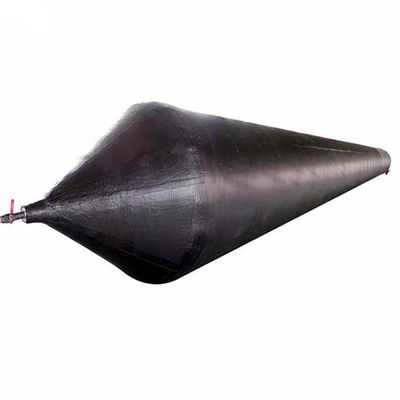
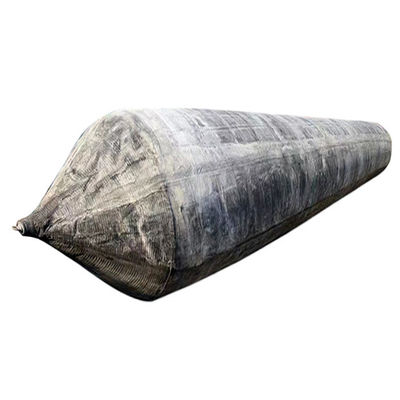
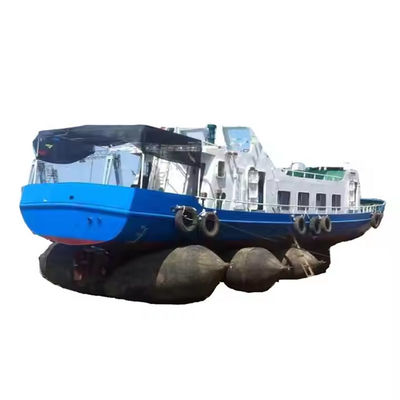
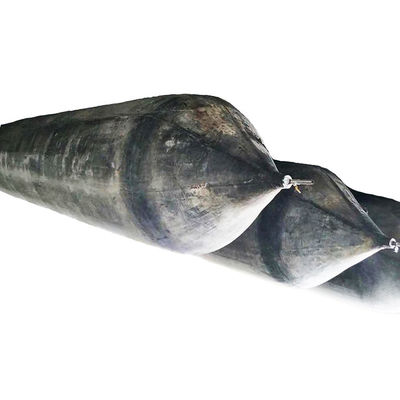
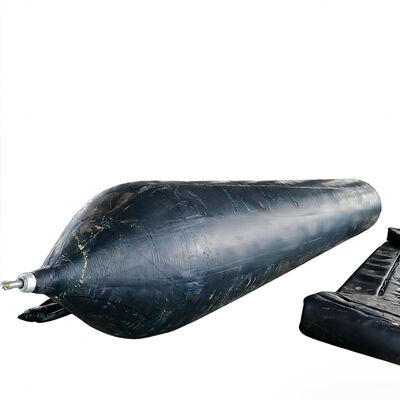
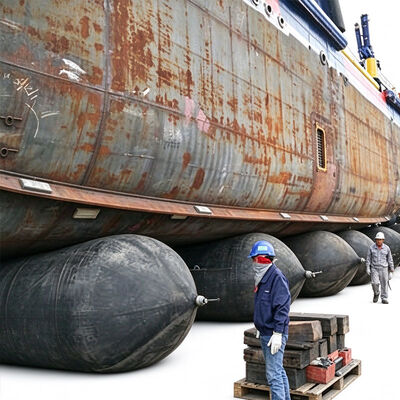
Ship Launching Balloon is an inflatable marine engineering product designed to support the controlled launching, transferring, and relocation of vessels between shipbuilding areas and designated water-entry locations. It operates as part of a multi-unit support arrangement in which reinforced inflatable rubber cylinders are positioned beneath the hull to distribute the vessel's weight and facilitate rolling movement along a prepared launching surface. Compared with launching systems that depend on permanent rails or fixed support structures, this method can provide greater flexibility for shipyards handling different vessel configurations, provided that the launching arrangement is suitable for the vessel and site conditions.
The product is generally constructed from an engineered rubber membrane reinforced with multiple layers of high-strength synthetic tire cord or equivalent reinforcement materials. The rubber compound provides an air-retaining barrier and protects the internal reinforcement against abrasion, moisture, and environmental exposure. Reinforcement layers provide tensile strength and help control dimensional changes under internal pressure and external loading. The arrangement of rubber and reinforcement must be designed to withstand repeated deformation while maintaining structural integrity throughout inflation, loading, rolling, deflation, and storage. The precise material composition and reinforcement configuration depend on the manufacturer's specification and the intended operating conditions.
The outer rubber surface is designed to withstand routine contact with prepared ground surfaces and the mechanical stresses associated with repeated rolling movement. However, resistance to wear depends on rubber formulation, surface condition, local contact pressure, and handling practices. Sharp stones, metal fragments, exposed reinforcement, incompatible chemicals, or excessive localized compression can damage the balloon and shorten its service life. For this reason, material durability must be considered together with ground preparation, load distribution, inspection procedures, and operating controls rather than treated as an isolated material property.
The internal air chamber allows the balloon to develop a load-bearing profile when inflated. Under an applied vessel load, the balloon deforms at its contact zones, producing a relationship between internal pressure, contact geometry, material strain, and supporting force. This behavior is nonlinear, meaning that the available bearing force cannot be determined from internal pressure alone. The effective contact area and allowable deformation must also be considered when establishing the working capacity of the system. Appropriate engineering calculations are therefore required to determine the number, dimensions, spacing, and operating pressure of the balloons for a particular launching operation.
Ship Launching Balloon is available in different diameters, effective lengths, and construction configurations according to project requirements. Diameter influences the available clearance beneath the hull and the deformation profile under load, while effective length influences the contact area available for supporting the vessel. The required quantity depends on the vessel's launching weight, longitudinal and transverse weight distribution, hull geometry, support locations, launching slope, and the load-bearing characteristics of the ground. These parameters should be assessed together to establish a balanced support arrangement and avoid excessive loading on individual units.
During operation, the balloons are positioned beneath predetermined hull support locations according to an approved launching plan. Following inspection of the equipment and launching surface, the units are inflated to the specified working pressure. The vessel is then transferred onto the support arrangement under controlled conditions, and the balloons rotate as the hull advances. The resulting movement can reduce reliance on direct sliding contact, although actual rolling resistance and movement stability depend on the surface, balloon deformation, alignment, slope, and operating conditions. The vessel must remain adequately restrained and controlled throughout the launching sequence.
Structural compatibility between the hull and the balloon arrangement is a critical engineering consideration. Concentrated loads, inappropriate spacing, uneven contact, and excessive deformation may generate undesirable stresses in the hull structure or the balloons themselves. The arrangement must therefore be evaluated against the vessel's bottom construction, framing locations, weight distribution, and expected changes in support conditions during movement. Where required, engineering calculations and structural analysis should be used to verify the proposed configuration before launching begins.
Illustrative Engineering Case Study: Coastal Shipyard in Indonesia
A coastal shipyard in Indonesia is assumed to be preparing for the launching of a newly constructed steel cargo barge with a representative launching weight of approximately 650 tonnes. The vessel is intended for regional transport of construction materials and general cargo between coastal terminals and river-connected industrial locations. The shipyard operates on a relatively restricted site where the launching area must also accommodate hull fabrication, equipment installation, material handling, and preparation for subsequent projects. These project details are illustrative and are not presented as a verified customer installation or documented Hongruntong Marine project.
The shipyard's main challenge is to transfer the completed barge from its construction area to the water without requiring extensive permanent launching infrastructure. The existing site layout limits the installation of fixed launching rails, while the barge's broad bottom structure and concentrated structural support locations require careful consideration of load distribution. In addition, the launching route includes a prepared inclined section approaching the waterline, where changes in support conditions and the vessel's center of gravity must be addressed in the operational plan.
The engineering team begins by collecting the vessel's launching weight, principal dimensions, hull drawings, bottom framing arrangement, and available weight-distribution information. The team also surveys the launching route to establish its gradient, surface condition, drainage characteristics, and ground bearing capacity. These data are used to determine whether an inflatable launching system is suitable and to identify the conditions that must be controlled before the vessel can be moved.
A Ship Launching Balloon arrangement is then developed according to the vessel's support geometry and the project's operating requirements. Balloon dimensions, effective contact lengths, quantity, spacing, working pressure, and allowable deformation are assessed together. The proposed arrangement must provide adequate support without creating unacceptable local loads on the barge's bottom structure. The ground must also be capable of supporting the combined loads transferred through the balloons during movement. Where the available information is insufficient to verify these conditions, further engineering assessment is required before the configuration is approved.
Before launching, the shipyard prepares the route by removing sharp debris, checking surface irregularities, and confirming that the supporting ground meets the project requirements. The balloons are inspected for visible damage, and the inflation equipment and pressure-measuring devices are checked for serviceability. The team verifies the balloon positions against the approved layout and confirms the restraint, towing, and movement-control arrangements. Responsibilities are assigned to the launching supervisor and operating personnel so that adjustments and movement commands follow a coordinated procedure.
During the operation, the balloons are inflated according to the specified procedure, and the barge is transferred progressively onto the support arrangement. The launching team monitors vessel alignment, balloon deformation, pressure behavior, and the distribution of support as the barge advances. Particular attention is given to changes in the hull's support points and to the transition toward the waterline. Movement is controlled according to the approved launching plan, and the operation is stopped if abnormal deformation, unexpected settlement, alignment changes, or other conditions outside the acceptance criteria are observed.
Specifications
| Product Name |
Ship Launching Balloon |
| Material |
100% High Tensile Natural Rubber (NR) |
| Dimensions |
Diameter 0.2 m – 4.0 m, Length 3.0 m – 28.0 m, or as requested |
| Working Pressure |
0.05 – 0.25 MPa |
| Technology |
Overall Winding, High Pressure, Explosion-Proof |
| Metal Parts |
Q355 / SS304 / SS316 |
| OEM |
Supported |
| MOQ |
1 |
| Repair Tools |
Electric Heating Plate, Repair Materials, Glue — Free of Charge |
| Standard |
ISO 17357 |
| Certificate |
ABS, BV, KR, LR, GL, NK, RINA, DNV, RMRS |
| Package |
Pallets, Wooden Cases |
| Service Life |
20 Years |
| Warranty |
36 Months |
Bearing Capacity Reference
| Diameter |
Working Pressure |
Working Height |
Bearing Capacity (kN/m) |
Bearing Capacity (Ton/m) |
| D = 1.0 m |
0.14 MPa |
0.6 m |
87.96 |
8.98 |
| D = 1.0 m |
0.14 MPa |
0.5 m |
109.96 |
11.22 |
| D = 1.0 m |
0.14 MPa |
0.4 m |
131.95 |
13.46 |
| D = 1.2 m |
0.12 MPa |
0.7 m |
94.25 |
9.62 |
| D = 1.2 m |
0.12 MPa |
0.6 m |
113.10 |
11.54 |
| D = 1.2 m |
0.12 MPa |
0.5 m |
131.95 |
13.46 |
| D = 1.2 m |
0.12 MPa |
0.4 m |
150.80 |
15.39 |
| D = 1.5 m |
0.10 MPa |
0.9 m |
94.25 |
9.62 |
| D = 1.5 m |
0.10 MPa |
0.8 m |
109.96 |
11.22 |
| D = 1.5 m |
0.10 MPa |
0.7 m |
125.66 |
12.82 |
| D = 1.5 m |
0.10 MPa |
0.6 m |
141.37 |
14.43 |
| D = 1.5 m |
0.10 MPa |
0.5 m |
157.08 |
16.03 |
| D = 1.8 m |
0.09 MPa |
1.1 m |
98.96 |
10.10 |
| D = 1.8 m |
0.09 MPa |
1.0 m |
113.10 |
11.54 |
| D = 1.8 m |
0.09 MPa |
0.9 m |
127.33 |
12.98 |
| D = 1.8 m |
0.09 MPa |
0.8 m |
141.37 |
14.43 |
| D = 1.8 m |
0.09 MPa |
0.7 m |
155.51 |
15.87 |
| D = 1.8 m |
0.09 MPa |
0.6 m |
169.65 |
17.31 |
| D = 2.0 m |
0.08 MPa |
1.2 m |
100.53 |
10.26 |
| D = 2.0 m |
0.08 MPa |
1.1 m |
113.10 |
11.54 |
| D = 2.0 m |
0.08 MPa |
1.0 m |
125.66 |
12.82 |
| D = 2.0 m |
0.08 MPa |
0.9 m |
138.23 |
14.11 |
| D = 2.0 m |
0.08 MPa |
0.8 m |
150.80 |
15.39 |
| D = 2.0 m |
0.08 MPa |
0.7 m |
163.36 |
16.67 |
| D = 2.0 m |
0.08 MPa |
0.6 m |
175.93 |
17.95 |
Other sizes can be provided according to client requirements.
Key Features
Reinforced Rubber Membrane and Structural Load Resistance
The load-bearing performance of Ship Launching Balloon depends on the interaction between the rubber membrane, reinforcement layers, internal pressure, and the external forces generated by the vessel. The rubber compound provides flexibility and forms the primary air-retaining barrier, while the embedded reinforcement carries tensile stresses and helps control expansion under pressure. This composite construction allows the balloon to develop a supporting profile while undergoing deformation at the contact areas between the hull, balloon, and launching surface.
The reinforcement system must be selected according to the required working pressure, dimensions, load conditions, and anticipated service cycle. High-strength synthetic cord reinforcement can provide directional tensile resistance, while the arrangement and bonding of the individual layers influence the overall mechanical response. Because reinforced rubber behaves differently from a rigid structural member, its load-bearing performance must be assessed using the relationship between internal pressure, contact geometry, deformation, and material properties. A nominal pressure rating alone is not sufficient to establish the allowable load under every operating condition.
Under a vessel load, the balloon develops a flattened contact region that transfers force to the ground and hull. The magnitude and distribution of the contact force depend on the applied load, inflation pressure, effective contact length, balloon geometry, and extent of deformation. Excessive deformation may increase stress in the membrane or create unfavorable contact conditions. Accordingly, the design should define an acceptable operating range and ensure that the selected configuration maintains adequate structural integrity throughout the intended launching sequence.
Pressure Management and Controlled Deformation
Internal air pressure is a primary operating parameter for Ship Launching Balloon because it influences the balloon's shape, deformation response, and ability to support an applied load. When the balloon is inflated, the internal pressure acts on the flexible membrane, while the reinforcement restrains expansion and helps maintain the intended geometry. Under external loading, the membrane deforms until the contact geometry and internal pressure establish an equilibrium appropriate to the applied forces.
This behavior requires careful pressure management during preparation and launching. The working pressure must remain within the approved range established for the specific balloon design. Underinflation may produce excessive deformation or insufficient clearance, while excessive pressure can increase membrane stresses and affect the interaction between the balloon and hull. Neither condition should be corrected through arbitrary pressure adjustments. The appropriate response is to verify the operating parameters, load distribution, and equipment configuration against the approved engineering requirements.
Pressure behavior must also be interpreted in relation to temperature and operating conditions. Changes in ambient temperature can influence the pressure of a sealed gas volume, while repeated deformation and movement may affect the operating state of the balloon. Operators should therefore use suitable pressure-measuring equipment and follow the manufacturer's procedures for inflation, monitoring, and adjustment. The inspection process should also consider leakage, valve condition, fitting integrity, and abnormal changes in the balloon's profile.
Load Distribution and Hull Support Compatibility
Ship Launching Balloon operates as part of an array of inflatable supports rather than as an isolated load-bearing unit. The vessel's weight must be distributed across the available balloons according to the hull geometry, longitudinal weight distribution, support locations, and expected movement during launching. The number of balloons and their spacing influence the forces transmitted to individual units, while differences in deformation or ground elevation may change the distribution of load during operation.
A suitable layout begins with an evaluation of the vessel's launching weight and bottom structure. The arrangement should consider structural framing, local hull strength, and the possibility of concentrated contact forces. If the balloons are positioned incorrectly, the resulting support pattern may create localized stresses or uneven hull deformation. This is especially important where hull plating, frames, girders, or other structural members influence the way loads are transferred through the bottom structure.
Dimensional Configuration and Project-Specific Adaptability
Ship Launching Balloon can be manufactured in different diameters and effective lengths to accommodate the requirements of individual shipyards and vessel types. Dimensional selection influences hull clearance, contact geometry, deformation behavior, handling requirements, and the arrangement of the supporting units. Because these factors are interdependent, customization should be based on a defined engineering requirement rather than on a preference for a particular size.
The selection process should begin with vessel and site information. Relevant data include launching weight, hull dimensions, bottom structure, available clearance, launching slope, ground bearing capacity, and the intended movement procedure. The engineering team can then assess the number of balloons required, their spacing, effective support length, allowable deformation, and operating pressure. The configuration should also consider the physical constraints of the launching site, including access for inflation equipment, handling personnel, and vessel restraint systems.
Repeated-Use Durability and Maintenance Requirements
Ship Launching Balloon is intended to support repeated launching operations when its construction remains within the approved service condition. Its serviceability depends on the integrity of the rubber membrane, reinforcement, end closures, valves, and other pressure-retaining components. Repeated inflation, deformation, rolling contact, handling, and storage place different demands on the product, making maintenance an essential part of its operating lifecycle.
The outer rubber layer is exposed to ground contact and may experience abrasion, cuts, punctures, or surface deterioration. Reinforcement damage may be less visible and can require technical assessment if the rubber surface shows unusual bulging, separation, or deformation. End fittings and inflation valves should also be examined for damage, looseness, leakage, and contamination. An abnormal pressure loss should not be dismissed as a routine operating issue until the cause has been identified.
A documented inspection procedure should be established before the equipment enters service. Pre-use checks can verify product identification, visible condition, fitting integrity, and readiness for inflation. During operation, personnel should monitor pressure, alignment, and deformation according to the approved procedure. After use, the balloon should be inspected again before deflation, removal, cleaning, and storage. Units that do not meet the acceptance criteria should be isolated pending evaluation or repair.
Applications
Launching of Newly Constructed Cargo Vessels and Workboats
Ship Launching Balloon can be incorporated into the launching arrangements of suitable newly constructed cargo vessels, harbor workboats, fishing vessels, and coastal service craft. In these applications, the balloon array supports the hull during movement from a prepared construction or assembly area toward the designated water-entry point. The configuration must reflect the vessel's launching weight, hull geometry, bottom framing, ground bearing conditions, and available launching space. A controlled procedure is necessary to maintain support distribution and vessel alignment throughout the operation.
Barge Construction and Marine Infrastructure Projects
Barges used for material transport, harbor maintenance, construction support, and industrial logistics may require launching arrangements that can accommodate broad hull forms and different structural layouts. Ship Launching Balloon can be considered where the ground surface and vessel construction are compatible with inflatable support. The engineering assessment should account for the barge's weight distribution, structural support points, potential concentrated loads, and transition from ground support to buoyancy. The launching route must be prepared to maintain suitable bearing capacity and minimize uneven deformation during movement.
Shipyards with Flexible or Temporary Launching Requirements
Shipyards with limited permanent infrastructure may use Ship Launching Balloon as part of a reusable launching system for suitable vessels. This arrangement can support changes in construction schedules and vessel dimensions without requiring the same fixed launching layout for every project. The operational benefits depend on the frequency of launches, availability of handling equipment, storage arrangements, ground preparation, and maintenance resources. The system should be selected only after confirming that the site and vessel meet the applicable engineering requirements; it is not a universal replacement for dry docks, fixed slipways, or other launching facilities.
Why Choose Hongruntong Marine
Manufacturing Experience and Understanding of Marine Rubber Products
Hongruntong Marine has more than 30 years of manufacturing experience, providing a foundation for understanding the material, structural, and operational considerations associated with marine rubber products. Ship Launching Balloon requires coordinated control of the rubber compound, reinforcement structure, dimensional accuracy, bonding quality, and pressure-retaining components. These characteristics influence not only the finished product's mechanical properties but also its suitability for repeated handling in shipyard environments.
The manufacturing process should be aligned with the technical requirements of the intended application. Before production, the required diameter, effective length, construction details, inflation fittings, operating pressure, and inspection criteria should be defined. The customer should also communicate the vessel type, operating environment, and intended use so that the product specification can be reviewed against the actual requirements. This structured approach helps prevent ambiguity between a general product description and the configuration needed for a particular project.
Customized Product Specifications and Engineering Coordination
Shipyard launching projects vary in vessel dimensions, launching weight, hull structure, ground profile, and operating environment. A standardized product may not satisfy every requirement without a suitable configuration review. Hongruntong Marine can coordinate with customers to establish the dimensions, construction details, and accessories required for a particular project, using the technical information available from the vessel owner, shipyard, or engineering contractor.
A reliable customization process begins with gathering the relevant data. These may include vessel launching weight, principal dimensions, hull drawings, weight distribution, intended support locations, launching slope, ground bearing capacity, and the planned movement-control method. The balloon quantity, effective contact length, spacing, pressure range, and allowable deformation should be determined by the responsible engineering team based on these conditions. Where the project data are incomplete, assumptions should be identified and resolved before the final configuration is accepted.
Material Quality and Manufacturing Inspection
The reliability of Ship Launching Balloon depends on the quality of the rubber membrane, reinforcement materials, bonding interfaces, end closures, and inflation fittings. Hongruntong Marine's product specification and manufacturing inspection process should identify the relevant construction requirements and acceptance criteria for the order. This allows customers to assess the product using documented characteristics rather than relying on general claims about strength or durability.
Reinforced rubber manufacturing requires attention to the consistency of materials and assembly. Rubber thickness, reinforcement placement, bonding conditions, and the installation of pressure-retaining components can influence mechanical behavior and serviceability. Inspection should therefore be planned around the product's critical features, including dimensions, external surface condition, fittings, and applicable pressure-retention requirements. The appropriate tests depend on the design specification and any standards explicitly agreed for the project.
Technical Support, Delivery Planning, and Lifecycle Coordination
Ship Launching Balloon is one component of a larger operating system that includes the vessel, launching surface, inflation equipment, restraints, handling arrangements, and movement-control procedures. Technical coordination is therefore necessary from the initial specification stage through delivery and subsequent maintenance. Hongruntong Marine can provide product-related information and coordinate with customers to clarify dimensions, fittings, operating parameters, packaging requirements, and available documentation.
Before manufacturing, the parties should confirm the technical specification, order quantity, delivery schedule, inspection requirements, and any documentation needed for project acceptance. This reduces the risk of supplying products that differ from the customer's intended configuration. For international transportation, packaging should protect the rubber surface, reinforcement structure, and fittings against avoidable damage during handling, transit, and storage. Product identification should remain clear enough for the receiving team to check the delivery against the approved order.
Frequently Asked Questions
1. What is a Ship Launching Balloon used for?
Ship Launching Balloon is an inflatable, reinforced rubber support used in a planned arrangement to help move suitable vessels from a shipyard or prepared launching area toward the water. The balloons distribute loads beneath the hull and rotate during movement. The system requires appropriate engineering calculations, ground preparation, vessel restraint, and operational controls.
2. How are the dimensions and quantity of Ship Launching Balloons determined?
Selection depends on vessel launching weight, hull geometry, weight distribution, support locations, launching slope, ground bearing capacity, balloon dimensions, and allowable deformation. Diameter and effective length influence contact geometry and clearance. The quantity, spacing, and working pressure should be established through a project-specific engineering assessment rather than by vessel weight alone.
3. Can Ship Launching Balloons be reused after a launching operation?
Yes, provided the units remain within their approved service condition. Each balloon should be inspected for cuts, punctures, unusual bulging, reinforcement damage, fitting defects, and abnormal pressure loss. Cleaning, appropriate storage, and maintenance records support reuse. Any damaged unit should be isolated until its suitability for further operation has been evaluated.
4. What inspection and testing requirements should be considered before use?
The product should be checked against its approved specification, including dimensions, visible condition, fittings, and applicable pressure-retention requirements. Testing should follow the relevant standard and manufacturer's approved procedure. Customers should confirm any required inspection reports or certificates before ordering; no particular certification should be assumed unless it has been verified for the supplied product.
5. What operating conditions can affect service life and safety?
Excessive loading, incorrect working pressure, sharp ground debris, uneven support, incompatible chemicals, improper handling, and unsuitable storage can affect performance and service life. The launching surface must provide adequate bearing capacity, and the vessel must be controlled throughout movement. Regular inspection and compliance with the manufacturer's operating limits are essential for safe and repeatable use.


 Your message must be between 20-3,000 characters!