Product Overview
Ship Launching Rubber Airbags — Abrasion Resistant, Reinforced Structure, Reliable Performance
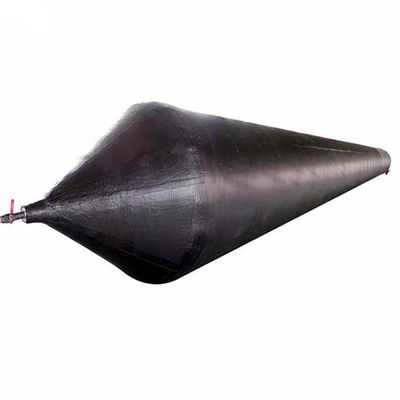
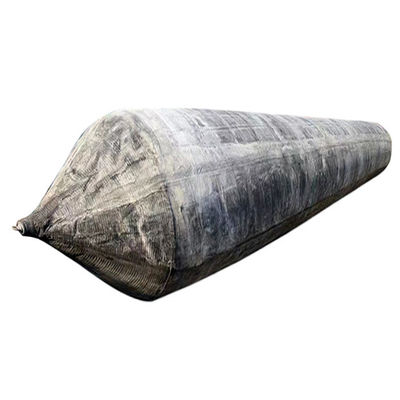
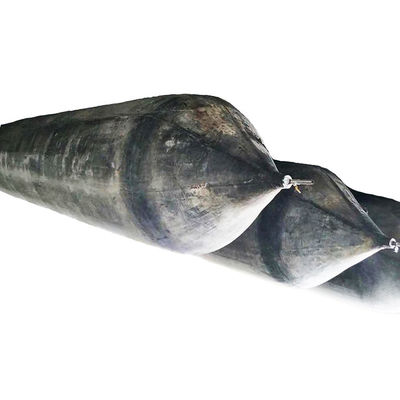
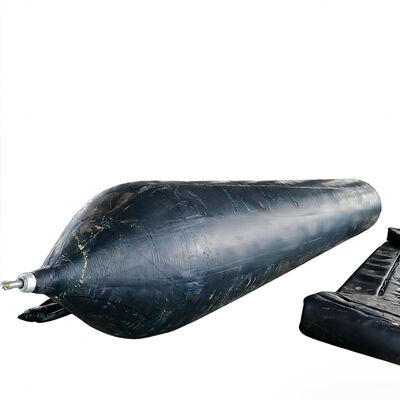
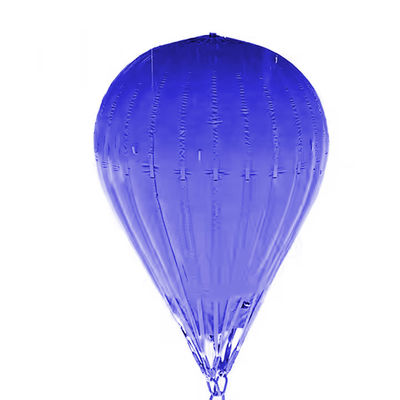
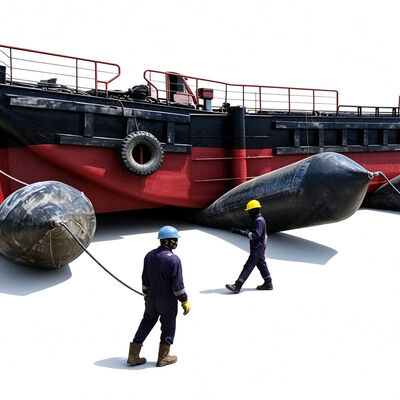
Ship Launching Balloon is an inflatable marine engineering product designed to support the controlled launching, transferring, and shore-to-water movement of ships and other large marine structures. It is commonly manufactured using high-strength synthetic tire-cord fabric reinforced with multiple layers of rubber compounds. The reinforced construction provides the tensile strength, flexibility, abrasion resistance, and pressure-bearing capability required for demanding shipyard operations. Depending on the vessel dimensions, launching method, ground conditions, and engineering requirements, the product can be manufactured in different diameters, effective lengths, working pressures, and load capacities.
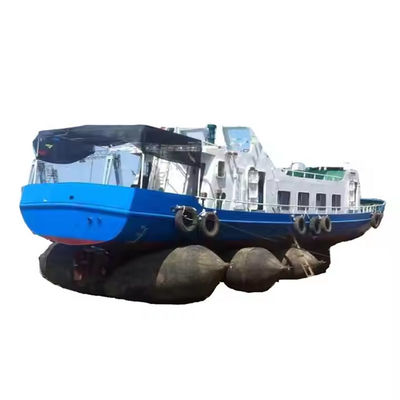
Unlike fixed launching rails and permanent slipway installations, Ship Launching Balloon provides a flexible support system that can be deployed on suitably prepared ground. When correctly positioned beneath a vessel, multiple inflated balloons distribute the vessel load across several support points. Controlled inflation and coordinated movement allow the vessel to move toward the water under the supervision of qualified shipyard personnel. This arrangement can reduce dependence on permanent launching infrastructure and provide a practical alternative for shipyards handling different vessel sizes or operating in locations where conventional launching facilities are limited.
The product structure typically consists of a reinforced rubber body, multiple tire-cord fabric layers, and integrated end components suitable for inflation, pressure control, and operational handling. The rubber compound protects the reinforcement against surface abrasion, moisture, and repeated contact with prepared launching surfaces. The internal fabric reinforcement helps resist circumferential expansion and maintain structural integrity under pressure. End fittings and inflation connections must be selected according to the product design, required operating pressure, and compatibility with the shipyard's inflation equipment.
Ship Launching Balloon is available in various configurations to accommodate different vessel weights, hull geometries, launching distances, and site conditions. Diameter selection influences the available lifting height and the balloon's ability to negotiate changes in ground elevation, while effective length affects the load-bearing contact area. The required number of balloons and their spacing must be calculated according to vessel displacement, longitudinal weight distribution, hull support requirements, ground bearing capacity, and the manufacturer's rated performance data. These parameters should be determined through an engineering assessment rather than by relying solely on nominal balloon dimensions.
A major functional advantage of Ship Launching Balloon is its ability to provide distributed, compliant support beneath a vessel hull. The flexible cylindrical body can adapt to suitable variations in the supporting surface and accommodate the changing contact geometry encountered during launching. This characteristic can help reduce concentrated contact loads when the arrangement is properly engineered. Nevertheless, the ground must be inspected and prepared to prevent sharp-object damage, excessive settlement, uneven loading, or uncontrolled movement.
The product is particularly suitable for shipyards constructing fishing vessels, workboats, barges, landing craft, patrol boats, and other vessels compatible with airbag launching methods. It can also be considered for certain marine structures and heavy fabricated units where rolling support is technically appropriate. Compared with permanent launching infrastructure, an airbag-based system can offer greater flexibility in equipment deployment, storage, and adaptation to different projects. Actual cost savings depend on project frequency, site preparation, vessel size, equipment requirements, and the availability of existing launching facilities.
For reliable performance, Ship Launching Balloon must be selected and operated according to its rated working pressure, allowable load, dimensional tolerances, and inspection requirements. Operators should verify the condition of the rubber surface, inflation connections, and reinforced body before each operation. During launching, pressure, vessel alignment, movement speed, and the condition of the supporting ground should be monitored continuously. A properly engineered arrangement, supported by trained personnel and appropriate restraint and emergency procedures, helps improve operational consistency and reduce avoidable risks during ship launching.
Case Study: Controlled Launching of a Steel Workboat in Southeast Asia
A coastal shipyard in Southeast Asia was preparing to launch a newly constructed steel workboat with an approximate displacement of 650 tonnes. The vessel was designed for harbor maintenance, equipment transportation, and nearshore service operations. The shipyard had limited access to permanent launching infrastructure, and the available shoreline working area needed to accommodate several construction activities simultaneously. Installing a dedicated fixed launching system for a single vessel would have required additional civil engineering work, extended preparation time, and substantial investment.
The principal engineering challenge was to establish a controlled launching arrangement that could support the vessel's weight while maintaining suitable hull support and predictable movement toward the water. The site assessment identified the need to evaluate the launching gradient, ground bearing capacity, surface condition, tidal conditions, and the available distance for vessel movement. Particular attention was given to the vessel's longitudinal weight distribution and the relationship between the proposed balloon positions and the hull's designated support areas.
After reviewing the vessel particulars and site conditions, the engineering team developed a preliminary Ship Launching Balloon arrangement based on the required dimensions, rated capacity, and expected operating pressure. The final number, spacing, and operating parameters would need to be confirmed against the manufacturer's technical data and the approved launching calculations. Before installation, the launching surface was cleared of debris and inspected for sharp objects, local depressions, and areas susceptible to settlement. The vessel's support points and launching path were also checked to reduce the possibility of uneven loading.
The balloons were positioned according to the approved layout, with inflation carried out in a controlled sequence. Each unit was inspected for visible damage and abnormal deformation before the vessel load was transferred onto the support system. The shipyard team coordinated the launching operation through designated personnel responsible for pressure monitoring, vessel alignment, movement control, and communication. The movement procedure included defined stop conditions so that the team could suspend the operation if pressure variation, unexpected hull movement, ground deformation, or alignment problems occurred.
During the planned launching process, the distributed support arrangement allowed the vessel to advance toward the water without requiring a permanent rail installation. The operation demonstrated the practical value of inflatable launching equipment at a site where launching flexibility was an important consideration. The balloons could subsequently be inspected, deflated, handled, and stored for potential use on another compatible vessel, subject to post-operation inspection and confirmation that their condition remained within the manufacturer's acceptance criteria.
From a project management perspective, the principal potential benefit was the reduction of dependence on dedicated launching infrastructure. Reusable equipment can also reduce repeated setup expenditure when a shipyard conducts multiple suitable launching operations over time. However, the overall economic outcome depends on the purchase or rental cost, ground preparation, labor, inspection, maintenance, and the number of launches completed during the equipment's service life.
Following the operation, the shipyard's maintenance team was advised to document the pressure history, inspect the rubber body and end connections, and record any abnormal deformation or surface wear. These records can support future equipment selection and improve consistency across subsequent launches. The engineering approach is repeatable for other suitable vessels, but the launching layout, load calculations, ground preparation, and operating procedures must be reassessed for every project rather than copied without verification.
Specifications
| Product Name |
Ship Launching Balloon |
| Material |
100% High Tensile Natural Rubber (NR) |
| Dimensions |
Diameter 0.2m – 4.0m, Length 3.0m – 28.0m, or As Request |
| Working Pressure |
0.05 – 0.25 MPa |
| Technology |
Overall Winding, High Pressure, Explosion-Proof |
| Metal Parts |
Q355 / SS304 / SS316 |
| OEM |
Supported |
| MOQ |
1 |
| Repair Tools |
Electric Heating Plate, Repair Materials, Glue, Free of Charge |
| Standard |
ISO 17357 |
| Certificate |
ABS, BV, KR, LR, GL, NK, RINA, DNV, RMRS |
| Package |
Pallets, Wooden Cases |
| Service Life |
20 Years |
| Warranty |
36 Months |
Load Performance by Diameter
| Diameter |
Working Pressure |
Working Height |
Bearing Capacity (KN/m) |
Bearing Capacity (Ton/m) |
| D=1.0m |
0.14 MPa |
0.6m |
87.96 |
8.98 |
| D=1.0m |
0.14 MPa |
0.5m |
109.96 |
11.22 |
| D=1.0m |
0.14 MPa |
0.4m |
131.95 |
13.46 |
| D=1.2m |
0.12 MPa |
0.7m |
94.25 |
9.62 |
| D=1.2m |
0.12 MPa |
0.6m |
113.10 |
11.54 |
| D=1.2m |
0.12 MPa |
0.5m |
131.95 |
13.46 |
| D=1.2m |
0.12 MPa |
0.4m |
150.80 |
15.39 |
| D=1.5m |
0.10 MPa |
0.9m |
94.25 |
9.62 |
| D=1.5m |
0.10 MPa |
0.8m |
109.96 |
11.22 |
| D=1.5m |
0.10 MPa |
0.7m |
125.66 |
12.82 |
| D=1.5m |
0.10 MPa |
0.6m |
141.37 |
14.43 |
| D=1.5m |
0.10 MPa |
0.5m |
157.08 |
16.03 |
| D=1.8m |
0.09 MPa |
1.1m |
98.96 |
10.10 |
| D=1.8m |
0.09 MPa |
1.0m |
113.10 |
11.54 |
| D=1.8m |
0.09 MPa |
0.9m |
127.33 |
12.98 |
| D=1.8m |
0.09 MPa |
0.8m |
141.37 |
14.43 |
| D=1.8m |
0.09 MPa |
0.7m |
155.51 |
15.87 |
| D=1.8m |
0.09 MPa |
0.6m |
169.65 |
17.31 |
| D=2.0m |
0.08 MPa |
1.2m |
100.53 |
10.26 |
| D=2.0m |
0.08 MPa |
1.1m |
113.10 |
11.54 |
| D=2.0m |
0.08 MPa |
1.0m |
125.66 |
12.82 |
| D=2.0m |
0.08 MPa |
0.9m |
138.23 |
14.11 |
| D=2.0m |
0.08 MPa |
0.8m |
150.80 |
15.39 |
| D=2.0m |
0.08 MPa |
0.7m |
163.36 |
16.67 |
| D=2.0m |
0.08 MPa |
0.6m |
175.93 |
17.95 |
Other sizes can be provided according to client requirements.
Key Features
Multi-Layer Reinforced Construction for Load-Bearing Stability
Ship Launching Balloon uses a reinforced rubber structure designed to withstand the combined tensile, compressive, and contact stresses associated with supporting a vessel during launching. High-strength synthetic tire-cord fabric forms the primary reinforcement, while rubber layers provide protection, bonding, and resistance to environmental exposure. The number, orientation, and arrangement of reinforcement layers are determined by the product's engineering design and required performance class.
During inflation, internal pressure creates circumferential tension within the reinforced body. When the balloon supports a vessel, the contact region undergoes deformation as the load is transferred between the hull, balloon, and ground. The reinforcement must therefore accommodate the intended deformation while limiting excessive expansion and maintaining structural integrity. The rubber compound must also tolerate repeated contact with properly prepared surfaces without premature cracking, separation, or abrasion damage under normal operating conditions.
Flexible Cylindrical Geometry for Distributed Hull Support
The cylindrical geometry of Ship Launching Balloon provides a rolling support surface that can be used to move compatible vessels over suitably prepared launching areas. Under load, the contact region flattens in accordance with the applied force, internal pressure, material stiffness, and supporting surface. This deformation creates a contact area through which the vessel load is transferred to the ground.
Compared with rigid support elements, the inflatable body can accommodate certain changes in contact geometry without requiring a precisely machined supporting surface. This flexibility is useful in shipyards where the launching area is designed around practical construction conditions rather than a permanent rail system. Nevertheless, the balloon is not intended to compensate for uncontrolled ground settlement, severe surface irregularities, sharp projections, or inadequate ground bearing capacity.
Pressure-Controlled Operation and Operational Monitoring
Internal pressure is a critical operating parameter because it influences balloon deformation, load-bearing behavior, and structural stress. Each Ship Launching Balloon must be operated within its specified pressure range and corresponding rated load conditions. A higher pressure should never be assumed to provide an unrestricted increase in capacity, because excessive inflation may damage the reinforcement, end components, or rubber body.
A controlled inflation procedure should include checking the inflation equipment, inspecting valves and connections, confirming pressure-gauge accuracy, and introducing air gradually. Pressure should be measured using suitable calibrated equipment, and the inflation system should be protected against accidental overpressure. The required operating pressure must be obtained from the manufacturer's technical documentation for the specific balloon model and intended load.
During launching, pressure readings should be interpreted together with balloon deformation, hull movement, ground conditions, and the distribution of the vessel load. Unexpected pressure loss, local bulging, abnormal rolling resistance, or visible surface damage requires an immediate assessment by the responsible personnel. The operation should be stopped whenever conditions exceed the approved procedure or the stability of the vessel cannot be maintained.
Reusable Design for Multiple Suitable Shipyard Projects
Ship Launching Balloon is designed to be deflated, handled, stored, inspected, and potentially reused across compatible launching projects. This reusability can be valuable for shipyards that build vessels in series or operate on sites where permanent launching facilities are not economically justified. Instead of constructing a separate fixed system for each launching requirement, the shipyard can maintain an inventory of appropriately rated balloons and associated equipment.
The practical service life depends on material quality, manufacturing consistency, operating pressure, applied loads, surface conditions, exposure to sunlight and chemicals, storage methods, maintenance practices, and the frequency of use. Reuse must therefore be based on documented inspection and acceptance criteria rather than on the assumption that an inflatable product remains safe simply because it has not visibly failed.
Applications
Shipyard Launching of Newly Constructed Vessels
Ship Launching Balloon can be used for launching suitable newly constructed steel, aluminum, or other compatible marine vessels from prepared shore-based launching areas. Typical applications include fishing boats, workboats, small cargo vessels, landing craft, service boats, and selected patrol vessels. The launching arrangement is established according to vessel displacement, hull configuration, launching slope, ground capacity, and the manufacturer's rated balloon performance.
The engineering process begins with a review of vessel drawings and launching conditions. Balloon placement must correspond to structurally suitable hull support areas, while the launching path must provide adequate clearance and controlled access to the water. Ground preparation, restraint provisions, communication procedures, and contingency planning are necessary to maintain control throughout the operation. The final arrangement should be approved by competent personnel before load transfer begins.
Relocation and Launching of Suitable Marine Structures
In addition to new vessel construction, Ship Launching Balloon may be used to reposition or launch certain barges, floating platforms, and fabricated marine structures when their geometry and structural design permit inflatable support. Such applications require particular attention to load concentration, center of gravity, structural support points, movement resistance, and the possibility of shifting loads during relocation.
Before implementation, engineers should verify that the structure can tolerate the proposed support arrangement and that the travel path is capable of carrying the resulting ground pressure. Balloons should be selected and positioned according to an approved plan, with movement controlled through suitable restraint and handling equipment. The method should only be used when a documented engineering assessment confirms its suitability.
Why Choose Hongruntong Marine
More Than 30 Years of Manufacturing Experience
Hongruntong Marine has more than 30 years of manufacturing experience, providing an established industrial background for the development and supply of marine rubber products. Experience in reinforced rubber manufacturing is relevant to Ship Launching Balloon because performance depends on more than the external dimensions of the finished product. Rubber formulation, fabric reinforcement, material bonding, dimensional consistency, and end-component integration all influence operational reliability.
For shipyards and marine contractors, manufacturing experience can support clearer communication between technical purchasing teams and production personnel. Product requirements can be evaluated in relation to vessel displacement, launching frequency, working environment, storage conditions, and expected equipment utilization. This process helps buyers identify the technical information that must be confirmed before ordering, rather than selecting a product solely on nominal diameter or price.
Hongruntong Marine can provide product information to support specification review and purchasing evaluation. Buyers should confirm the available manufacturing records, inspection procedures, product-specific test reports, and applicable quality documentation for the model being considered. The objective is to establish a verifiable relationship between the ordered configuration and the requirements of the intended launching project.
Project-Based Dimensional and Configuration Support
Ship launching requirements differ significantly between shipyards. A vessel's displacement alone does not determine the correct balloon configuration; the hull support areas, load distribution, launching gradient, ground bearing capacity, required lifting height, and available movement distance must also be considered.
Hongruntong Marine can discuss project requirements to help identify a suitable product configuration. Relevant information may include vessel type, overall dimensions, displacement, hull drawings, proposed balloon positions, ground conditions, launching method, and the expected operating environment. Where available, engineering calculations and the manufacturer's load-performance data should be used to verify the required number of units, dimensions, operating pressure, and spacing.
Customization may involve diameter, effective length, construction specifications, end connections, and other agreed product details, subject to manufacturing capability and technical approval. Any proposed change to reinforcement construction or pressure rating must be supported by appropriate design verification. This approach helps reduce specification gaps between the purchasing document, the manufactured product, and the equipment required at the shipyard.
Material Selection and Manufacturing Quality Control
The service performance of Ship Launching Balloon depends on the consistency of its rubber body, reinforcement fabric, bonding interfaces, and end components. Hongruntong Marine's product evaluation should therefore focus on the material and manufacturing characteristics relevant to the specified operating conditions.
For a project requiring repeated launching operations, buyers should review the proposed rubber compound, reinforcement construction, rated operating parameters, environmental compatibility, and storage requirements. Manufacturing quality controls may include checks on raw materials, fabric alignment, rubber thickness, bonding quality, dimensions, appearance, and completed-product performance, depending on the agreed manufacturing specification.
These controls are important because defects that are difficult to identify visually may affect service performance under load. Documentation should clearly distinguish routine inspection records from formal performance tests and third-party certification. Buyers should request the records applicable to their order and verify that they correspond to the supplied model and manufacturing batch.
By establishing measurable acceptance criteria before production, the supplier and customer can reduce ambiguity during inspection and delivery. The resulting documentation also supports future maintenance, equipment traceability, and procurement decisions for subsequent projects.
Technical Communication and After-Sales Support
Ship launching equipment must be integrated into a broader operational plan that includes vessel preparation, ground inspection, inflation, load transfer, movement control, and post-operation maintenance. For this reason, technical communication is an important part of the supply process.
Hongruntong Marine can support customer discussions concerning product dimensions, operating parameters, inspection requirements, handling, and storage, subject to the technical information available for the selected model. Before delivery, buyers should obtain the applicable product specifications, operating instructions, inspection recommendations, and warranty conditions. If the project requires particular documents or third-party inspections, these requirements should be agreed upon before the order is finalized.
After delivery, clear records of the supplied configuration and product identification can assist the customer in confirming suitability for future work. Any reported abnormal pressure loss, visible damage, or performance concern should be evaluated using the actual operating history and inspection evidence. Product repairs, continued use, or return-to-service decisions should follow the manufacturer's guidance and the responsible engineer's assessment.
For international marine customers, this structured approach helps establish clear responsibilities between the supplier, shipyard, and project engineering team. It also supports more consistent equipment management over repeated launches without making unsupported assumptions about service life or performance under conditions outside the approved operating range.
Frequently Asked Questions
1. What sizes are available for Ship Launching Balloon?
Ship Launching Balloon can be manufactured in different diameters and effective lengths to meet project-specific requirements. Common industry configurations vary by supplier and product series, so buyers should request the current dimensional range and rated performance data from Hongruntong Marine. Selection should consider vessel displacement, hull geometry, required lifting height, launching slope, ground conditions, and balloon spacing. The largest available size is not necessarily the most suitable option for every vessel.
2. How is the load capacity of a Ship Launching Balloon determined?
Load capacity depends on the complete product design, dimensions, internal pressure, allowable deformation, contact conditions, and the manufacturer's verified performance data. The engineering assessment must also consider load distribution between balloons and the strength of the vessel's support areas. Buyers should not estimate capacity using diameter alone or increase operating pressure beyond the specified limit to compensate for an insufficient configuration.
3. Can Ship Launching Balloon be reused after launching a vessel?
Yes, a balloon may be reused when its design permits repeated service and its condition remains acceptable after inspection. After each operation, it should be deflated according to the prescribed procedure and examined for cuts, abrasion, cracks, reinforcement exposure, bonding separation, and damage around end connections. Reuse must be based on the manufacturer's inspection criteria and operating records. Units with suspected structural damage should not be returned to service without appropriate evaluation.
4. What safety checks are required before a launching operation?
The team should verify the balloon specifications, rated load, operating pressure, inflation equipment, hull support arrangement, ground bearing capacity, launching path, restraints, and communication procedures. The balloons must be checked for visible damage, and pressure gauges should be suitable for the specified operating range. A documented launching plan should define monitoring responsibilities and stop-work conditions. The operation must be supervised by qualified personnel, with the vessel's movement controlled throughout the process.
5. Does Ship Launching Balloon require third-party certification or special testing?
Requirements depend on the project specifications, purchasing contract, applicable regulations, and the customer's quality-assurance system. Buyers should confirm which manufacturing inspections, pressure tests, load-performance tests, material records, and third-party documents are required before placing an order. Any certificate provided should identify the relevant product or manufacturing scope and be verifiable with the issuing organization. Compliance with a specific standard or certification should not be assumed unless the supplied documentation confirms it.


 Your message must be between 20-3,000 characters!