Product Overview
Marine Rubber Airbags — Durable Rubber Material, High Pressure Resistance, Custom Sizes
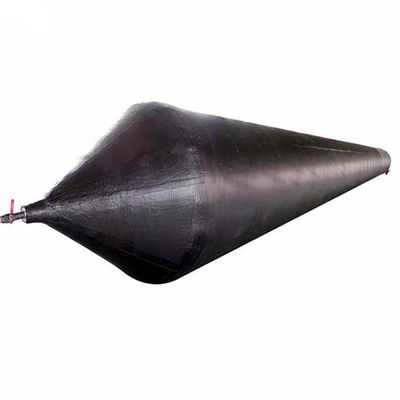
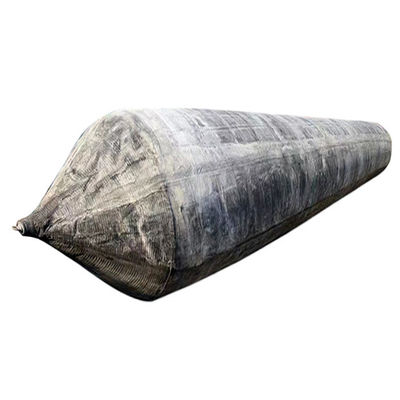
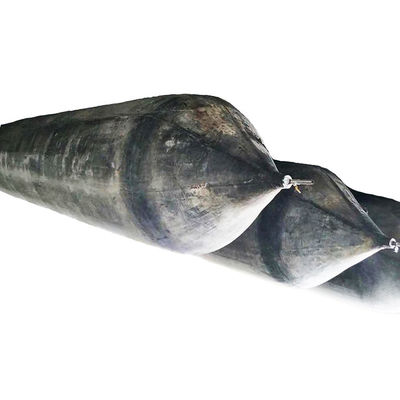
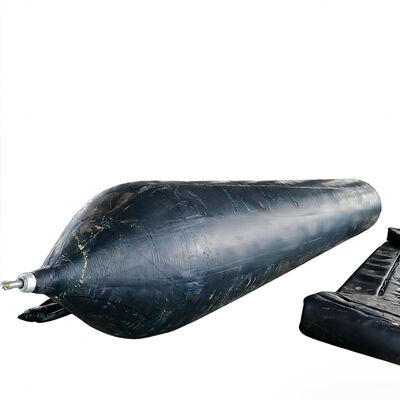
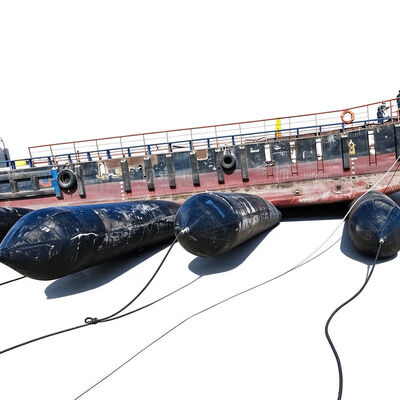
The Ship Launching Balloon is an inflatable marine engineering product designed for the controlled launching and relocation of vessels on suitably prepared ground. Manufactured from high-strength synthetic tire-cord fabric and wear-resistant rubber compounds, it provides flexible load support during shipyard operations. The reinforced structure is designed to withstand internal pressure, repeated deformation, and surface contact while maintaining structural integrity within the specified operating limits.
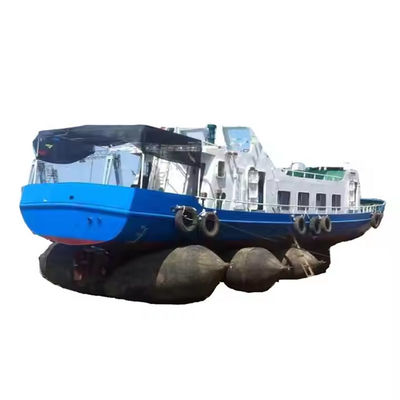
Available in different diameters, effective lengths, and reinforcement configurations, the Ship Launching Balloon can be selected according to vessel displacement, hull dimensions, launching slope, and site conditions. Multiple balloons are positioned beneath designated hull support areas to distribute the vessel load and facilitate controlled movement toward the water. The required quantity, spacing, and working pressure must be determined using engineering calculations and verified product performance data.
Compared with permanent launching rails, inflatable launching systems offer flexibility in equipment deployment and storage. They are suitable for shipyards handling fishing vessels, cargo barges, workboats, and other compatible marine structures. Proper ground preparation, pressure monitoring, and operational supervision are essential to achieve reliable performance and prevent uneven loading or uncontrolled movement.
Case Study: Launching a Steel Cargo Barge at a Coastal Shipyard in South Asia
A coastal shipyard in South Asia planned to launch a steel cargo barge with an approximate displacement of 800 tonnes. The facility lacked a permanent launching rail system, and the available waterfront area was shared by fabrication and material-handling activities. Installing dedicated launching infrastructure would have required additional civil works and extended the project schedule.
The engineering team evaluated the barge's hull configuration, weight distribution, launching distance, and ground conditions before developing a preliminary Ship Launching Balloon arrangement. Balloon dimensions, spacing, and operating pressure were reviewed against the manufacturer's rated performance data. The launching surface was cleared of debris and inspected to reduce the risk of damage and uneven support.
During preparation, the balloons were positioned beneath approved hull support areas and inflated under controlled conditions. Personnel checked pressure readings, balloon deformation, and vessel alignment before movement commenced. The launching operation was supervised by designated staff, with stop-work procedures established for unexpected pressure loss, ground settlement, or abnormal vessel movement.
The inflatable arrangement provided a practical alternative to permanent launching infrastructure for this project. Following the operation, the balloons were deflated and inspected for possible damage before storage. The approach may be repeated for other compatible vessels, provided that each project undergoes an independent engineering assessment. Actual cost savings depend on equipment utilization, site preparation, labor, and maintenance requirements.
Specifications
| Product Name |
Ship Launching Balloon |
| Material |
100% High Tensile Natural Rubber (NR) |
| Dimensions |
Diameter 0.2m – 4.0m, Length 3.0m – 28.0m, or As Request |
| Working Pressure |
0.05 – 0.25 MPa |
| Technology |
Overall Winding, High Pressure, Explosion-Proof |
| Metal Parts |
Q355 / SS304 / SS316 |
| OEM |
Supported |
| MOQ |
1 |
| Repair Tools |
Electric Heating Plate, Repair Materials, Glue — Free of Charge |
| Standard |
ISO 17357 |
| Certificate |
ABS, BV, KR, LR, GL, NK, RINA, DNV, RMRS |
| Package |
Pallets, Wooden Cases |
| Service Life |
20 Years |
| Warranty |
36 Months |
Load Capacity Reference
| Diameter |
Working Pressure |
Working Height |
Bearing Capacity (KN/m) |
Bearing Capacity (Ton/m) |
| D = 1.0 m |
0.14 MPa |
0.6 m |
87.96 |
8.98 |
| 0.5 m |
109.96 |
11.22 |
| 0.4 m |
131.95 |
13.46 |
| D = 1.2 m |
0.12 MPa |
0.7 m |
94.25 |
9.62 |
| 0.6 m |
113.10 |
11.54 |
| 0.5 m |
131.95 |
13.46 |
| 0.4 m |
150.80 |
15.39 |
| D = 1.5 m |
0.10 MPa |
0.9 m |
94.25 |
9.62 |
| 0.8 m |
109.96 |
11.22 |
| 0.7 m |
125.66 |
12.82 |
| 0.6 m |
141.37 |
14.43 |
| 0.5 m |
157.08 |
16.03 |
| D = 1.8 m |
0.09 MPa |
1.1 m |
98.96 |
10.10 |
| 1.0 m |
113.10 |
11.54 |
| 0.9 m |
127.33 |
12.98 |
| 0.8 m |
141.37 |
14.43 |
| 0.7 m |
155.51 |
15.87 |
| 0.6 m |
169.65 |
17.31 |
| D = 2.0 m |
0.08 MPa |
1.2 m |
100.53 |
10.26 |
| 1.1 m |
113.10 |
11.54 |
| 1.0 m |
125.66 |
12.82 |
| 0.9 m |
138.23 |
14.11 |
| 0.8 m |
150.80 |
15.39 |
| 0.7 m |
163.36 |
16.67 |
| 0.6 m |
175.93 |
17.95 |
Other sizes can be provided according to client requirements.
Key Features
High-Strength Reinforced Rubber Construction
The Ship Launching Balloon incorporates multiple layers of synthetic tire-cord fabric reinforced with rubber compounds. The fabric provides tensile strength, while the rubber protects the reinforcement against abrasion and environmental exposure. Proper bonding between these materials is important for maintaining structural integrity under pressure and load. Manufacturing inspection should cover material consistency, dimensions, bonding quality, and the condition of end connections.
Flexible Load Distribution
The cylindrical body deforms under load to establish contact between the vessel and the ground. This flexible support helps accommodate changes in contact geometry during rolling movement. Balloon diameter, effective length, spacing, and operating pressure influence load distribution and must be selected according to the vessel's hull structure and displacement. Suitable ground preparation is necessary to prevent excessive deformation and concentrated loading.
Controlled Inflation and Pressure Performance
Operating pressure directly affects the balloon's deformation and load-bearing behavior. Each unit must be inflated within the manufacturer's specified pressure range using suitable gauges and compatible inflation equipment. Operators should monitor pressure and visible deformation throughout the launching process. Unexpected pressure loss, abnormal bulging, or irregular movement requires immediate assessment. Increasing pressure beyond the approved limit must never be used as a substitute for correct product selection.
Reusable Design for Shipyard Operations
The Ship Launching Balloon can be deflated, inspected, and stored for potential reuse on compatible projects. Service life depends on operating loads, handling practices, environmental exposure, and maintenance quality. After each use, the product should be checked for cuts, abrasion, cracks, material separation, and damage around inflation connections. Proper storage and documented inspection records help shipyards manage equipment condition and determine whether a balloon remains suitable for future operations.
Applications
Shipbuilding and Vessel Launching
Suitable for launching fishing vessels, workboats, landing craft, and other compatible vessels from prepared shore-based facilities. The arrangement must account for hull support locations, vessel displacement, launching slope, and ground bearing capacity.
Cargo Barges and Coastal Transport Vessels
Can be considered for launching steel cargo barges and selected transport vessels when the reinforced balloon configuration meets the calculated load requirements. Proper positioning and controlled movement are essential for maintaining vessel alignment.
Marine Structure Relocation
May support the relocation of compatible floating platforms and fabricated marine structures across prepared surfaces. Structural support capacity, center of gravity, ground conditions, and movement control must be assessed before implementation.
Why Choose Hongruntong Marine
More Than 30 Years of Manufacturing Experience
Hongruntong Marine has more than 30 years of manufacturing experience, supporting its work in marine and industrial product manufacturing. The Ship Launching Balloon requires consistent material selection, reinforcement placement, and rubber bonding to meet the intended operating requirements. Manufacturing experience helps support technical communication and specification review. Customers should confirm product-specific performance data and quality documentation before purchase.
Project-Specific Customization
Different vessels require different balloon dimensions and configurations. Hongruntong Marine can discuss project requirements, including vessel displacement, hull dimensions, launching conditions, and required product specifications. Depending on manufacturing capability, customization may include diameter, effective length, reinforcement construction, and end connections. Final selection must be verified against engineering calculations and the manufacturer's rated performance data.
Material Selection and Quality Control
Material quality and production consistency are essential to the performance of reinforced inflatable products. Relevant inspection items may include dimensions, rubber surface condition, fabric reinforcement, bonding quality, and end-component integrity. Customers can request applicable specifications and test reports for the selected model. Any required third-party inspection or certification should be agreed upon before production.
Technical Documentation and After-Sales Support
Hongruntong Marine can provide product information and discuss handling, operating parameters, inspection, and storage requirements for the selected configuration. Before shipment, customers should confirm the agreed specifications, operating instructions, warranty terms, and required documentation. Clear product records and appropriate maintenance procedures help customers manage equipment throughout its service life.
Frequently Asked Questions
1. What dimensions are available?
Diameters and effective lengths depend on the product series and project requirements. Selection should consider vessel displacement, hull geometry, support height, and site conditions.
2. How is load capacity determined?
Capacity depends on the complete design, dimensions, operating pressure, and allowable deformation. The arrangement must be verified using manufacturer data and engineering calculations.
3. Can the balloon be reused?
Yes, if the product remains serviceable after inspection. Damage, abnormal pressure loss, or suspected reinforcement failure must be evaluated before reuse.
4. What safety checks are required?
Inspect the balloon, inflation connections, ground surface, and launching path. Monitor pressure, vessel alignment, and deformation throughout the operation.
5. Are certificates available?
Applicable test reports and quality documents should be confirmed with Hongruntong Marine before ordering. Specific certification requirements must be agreed upon and verified for the supplied model.


 Your message must be between 20-3,000 characters!