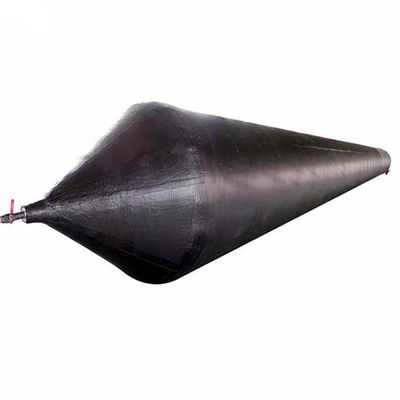
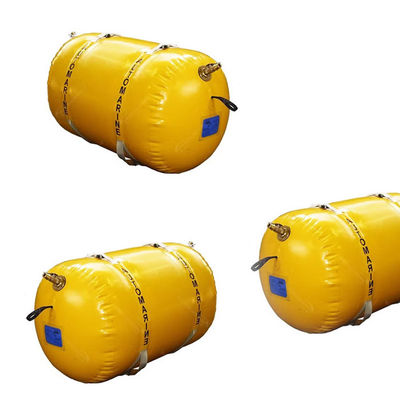
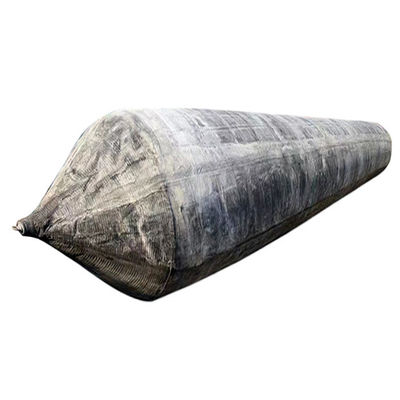
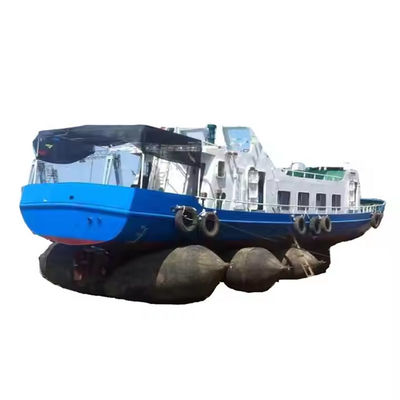
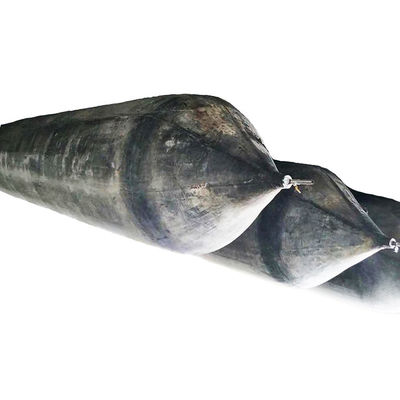
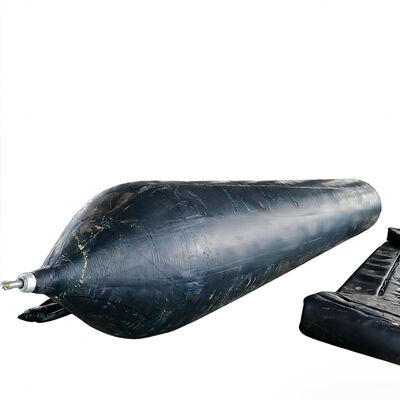
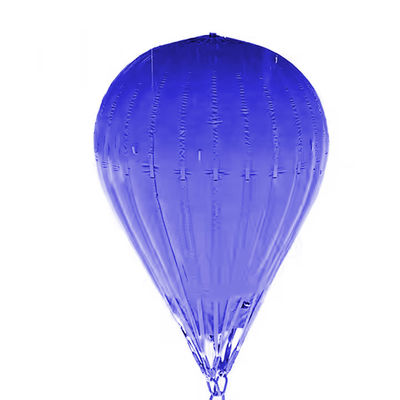
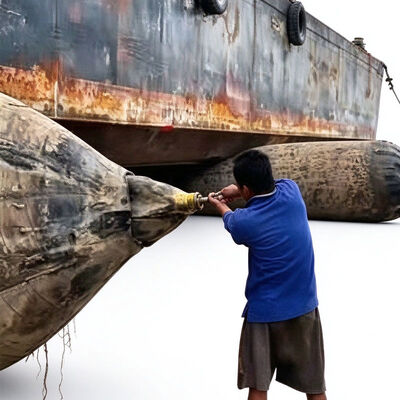
The Ship Launching Balloon is an inflatable marine support product designed to facilitate the controlled launching of vessels from shipyards and coastal construction facilities. It is manufactured using high-strength synthetic tire-cord fabric combined with durable rubber compounds to provide flexibility, tensile reinforcement, and resistance to abrasion during operation. The reinforced structure is designed to withstand internal pressure and repeated loading when used within the manufacturer's specified operating limits.
The product is available in different diameters, effective lengths, and reinforcement configurations to accommodate varying vessel dimensions and launching requirements. Multiple balloons are positioned beneath designated hull support areas, allowing the vessel to move across a prepared surface toward the water. The required quantity, spacing, and operating pressure depend on vessel displacement, hull geometry, ground conditions, and verified load-performance data.
Compared with fixed launching systems, the Ship Launching Balloon offers flexible deployment and storage. It can be used for suitable fishing boats, steel barges, workboats, and other compatible marine structures. Proper engineering calculations, ground preparation, pressure monitoring, and operational supervision are essential to ensure safe and consistent performance.
A regional shipyard in East Africa was preparing to launch a steel fishing vessel with an approximate displacement of 350 tonnes. The facility operated with limited launching infrastructure, and the existing shoreline area required an economical solution that would not interfere with other construction activities.
The project team evaluated the vessel's hull dimensions, weight distribution, ground conditions, and launching path. The Ship Launching Balloon was selected for further engineering assessment because it could provide temporary rolling support without requiring a permanent rail installation. The balloon dimensions and quantity were determined according to the proposed load distribution and the manufacturer's technical specifications.
Before launching, the working surface was cleared of debris and checked for uneven areas. The balloons were positioned according to the approved arrangement and inflated gradually. Personnel inspected pressure readings and visible deformation before transferring the vessel's load onto the support system. During movement, the team monitored vessel alignment and maintained communication between the operators responsible for pressure control and launching supervision.
The arrangement provided a practical solution for the shipyard's infrastructure constraints. After launching, the balloons were deflated, inspected, and prepared for storage. The project demonstrated the potential for reusable launching equipment to support future vessel construction, provided that each new application is assessed independently and all equipment remains within its approved operating limits.
| Product Name | Ship Launching Balloon |
|---|---|
| Material | 100% High Tensile Natural Rubber (NR) |
| Dimensions | Diameter 0.2m – 4.0m, Length 3.0m – 28.0m, or As Request |
| Working Pressure | 0.05 – 0.25 MPa |
| Technology | Overall Winding, High Pressure, Explosion-Proof |
| Metal Parts | Q355 / SS304 / SS316 |
| OEM | Supported |
| MOQ | 1 |
| Repair Tools | Electric Heating Plate, Repair Materials, Glue, Free of Charge |
| Standard | ISO 17357 |
| Certificate | ABS, BV, KR, LR, GL, NK, RINA, DNV, RMRS |
| Package | Pallets, Wooden Cases |
| Service Life | 20 Years |
| Warranty | 36 Months |
| Diameter | Working Pressure | Working Height | Bearing Capacity (KN/m) | Bearing Capacity (Ton/m) |
|---|---|---|---|---|
| D=1.0m | 0.14 MPa | 0.6m | 87.96 | 8.98 |
| D=1.0m | 0.14 MPa | 0.5m | 109.96 | 11.22 |
| D=1.0m | 0.14 MPa | 0.4m | 131.95 | 13.46 |
| D=1.2m | 0.12 MPa | 0.7m | 94.25 | 9.62 |
| D=1.2m | 0.12 MPa | 0.6m | 113.10 | 11.54 |
| D=1.2m | 0.12 MPa | 0.5m | 131.95 | 13.46 |
| D=1.2m | 0.12 MPa | 0.4m | 150.80 | 15.39 |
| D=1.5m | 0.10 MPa | 0.9m | 94.25 | 9.62 |
| D=1.5m | 0.10 MPa | 0.8m | 109.96 | 11.22 |
| D=1.5m | 0.10 MPa | 0.7m | 125.66 | 12.82 |
| D=1.5m | 0.10 MPa | 0.6m | 141.37 | 14.43 |
| D=1.5m | 0.10 MPa | 0.5m | 157.08 | 16.03 |
| D=1.8m | 0.09 MPa | 1.1m | 98.96 | 10.10 |
| D=1.8m | 0.09 MPa | 1.0m | 113.10 | 11.54 |
| D=1.8m | 0.09 MPa | 0.9m | 127.33 | 12.98 |
| D=1.8m | 0.09 MPa | 0.8m | 141.37 | 14.43 |
| D=1.8m | 0.09 MPa | 0.7m | 155.51 | 15.87 |
| D=1.8m | 0.09 MPa | 0.6m | 169.65 | 17.31 |
| D=2.0m | 0.08 MPa | 1.2m | 100.53 | 10.26 |
| D=2.0m | 0.08 MPa | 1.1m | 113.10 | 11.54 |
| D=2.0m | 0.08 MPa | 1.0m | 125.66 | 12.82 |
| D=2.0m | 0.08 MPa | 0.9m | 138.23 | 14.11 |
| D=2.0m | 0.08 MPa | 0.8m | 150.80 | 15.39 |
| D=2.0m | 0.08 MPa | 0.7m | 163.36 | 16.67 |
| D=2.0m | 0.08 MPa | 0.6m | 175.93 | 17.95 |
Other sizes can be provided according to client requirements.
The Ship Launching Balloon uses reinforced rubber construction to withstand the stresses associated with vessel support and rolling movement. Synthetic tire-cord fabric provides tensile strength, while the rubber layers protect the reinforcement against abrasion and environmental exposure. Consistent bonding between the materials is essential to maintaining structural integrity under pressure. Product quality should be verified through appropriate dimensional inspections, material controls, and specified performance tests.
Different vessel types require different support configurations. Balloon diameter influences support height and rolling characteristics, while effective length affects the contact area beneath the hull. Selection must consider displacement, hull shape, structural support locations, and launching conditions. Customized dimensions may be available depending on manufacturing capability, but the final configuration must be verified against engineering calculations and rated performance data.
Correct inflation is essential for maintaining the intended load-bearing behavior. The balloon must operate within its specified pressure range, using suitable gauges and compatible inflation equipment. Operators should check pressure and visible deformation before and during launching. Abnormal bulging, unexpected pressure loss, or uneven movement requires immediate investigation. Operating pressure must never exceed the manufacturer's specified limit.
After a launching operation, the balloon can be deflated, inspected, and stored for potential reuse. Its service life depends on operating conditions, handling, storage, and maintenance. Inspection should identify cuts, abrasion, cracks, exposed reinforcement, and damage to inflation connections. Proper cleaning, storage, and maintenance records help shipyards manage equipment condition and determine whether each unit remains suitable for future projects.
Suitable for launching compatible steel or aluminum fishing vessels from prepared shipyard surfaces. Balloon placement and capacity must be determined according to vessel weight, hull support areas, and ground conditions.
Provides a flexible launching option for facilities without permanent slipways. The equipment can be deployed when required and stored after use, subject to inspection and suitability for subsequent projects.
Can support the movement or launching of certain marine structures where inflatable rolling support is technically appropriate. Structural strength, ground stability, load distribution, and movement control must be verified before use.
Hongruntong Marine has more than 30 years of manufacturing experience. This background supports product development, manufacturing coordination, and technical communication for marine applications. For the Ship Launching Balloon, material consistency, reinforcement construction, and bonding quality are important considerations. Customers should review the specifications and performance documentation relevant to their selected product.
Shipyards have different requirements according to vessel size, launching methods, and site conditions. Hongruntong Marine can discuss dimensions, reinforcement configurations, and connection requirements based on project information. Vessel drawings, displacement, and launching conditions help establish the required specifications. Final product selection must be supported by engineering calculations and verified load-performance data.
Quality control is important for reinforced inflatable products exposed to repeated loading. Relevant checks may include dimensional accuracy, rubber surface condition, reinforcement placement, bonding quality, and end-component integrity. Customers can request applicable inspection records and test documentation. Any project-specific testing or third-party certification should be confirmed before production.
Hongruntong Marine can provide product specifications and discuss operating, inspection, handling, and storage requirements for the selected model. Customers should confirm the applicable working pressure, rated capacity, warranty conditions, and delivery documentation before ordering. Clear maintenance procedures and equipment records help support consistent operation and effective lifecycle management.
Provide vessel displacement, dimensions, hull drawings, launching conditions, and ground information. These details help determine the appropriate configuration.
Dimensions and certain construction details may be customized according to manufacturing capability and engineering requirements.
Inspect it after use, clean it appropriately, and store it away from sharp objects, excessive heat, and incompatible chemicals.
No. Suitability depends on vessel structure, load distribution, ground conditions, and the verified capacity of the proposed arrangement.
Request product specifications, operating instructions, applicable test reports, and any contractually required inspection or certification documents before ordering.