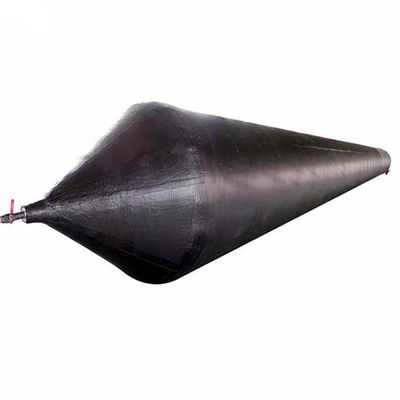
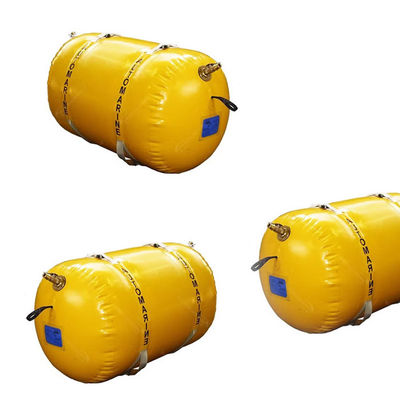
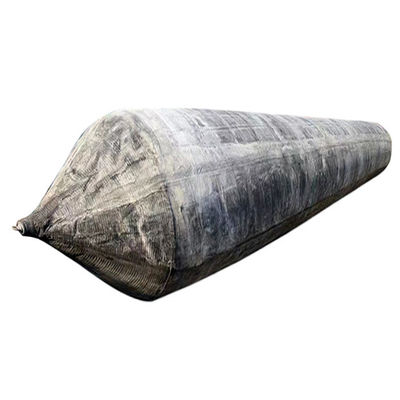
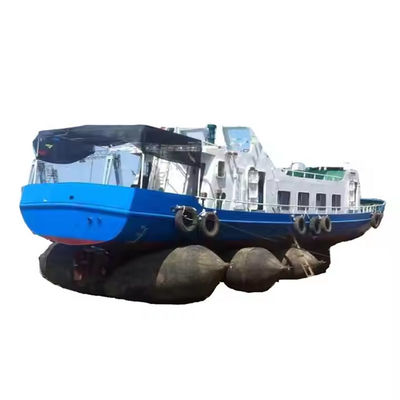
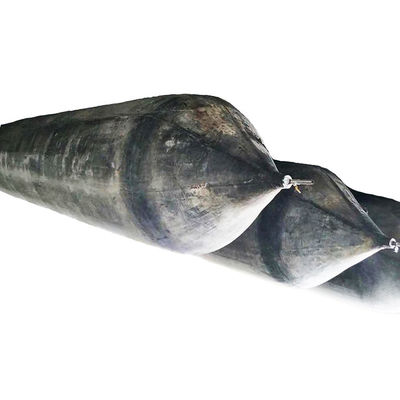
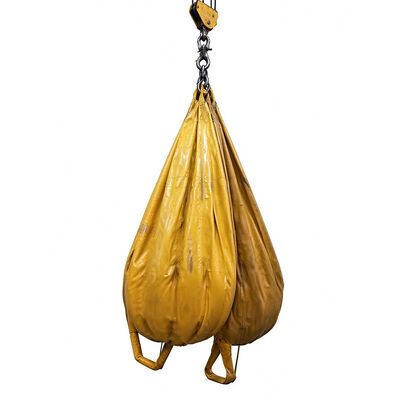
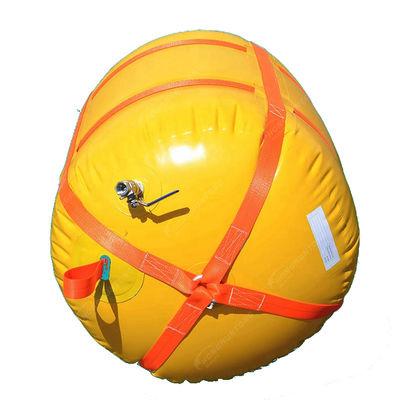
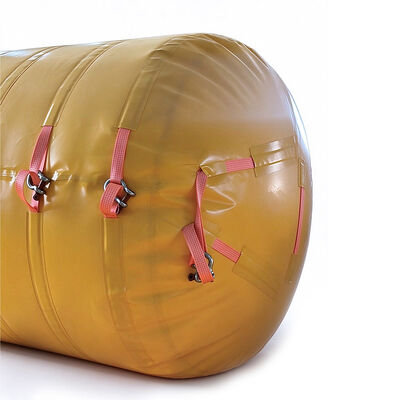
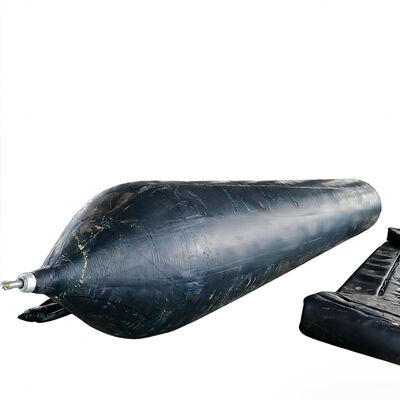
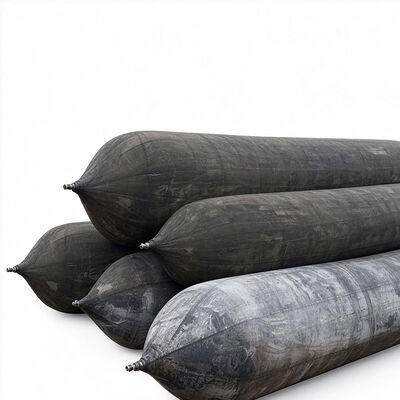
Ship Launching Airbags are flexible pneumatic lifting and supporting devices designed for ship launching, landing, relocation, and other marine engineering operations. They provide an alternative to conventional fixed launching systems by using compressed air to support and move vessels across prepared launching surfaces. Their flexible structure allows shipyards to conduct launching operations with relatively simple ground preparation and adaptable equipment arrangements.
Manufactured from high-strength synthetic tire cord fabric reinforced with specially formulated rubber compounds, Ship Launching Airbags feature a multilayer construction designed to withstand substantial compression, repeated rolling, and demanding marine working conditions. The reinforced body combines tensile strength, flexibility, and resistance to abrasion, helping maintain structural stability under changing load conditions.
Available in different diameters, effective lengths, working pressures, and load capacities, the airbags can be configured according to vessel dimensions, displacement, hull geometry, and launching conditions. Both standard and customized specifications are available to accommodate different shipyard requirements.
During operation, multiple airbags are positioned beneath the vessel according to an engineered layout. Controlled inflation distributes the vessel's weight across the supporting units, allowing the hull to move gradually along the launching route. Compared with permanent launching infrastructure, this system offers greater flexibility in equipment deployment, storage, and reuse.
Ship Launching Airbags are widely used for cargo vessels, fishing boats, workboats, barges, and various steel or aluminum vessels. Their flexible support structure, adjustable pressure, and reusable design provide shipyards with a practical solution for improving launching efficiency while controlling infrastructure investment.
A coastal shipyard undertaking the construction of a 3,500-ton cargo vessel required a launching solution that could accommodate the vessel's displacement without installing a permanent slipway. The existing launching area had a limited working width, and the shipyard needed equipment that could be arranged according to the vessel's keel structure and local ground conditions.
After reviewing the hull dimensions, estimated launching weight, ground bearing capacity, and available operating space, an airbag launching arrangement was developed. Multiple reinforced Ship Launching Airbags were positioned beneath the hull at calculated intervals. Their working pressure and supporting positions were determined according to the engineering requirements of the project.
Before launching, the airbags underwent visual inspection, inflation checks, and pressure verification. The launching surface was prepared to remove sharp objects and uneven obstructions. During the operation, the vessel's movement was controlled through coordinated winching and continuous monitoring of the supporting airbags.
The vessel was successfully transferred from the construction area into the launching channel. The flexible support arrangement helped distribute the load and reduced dependence on permanent launching equipment. The shipyard also retained the airbags for subsequent vessel projects, improving equipment utilization and reducing repeated infrastructure costs.
The project demonstrated the importance of correct load calculation, suitable airbag configuration, and controlled operating procedures. The shipyard considered the reusable system practical for future vessel construction and launching operations.
| Item | Description |
|---|---|
| Place of Origin | China |
| Brand Name | Hongruntong Marine |
| Product Name | Ship Launching Airbags |
| Material | Top-Notch Natural Rubber |
| Diameter | 0.5m–3.0m, or As Request |
| Length | 1.0m–28.0m, or As Request |
| Working Pressure | 0.05–0.25 MPa |
| Technics | High Pressure, Overall Winding, Explosion-Proof |
| Use | Ship launching and docking |
| Thickness | 5–15 ply |
| Standard | Conducted by ISO14409 and GB/T1590-2006 system |
| Accessories | Q355/SS304/SS316, Pressure Gauge, Tee, Plug, Switch, Inflation Tube |
| Packaging | Inner-Plastic Bag; Outer-Standard Wooden Pallets |
| Keywords | Marine Rubber Airbags for Ship Launching |
| Certificates | ABS, BV, KR, LR, GL, NK, RINA, DNV, RMRS |
| MOQ | 1 |
| OEM | Welcome |
| Diameter | Working Pressure | Working Height | Bearing Capacity (KN/m) | Bearing Capacity (Ton/m) |
|---|---|---|---|---|
| D = 1.0m | 0.14 MPa | 0.6m | 87.96 | 8.98 |
| 0.5m | 109.96 | 11.22 | ||
| 0.4m | 131.95 | 13.46 | ||
| D = 1.2m | 0.12 MPa | 0.7m | 94.25 | 9.62 |
| 0.6m | 113.10 | 11.54 | ||
| 0.5m | 131.95 | 13.46 | ||
| 0.4m | 150.80 | 15.39 | ||
| D = 1.5m | 0.10 MPa | 0.9m | 94.25 | 9.62 |
| 0.8m | 109.96 | 11.22 | ||
| 0.7m | 125.66 | 12.82 | ||
| 0.6m | 141.37 | 14.43 | ||
| 0.5m | 157.08 | 16.03 | ||
| D = 1.8m | 0.09 MPa | 1.1m | 98.96 | 10.10 |
| 1.0m | 113.10 | 11.54 | ||
| 0.9m | 127.33 | 12.98 | ||
| 0.8m | 141.37 | 14.43 | ||
| 0.7m | 155.51 | 15.87 | ||
| 0.6m | 169.65 | 17.31 | ||
| D = 2.0m | 0.08 MPa | 1.2m | 100.53 | 10.26 |
| 1.1m | 113.10 | 11.54 | ||
| 1.0m | 125.66 | 12.82 | ||
| 0.9m | 138.23 | 14.11 | ||
| 0.8m | 150.80 | 15.39 | ||
| 0.7m | 163.36 | 16.67 | ||
| 0.6m | 175.93 | 17.95 |
Other sizes can be produced according to client's requirements.
Ship Launching Airbags are manufactured using high-strength synthetic tire cord fabric combined with wear-resistant rubber layers. The reinforcement structure is designed to withstand substantial tensile forces generated during inflation and loading. Multiple fabric layers provide structural strength, while the outer rubber covering protects the reinforcement against abrasion, moisture, and contact damage.
The manufacturing process focuses on the bonding quality between rubber and reinforcement fabric. Consistent adhesion is essential because the airbag must maintain its structural integrity while experiencing compression, deformation, and rolling movement. The reinforced construction also helps reduce the risk of localized damage during normal operating conditions.
The airbag system supports vessel weight through a combination of internal air pressure, effective contact area, and load distribution. Its capacity is influenced by diameter, effective length, operating pressure, vessel geometry, and ground conditions.
Different specifications can be selected to suit small fishing boats, commercial vessels, barges, and larger shipbuilding projects. Proper spacing between airbags helps distribute the vessel's weight and maintain stable support during movement. Engineering calculations should be completed before operation to determine the required quantity, pressure, and arrangement.
Unlike rigid launching structures, pneumatic airbags can deform under load and adapt to moderate variations in the supporting surface. This flexibility allows shipyards to use prepared launching areas without constructing extensive permanent infrastructure.
The cylindrical configuration supports rolling movement as the vessel advances. Properly prepared ground, controlled traction, and suitable launching equipment remain essential to prevent uneven movement. The system is particularly useful where shipyards require adaptable launching arrangements for different vessel dimensions.
Ship Launching Airbags are designed for repeated use when operated within their specified working limits and maintained correctly. After launching, the airbags can be deflated, cleaned, inspected, and stored for future projects.
Their reusable characteristics help reduce recurring equipment expenditure and minimize the need for permanent launching facilities. Regular inspection of the rubber surface, reinforcement condition, valves, and connections supports reliable service throughout the equipment's operating life.
Shipyards use Ship Launching Airbags to launch cargo vessels, coastal transport ships, and other commercial vessels. Their flexible arrangement supports different hull configurations and helps reduce dependence on fixed launching infrastructure.
Fishing boat manufacturers can use pneumatic airbags for launching and relocating vessels from construction workshops to nearby waterways. Different airbag sizes can be selected according to hull dimensions and vessel weight.
Ship Launching Airbags are suitable for moving barges, dredging workboats, and marine service vessels across prepared working surfaces. Their reusable construction makes them practical for shipyards handling multiple vessel projects.
Hongruntong Marine has more than 30 years of manufacturing experience in marine rubber products and related engineering equipment. This background provides an established understanding of rubber formulation, reinforcement materials, production processes, and marine operating requirements.
For Ship Launching Airbags, manufacturing consistency is particularly important because the products operate under substantial compression and tensile loading. Experience in rubber product manufacturing helps the company focus on material selection, reinforcement arrangement, bonding quality, and dimensional consistency.
Different shipyards have different launching requirements. Vessel displacement, hull width, keel configuration, launching slope, ground conditions, and operating methods all influence the required airbag specifications.
Hongruntong Marine can provide customized diameters, effective lengths, and construction configurations according to project requirements. Technical communication before production helps ensure that the selected products are suitable for the intended operating conditions rather than relying solely on standard dimensions.
The performance of an airbag depends heavily on its reinforcement fabric and rubber compound. Hongruntong Marine focuses on the selection of suitable materials and control of manufacturing procedures to support tensile strength, flexibility, abrasion resistance, and bonding reliability.
Production inspections can cover dimensions, appearance, valve installation, and pressure-related performance according to the agreed product specifications. These controls help reduce inconsistencies between supplied units and support more predictable equipment performance.
Selecting the correct airbag arrangement requires cooperation between the manufacturer, shipyard, and engineering personnel. Hongruntong Marine provides technical communication regarding product specifications, application conditions, storage, inspection, and maintenance.
The company can also assist customers with understanding the factors affecting airbag capacity and service life. Clear technical documentation and responsive after-sales communication help customers manage equipment throughout procurement, installation, operation, and subsequent reuse.
Common specifications include different diameters, effective lengths, working pressures, and reinforcement constructions. Customized dimensions can be manufactured according to vessel weight and launching conditions.
The quantity depends on vessel displacement, hull geometry, airbag dimensions, effective supporting area, and engineering safety requirements. A professional load calculation should be completed before selecting the arrangement.
Yes. They are designed for repeated use when properly operated, inspected, cleaned, and stored. Damaged airbags should be removed from service until professionally assessed.
The launching surface should be adequately prepared, sufficiently load-bearing, and free from sharp objects or serious obstructions. Ground conditions and launching gradients must be evaluated before operation.
Yes. Customized diameters, lengths, construction details, and other specifications can be discussed according to vessel dimensions, project requirements, and operating conditions.