logo

Heavy Duty Ship Launching Airbags with Good Air Tightness and Easy Rolling Movement for Marine Rubber Airbags

1
MOQ
US$37-US$258
Price
Heavy Duty Ship Launching Airbags with Good Air Tightness and Easy Rolling Movement for Marine Rubber Airbags
Features Gallery Product Description Request A Quote
Features
Specifications
Layers: 5-13Ply, Or As Request
Working Pressure: 0.05-0.25 MPA
Warranty: 3 Years
Diameter: 0.5M-3.0M, Or As Request
Application: Ship/Vessel/Boat Launching & Docking
Packaging: Pallets, Wooden Box
Length: 3M-28M, Or As Request
Material: Top-Notch Natural Rubber
Name: Ship Launching Airbags
Logo: Supported
Reinforcement: Tyre Cord Fabric Layer
Shape: Cylindrical
Certificate: ABS, BV, KR, LR, GL, NK, RINA, DNV, RMRS
Standard: ISO14409:2011
Metal Parts: Q355, SS304, SS316
Color: Black
Highlight:

Heavy Duty Ship Launching Airbags

,

Good Air Tightness Marine Rubber Airbags

,

Easy Rolling Movement Ship Launching Airbags

Basic Infomation
Place of Origin: China
Brand Name: Hongruntong Marine
Certification: ABS, BV, KR, LR, GL, NK, RINA, DNV, RMRS
Model Number: HM-SLA12
Payment & Shipping Terms
Packaging Details: Wooden Pallets, Wooden Box
Delivery Time: 5-7 Work Days
Payment Terms: L/C,T/T,D/A,D/P,Western Union,
Supply Ability: 1250 Pcs Per Month
Product Description
Product Overview

Roller Airbags — Easy Rolling Movement, Good Air Tightness, Heavy Duty

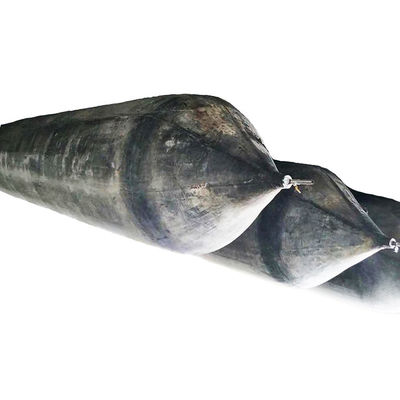
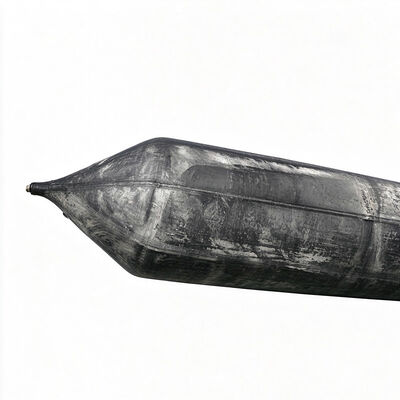
Ship Launching Airbags are specialized pneumatic equipment developed to support the movement and launching of vessels in shipyards, coastal facilities, and marine construction sites. By utilizing compressed air and reinforced flexible rubber structures, these airbags provide temporary load-bearing support beneath a vessel, allowing it to move from a construction platform toward the water.

The system offers considerable flexibility compared with conventional launching methods that depend on fixed rails, concrete slipways, or permanent mechanical installations. Airbags can be positioned according to the hull structure and launching requirements, making them suitable for shipyards that handle vessels of different sizes and configurations.

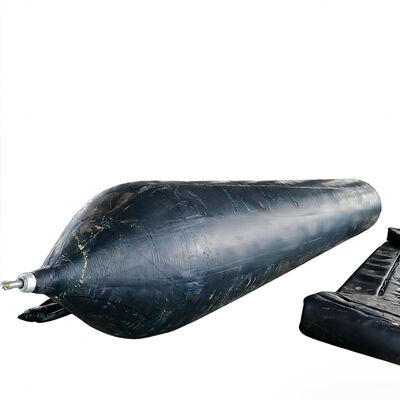
The product generally consists of multiple layers of high-strength synthetic tire cord fabric and specially formulated natural or synthetic rubber compounds. The reinforcement fabric provides tensile strength, while the rubber layers offer elasticity, abrasion resistance, and protection against external environmental conditions. The ends are equipped with appropriately designed sealing structures and inflation connections.

Ship Launching Airbags are available in various diameters and effective lengths. Working pressure, load capacity, and product dimensions can be customized according to vessel displacement, launching distance, ground conditions, and operational requirements.

During launching, the airbags are arranged beneath the hull to create a controlled rolling support system. Their inflation pressure and positioning are coordinated with the movement of the vessel. With appropriate engineering calculations and operating procedures, this method can reduce installation time, improve equipment flexibility, and support efficient vessel transfer.

Case Study: Launching a 1,800-Ton Cargo Ship

A shipbuilding company specializing in coastal transport vessels was preparing to launch a 1,800-ton steel cargo ship. Its existing launching facility was designed for smaller vessels, and modifying the permanent infrastructure would have required additional construction work and a longer project schedule.

The shipyard evaluated pneumatic launching as an alternative. The engineering team reviewed the vessel's length, width, hull profile, displacement, launching direction, and ground conditions. Based on these parameters, a suitable arrangement of Ship Launching Airbags was selected.

The airbags were positioned at calculated supporting points beneath the hull. Before the operation, the launching area was inspected and prepared, and the inflation equipment, pressure gauges, winching system, and safety arrangements were checked.

During launching, the vessel was moved gradually while the supporting airbags were monitored. Personnel maintained communication between the winching team and the operators responsible for monitoring the airbag system. The controlled arrangement helped maintain support beneath the hull as the vessel progressed toward the water.

The operation was completed without requiring a major reconstruction of the existing launching facility. Following the project, the shipyard deflated and inspected the airbags and retained them for subsequent launching work.

The customer recognized the flexibility of the system, particularly its suitability for shipyards that need to accommodate changing vessel dimensions without investing in permanent launching equipment for every project.

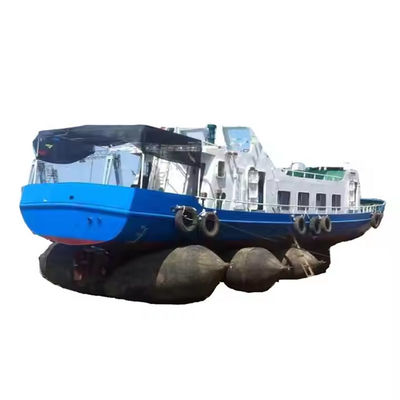
Ship launching airbags arranged beneath a steel cargo vessel hull during preparation Reinforced rubber ship launching airbags positioned at calculated support points under the hull
Specifications
Item Description
Place of Origin China
Brand Name Hongruntong Marine
Product Name Ship Launching Airbags
Material Top-Notch Natural Rubber
Diameter 0.5m–3.0m, or As Request
Length 1.0m–28.0m, or As Request
Working Pressure 0.05–0.25 MPa
Technics High Pressure, Overall Winding, Explosion-Proof
Use Ship launching and docking
Thickness 5–15 ply
Standard Conducted by ISO14409 and GB/T1590-2006 system
Accessories Q355/SS304/SS316, Pressure Gauge, Tee, Plug, Switch, Inflation Tube
Packaging Inner-Plastic Bag; Outer-Standard Wooden Pallets
Keywords Marine Rubber Airbags for Ship Launching
Certificates ABS, BV, KR, LR, GL, NK, RINA, DNV, RMRS
MOQ 1
OEM Welcome
Load Bearing Capacity
Diameter Working Pressure Working Height Bearing Capacity (KN/m) Bearing Capacity (Ton/m)
D=1.0m 0.14 MPa 0.6m 87.96 8.98
D=1.0m 0.14 MPa 0.5m 109.96 11.22
D=1.0m 0.14 MPa 0.4m 131.95 13.46
D=1.2m 0.12 MPa 0.7m 94.25 9.62
D=1.2m 0.12 MPa 0.6m 113.10 11.54
D=1.2m 0.12 MPa 0.5m 131.95 13.46
D=1.2m 0.12 MPa 0.4m 150.80 15.39
D=1.5m 0.10 MPa 0.9m 94.25 9.62
D=1.5m 0.10 MPa 0.8m 109.96 11.22
D=1.5m 0.10 MPa 0.7m 125.66 12.82
D=1.5m 0.10 MPa 0.6m 141.37 14.43
D=1.5m 0.10 MPa 0.5m 157.08 16.03
D=1.8m 0.09 MPa 1.1m 98.96 10.10
D=1.8m 0.09 MPa 1.0m 113.10 11.54
D=1.8m 0.09 MPa 0.9m 127.33 12.98
D=1.8m 0.09 MPa 0.8m 141.37 14.43
D=1.8m 0.09 MPa 0.7m 155.51 15.87
D=1.8m 0.09 MPa 0.6m 169.65 17.31
D=2.0m 0.08 MPa 1.2m 100.53 10.26
D=2.0m 0.08 MPa 1.1m 113.10 11.54
D=2.0m 0.08 MPa 1.0m 125.66 12.82
D=2.0m 0.08 MPa 0.9m 138.23 14.11
D=2.0m 0.08 MPa 0.8m 150.80 15.39
D=2.0m 0.08 MPa 0.7m 163.36 16.67
D=2.0m 0.08 MPa 0.6m 175.93 17.95

Other sizes can be produced according to client requirements.

Key Features
Flexible Equipment Arrangement for Different Hull Configurations

Ship Launching Airbags can be arranged according to the vessel's hull geometry, keel position, and supporting requirements. This flexibility is particularly useful for shipyards producing different vessel types, where fixed launching structures may not provide sufficient adaptability.

Airbag dimensions, spacing, and quantities can be selected according to engineering calculations. Their arrangement should consider the distribution of vessel weight, hull contact conditions, ground support, and movement requirements. Proper configuration helps maintain balanced support and reduce the possibility of excessive localized loading.

The flexible installation method also allows shipyards to adjust equipment positioning between projects. This reduces the need for permanently fixed support systems and provides greater freedom when planning vessel construction and launching activities.

Controlled Inflation and Pressure Adjustment

The internal pressure of Ship Launching Airbags is an important factor affecting their supporting performance. Different vessel weights and operating conditions require appropriate pressure settings within the manufacturer's specified limits.

The pneumatic structure allows operators to inflate the airbags before loading and monitor pressure during preparation and launching. Proper pressure management helps maintain the intended load-bearing condition and reduces the risk of abnormal deformation.

Pressure adjustment must be based on engineering instructions rather than arbitrary inflation. Suitable pressure gauges, inflation connections, and inspection procedures help operators maintain consistent operating conditions throughout the project.

Reduced Dependence on Permanent Launching Infrastructure

Traditional launching systems may require substantial investment in fixed foundations, rails, mechanical equipment, and maintenance facilities. Pneumatic airbags provide a more adaptable alternative for shipyards where permanent infrastructure is difficult or uneconomical to install.

After use, the airbags can be deflated and removed from the launching area. They can then be stored and transported for subsequent operations. This arrangement is especially beneficial for temporary shipbuilding facilities, small and medium-sized shipyards, and projects involving multiple launching locations.

Durable Construction for Repeated Marine Operations

The reinforced rubber structure is designed to withstand repeated compression, rolling movement, and exposure to typical marine working environments. The outer rubber layer helps protect the internal reinforcement fabric against abrasion, moisture, and mechanical contact.

The overall service life depends on material quality, operating pressure, ground preparation, loading conditions, and maintenance practices. Routine inspection and proper storage help maintain product condition and reduce premature deterioration.

Applications
  • Shipyards with multiple vessel sizes: Shipyards producing cargo vessels, fishing boats, service vessels, and coastal transport ships can use airbags to accommodate different launching requirements. Adjustable equipment arrangements allow launching plans to be adapted to individual hull configurations.
  • Temporary and small-scale shipbuilding facilities: Shipbuilding locations without permanent launching infrastructure can use pneumatic airbags as part of an engineered launching system. Their transportable and reusable characteristics help reduce the need for extensive fixed installations.
  • Marine equipment relocation projects: The airbags can also support the movement of selected marine structures, workboats, and barges across prepared surfaces. Appropriate load calculations and ground preparation are required before these applications.
Why Choose Hongruntong Marine
Manufacturing Experience in Marine Rubber Products

Hongruntong Marine has more than 30 years of experience in manufacturing marine rubber products. This experience supports the company's understanding of reinforcement materials, rubber processing, product construction, and the performance requirements of marine engineering applications.

Ship Launching Airbags require more than basic rubber fabrication. Their construction must balance tensile strength, flexibility, bonding quality, and dimensional consistency. These characteristics influence how the product responds to inflation, compression, and repeated movement.

With established manufacturing experience, Hongruntong Marine focuses on these critical production factors to provide products suitable for demanding shipyard operations.

Solutions Adapted to Individual Shipyard Requirements

A launching system must be designed around the vessel and working environment. A standard airbag may not be appropriate for every project because vessel dimensions, displacement, hull structure, launching slope, and ground conditions vary considerably.

Hongruntong Marine can discuss customized specifications according to customer drawings and technical requirements. Product diameter, effective length, construction, and other parameters can be evaluated before production.

This approach helps customers select equipment based on actual operating requirements and reduces the risk of choosing products solely by appearance or nominal dimensions.

Consistent Production and Product Inspection

Manufacturing consistency is essential when several airbags are used together beneath a vessel. Differences in dimensions, reinforcement construction, or sealing quality may affect the overall arrangement.

Hongruntong Marine emphasizes material inspection, production process control, dimensional verification, and appropriate finished-product checks. Inspection requirements can be discussed according to the agreed technical specification and applicable project standards.

The objective is to provide products with consistent construction and dependable quality for coordinated launching operations.

Practical Technical Support Throughout Procurement

Customers often require assistance with specifications, product selection, packing, transportation, and operating considerations. Hongruntong Marine provides technical communication to help customers understand these requirements before placing an order.

The company can discuss product drawings, dimensional arrangements, pressure requirements, and maintenance considerations. This support helps customers coordinate procurement with their engineering and operational teams.

Frequently Asked Questions
1. Are Ship Launching Airbags suitable for different vessel types?

Yes. They can be configured for cargo vessels, fishing boats, barges, workboats, and other suitable vessels. The arrangement must be engineered according to vessel weight and hull geometry.

2. Can airbag launching reduce shipyard construction costs?

It can reduce the need for extensive permanent launching infrastructure. Actual cost savings depend on project frequency, vessel size, site preparation, equipment requirements, and operating conditions.

3. How long does it take to prepare the airbags?

Preparation time depends on the number of airbags, their dimensions, inflation equipment, and site conditions. Inspection and pressure verification should always be completed before loading.

4. What accessories are required?

Typical equipment includes inflation hoses, pressure gauges, air supply equipment, suitable valves, and launching control equipment. The exact configuration depends on the project design.

5. Can the airbags be transported between shipyards?

Yes. After deflation and proper packing, they can be transported and stored for future projects. They should be protected against sharp objects, excessive heat, and damaging chemicals.

Product Gallery
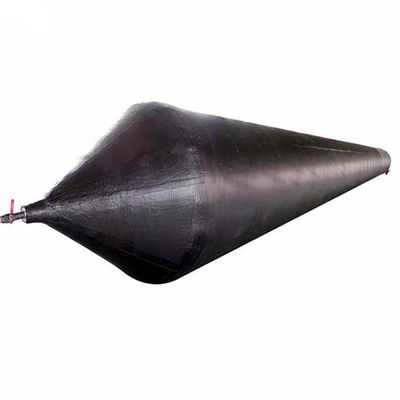
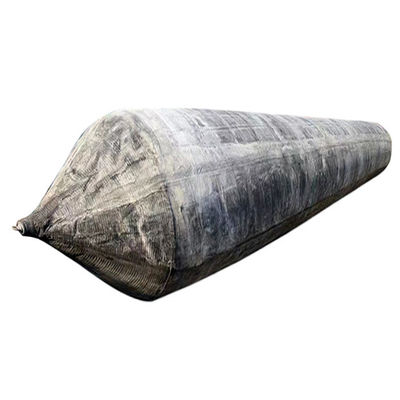
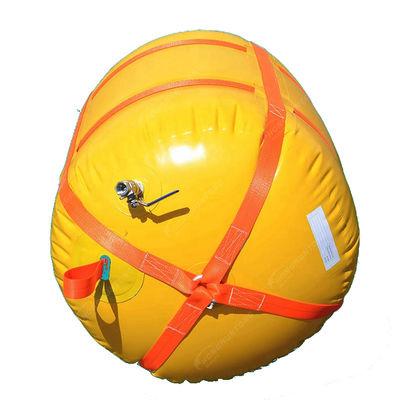
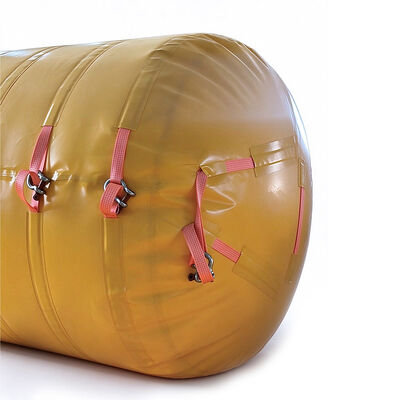
Heavy-duty ship launching airbags with reinforced rubber layers and inflation connections Ship launching airbags prepared for vessel transfer at a coastal shipyard Marine rubber airbags arranged beneath a vessel hull for controlled rolling movement
Recommended Products
Get in touch with us
Contact Person : Mr. William Lau
Tel : +8618910539783
Fax : 86-10-89461910
Characters Remaining(20/3000)