logo

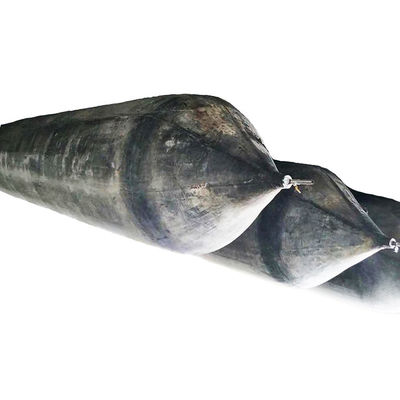
Reliable Buoyancy Shock Resistant Reusable Ship Launching Airbags Marine Rubber Airbags

1
MOQ
US$67-US$257
Price
Reliable Buoyancy Shock Resistant Reusable Ship Launching Airbags Marine Rubber Airbags
Features Gallery Product Description Request A Quote
Features
Specifications
Working Pressure: 0.05-0.25 MPA
Application: Ship/Vessel/Boat Launching & Docking
Name: Ship Launching Airbags
Color: Black
Packaging: Pallets, Wooden Box
Certificate: ABS, BV, KR, LR, GL, NK, RINA, DNV, RMRS
Standard: ISO14409:2011
Layers: 5-13Ply, Or As Request
Length: 3M-28M, Or As Request
Shape: Cylindrical
Metal Parts: Q355, SS304, SS316
Material: Top-Notch Natural Rubber
Reinforcement: Tyre Cord Fabric Layer
Warranty: 3 Years
Diameter: 0.5M-3.0M, Or As Request
Logo: Supported
Highlight:

Reliable Buoyancy Ship Launching Airbags

,

Shock Resistant Marine Rubber Airbags

,

Reusable Ship Launching Airbags

Basic Infomation
Place of Origin: China
Brand Name: Hongruntong Marine
Certification: ABS, BV, KR, LR, GL, NK, RINA, DNV, RMRS
Model Number: HM-SLA16
Payment & Shipping Terms
Packaging Details: Wooden Pallets, Wooden Box
Delivery Time: 5-7 Work Days
Payment Terms: L/C,T/T,D/A,D/P,Western Union,
Supply Ability: 2250 Pcs Per Month
Product Description

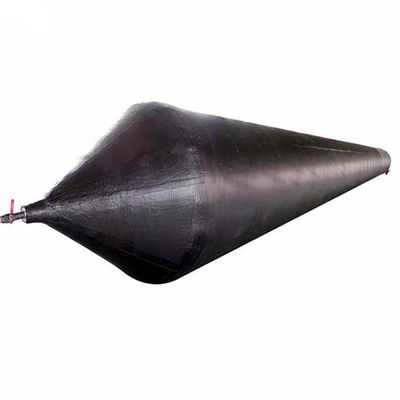
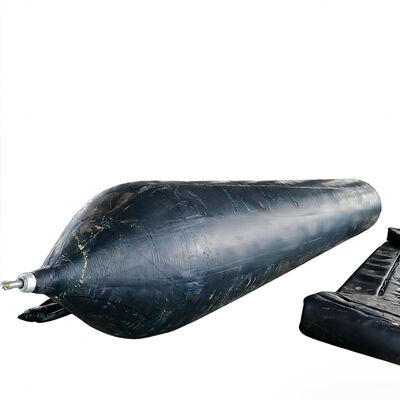
Ship Launching Airbags are reinforced pneumatic rubber products engineered for vessel launching, ship relocation, and marine construction operations. Their primary function is to provide temporary load-bearing support beneath a vessel while allowing controlled movement across a prepared launching surface.

The performance of these products depends heavily on rubber formulation, reinforcement fabric quality, bonding strength, and manufacturing precision. Hongruntong Marine Ship Launching Airbags use high-strength synthetic tire cord fabric combined with specially formulated rubber compounds to create a flexible yet durable multilayer structure.

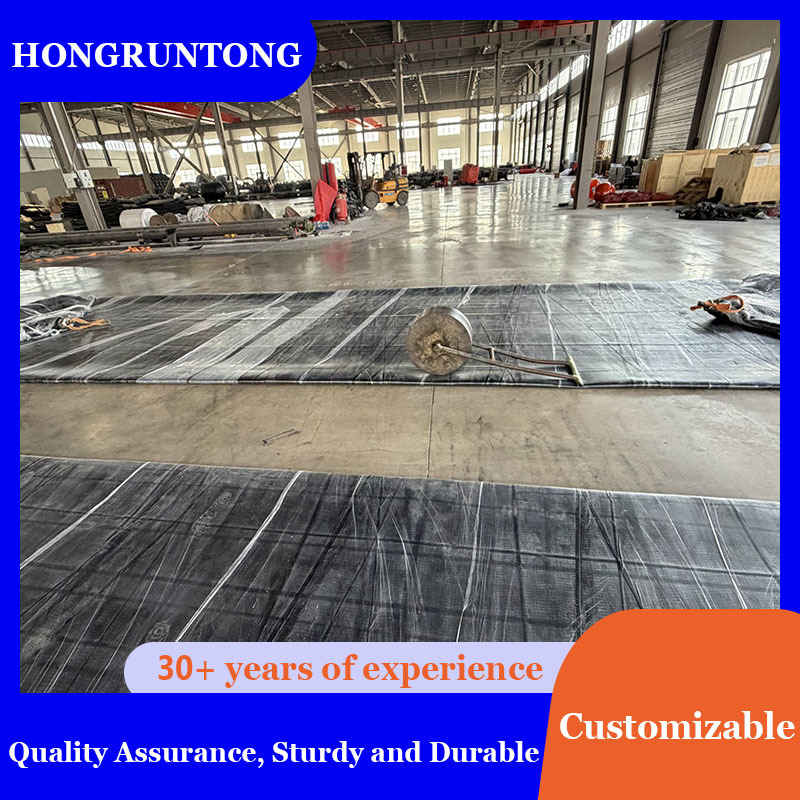
The outer rubber covering provides protection against abrasion, moisture, and environmental exposure, while the internal reinforcement fabric carries tensile loads generated during inflation and operation. This combination helps the airbags maintain their structural integrity under repeated deformation and compression.

Different diameters, effective lengths, reinforcement configurations, and working pressure specifications are available to accommodate different shipbuilding projects. Product selection should consider vessel displacement, contact area, hull configuration, launching slope, and ground bearing capacity.

During operation, multiple airbags work together to support the vessel and facilitate rolling movement. With proper installation, pressure control, and engineering supervision, the system provides an adaptable solution for shipyards seeking to improve equipment utilization and reduce dependence on permanent launching facilities.

Case Study

A shipyard located in a humid coastal region was preparing to launch a 2,600-ton steel service vessel. Previous launching operations had exposed its equipment to frequent moisture, surface abrasion, and demanding working conditions. The shipyard therefore required a reinforced airbag solution with suitable structural durability and repeat-use characteristics.

The engineering department evaluated the vessel's dimensions, displacement, keel configuration, and launching route. The selected airbags featured a multilayer reinforcement structure and rubber covering designed for marine operating conditions.

Before the project, the shipyard inspected the launching surface and removed sharp debris. The airbags were distributed beneath the hull according to the approved arrangement. Each unit was checked for external damage, valve condition, and inflation performance before the vessel was transferred onto the supporting system.

During the operation, the airbags experienced compression and rolling contact as the vessel moved along the prepared route. The operating team monitored their position and condition, while the movement of the vessel was controlled through the designated launching equipment.

Following successful launching, the airbags were cleaned and inspected. The shipyard found the reusable construction suitable for its continuing vessel production program and incorporated regular inspection into its equipment management procedure.

The project highlighted the importance of reinforcement quality, surface protection, and maintenance in extending the useful service life of pneumatic launching equipment.

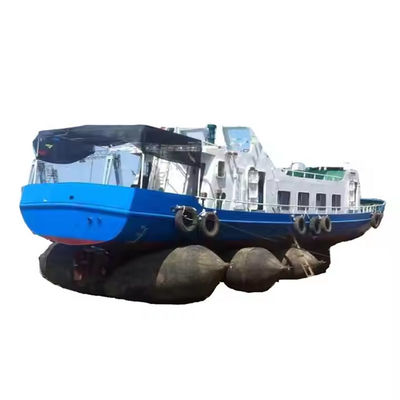
Ship launching airbags arranged beneath a steel vessel hull at a coastal shipyard
Reinforced pneumatic ship launching airbags supporting a vessel during launch operation
Specifications
Item Description
Place of Origin China
Brand Name Hongruntong Marine
Product Name Ship Launching Airbags
Material Top-Notch Natural Rubber
Diameter 0.5m–3.0m, or As Request
Length 1.0m–28.0m, or As Request
Working Pressure 0.05–0.25 MPa
Technics High Pressure, Overall Winding, Explosion-Proof
Use Ship launching and docking
Thickness 5–15 ply
Standard Conducted by ISO14409 and GB/T1590-2006 system
Accessories Q355/SS304/SS316, Pressure Gauge, Tee, Plug, Switch, Inflation Tube
Packaging Inner-Plastic Bag; Outer-Standard Wooden Pallets
Keywords Marine Rubber Airbags for Ship Launching
Certificates ABS, BV, KR, LR, GL, NK, RINA, DNV, RMRS
MOQ 1
OEM Welcome
Bearing Capacity by Diameter and Working Pressure
Diameter Working Pressure Working Height Bearing Capacity (KN/m) Bearing Capacity (Ton/m)
D=1.0m 0.14 MPa 0.6m 87.96 8.98
D=1.0m 0.14 MPa 0.5m 109.96 11.22
D=1.0m 0.14 MPa 0.4m 131.95 13.46
D=1.2m 0.12 MPa 0.7m 94.25 9.62
D=1.2m 0.12 MPa 0.6m 113.10 11.54
D=1.2m 0.12 MPa 0.5m 131.95 13.46
D=1.2m 0.12 MPa 0.4m 150.80 15.39
D=1.5m 0.10 MPa 0.9m 94.25 9.62
D=1.5m 0.10 MPa 0.8m 109.96 11.22
D=1.5m 0.10 MPa 0.7m 125.66 12.82
D=1.5m 0.10 MPa 0.6m 141.37 14.43
D=1.5m 0.10 MPa 0.5m 157.08 16.03
D=1.8m 0.09 MPa 1.1m 98.96 10.10
D=1.8m 0.09 MPa 1.0m 113.10 11.54
D=1.8m 0.09 MPa 0.9m 127.33 12.98
D=1.8m 0.09 MPa 0.8m 141.37 14.43
D=1.8m 0.09 MPa 0.7m 155.51 15.87
D=1.8m 0.09 MPa 0.6m 169.65 17.31
D=2.0m 0.08 MPa 1.2m 100.53 10.26
D=2.0m 0.08 MPa 1.1m 113.10 11.54
D=2.0m 0.08 MPa 1.0m 125.66 12.82
D=2.0m 0.08 MPa 0.9m 138.23 14.11
D=2.0m 0.08 MPa 0.8m 150.80 15.39
D=2.0m 0.08 MPa 0.7m 163.36 16.67
D=2.0m 0.08 MPa 0.6m 175.93 17.95

Other sizes can be produced according to client's requirements.

Features
Synthetic Tire Cord Fabric Reinforcement

The internal reinforcement structure is one of the most important elements determining airbag performance. High-strength synthetic tire cord fabric provides tensile resistance and helps the airbag maintain its designed shape under internal pressure and external loading.

The fabric arrangement is designed to distribute stress throughout the reinforced body rather than concentrating it in isolated areas. Proper fabric positioning and bonding are essential to maintain structural stability during repeated inflation and compression.

This construction is particularly important for ship launching because the airbags must support substantial loads while undergoing continuous deformation as the vessel moves. Material selection and manufacturing consistency therefore play a significant role in overall reliability.

Abrasion-Resistant Rubber Covering

The outer rubber layer protects the internal reinforcement fabric from direct contact with the launching surface. During operation, airbags may encounter friction, compression, moisture, and contact with different types of prepared ground.

A suitable rubber compound helps improve resistance to abrasion and environmental exposure while maintaining the flexibility required for rolling movement. Rubber formulation must balance hardness, elasticity, tensile properties, and resistance to aging.

The condition of the outer covering should be checked before and after every operation. Cuts, deep scratches, exposed fabric, or abnormal deformation require professional assessment before further use.

Reliable Layer Bonding and Sealing Structure

Multilayer airbag construction requires consistent bonding between the rubber and reinforcement fabric. Poor adhesion can affect the structural integrity of the product, particularly under repeated pressure changes and deformation.

The manufacturing process should control material preparation, layer assembly, bonding conditions, and curing procedures. End sealing and inflation connections must also be manufactured to suit the specified working conditions.

These details contribute to the overall performance of the airbag and help reduce the likelihood of premature damage caused by manufacturing defects.

Flexible Dimensions and Reinforcement Options

Different vessels require different support configurations. Ship Launching Airbags can be manufactured in various diameters and effective lengths, with reinforcement specifications selected according to the intended application.

Larger vessels may require different airbag arrangements from smaller boats because the supporting load, hull contact area, and ground conditions are not the same. Customization allows shipyards to select products that match their engineering plans.

Before production, customers should provide vessel information and relevant operating parameters to support appropriate product selection.

Applications
Coastal Shipyards and Marine Manufacturing

Ship Launching Airbags are used in coastal shipyards for launching steel cargo vessels, fishing boats, service vessels, and other marine structures. Their flexible construction makes them useful for facilities that need adaptable launching equipment.

Repeated Vessel Construction Programs

Shipyards with ongoing production schedules can use reusable airbags across multiple projects. Proper inspection, maintenance, and storage help maintain equipment condition between operations.

Marine Repair and Vessel Transfer

Selected vessels undergoing repair or relocation may use pneumatic airbags to support movement across prepared ground. The application requires evaluation of vessel structure, support points, ground conditions, and movement control.

Why Choose Hongruntong Marine
More Than Three Decades of Manufacturing Knowledge

With more than 30 years of manufacturing experience, Hongruntong Marine understands the importance of material consistency and structural design in marine rubber products.

The production of Ship Launching Airbags involves multiple technical stages, including rubber compounding, reinforcement fabric preparation, layer assembly, bonding, curing, and final inspection. Each stage can influence the mechanical properties and durability of the finished product.

The company's manufacturing experience supports attention to these processes and provides a foundation for developing products suited to different marine engineering requirements.

Attention to Rubber and Reinforcement Materials

Material selection directly affects the tensile strength, flexibility, abrasion resistance, and aging characteristics of Ship Launching Airbags. Reinforcement fabric must provide sufficient strength, while the rubber covering must protect the internal structure without compromising flexibility.

Hongruntong Marine considers the intended operating environment when discussing product specifications. Customers can communicate their requirements regarding vessel weight, launching frequency, site conditions, and expected equipment use.

This technical approach helps establish a more appropriate balance between product construction and actual operating demands.

Manufacturing Process and Quality Verification

Airbag quality is influenced by both material properties and manufacturing precision. Consistent layer assembly, effective bonding, accurate dimensions, and reliable sealing structures are important for products used in coordinated launching systems.

Hongruntong Marine can arrange product inspections according to agreed specifications, including dimensional checks, visual examination, valve inspection, and relevant pressure testing.

Documented inspection requirements help customers evaluate product conformity before shipment and support more effective equipment management after delivery.

Long-Term Product and Maintenance Support

The useful life of Ship Launching Airbags depends on operating pressure, loading conditions, ground preparation, handling, and storage. Technical guidance regarding these factors helps customers reduce unnecessary equipment damage.

Hongruntong Marine provides communication on inspection methods, cleaning, storage, and maintenance considerations. Customers can also discuss replacement requirements and customized specifications for future projects.

This support helps establish a consistent procurement and maintenance approach for shipyards operating pneumatic launching equipment over multiple years.

Frequently Asked Questions
1. What materials are used in Ship Launching Airbags?

They generally use high-strength synthetic tire cord fabric as reinforcement, combined with specially formulated rubber compounds for the inner and outer layers.

2. What makes multilayer construction important?

The reinforcement layers provide tensile strength and help distribute stress, while the rubber layers protect the fabric and maintain flexibility under compression.

3. Are the airbags resistant to seawater and moisture?

They are designed for marine working environments. However, regular cleaning, inspection, and appropriate storage are necessary to minimize long-term environmental deterioration.

4. How should damaged rubber surfaces be handled?

Airbags with deep cuts, exposed reinforcement fabric, abnormal deformation, or suspected structural damage should be removed from service and assessed by qualified personnel.

5. Does Hongruntong Marine offer different reinforcement specifications?

Yes. Reinforcement construction and product dimensions can be discussed according to vessel weight, project conditions, and the agreed technical requirements.

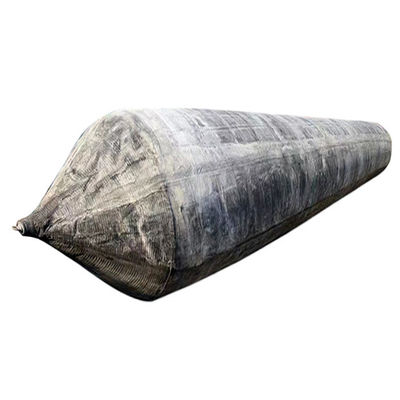
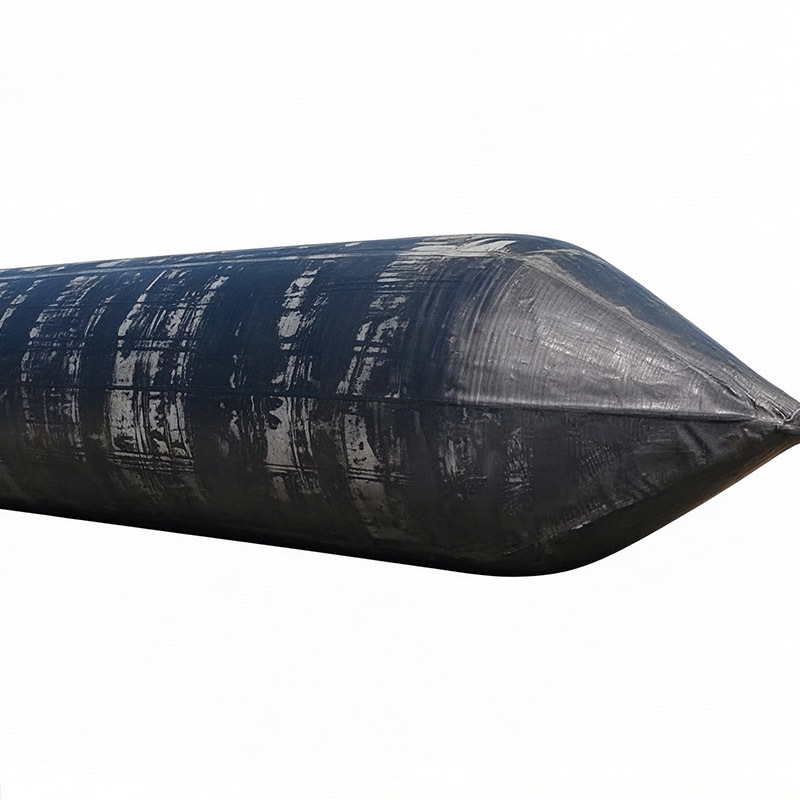
Close-up view of ship launching airbag rubber surface and reinforcement structure
Ship launching airbags positioned under vessel hull for marine launching operation
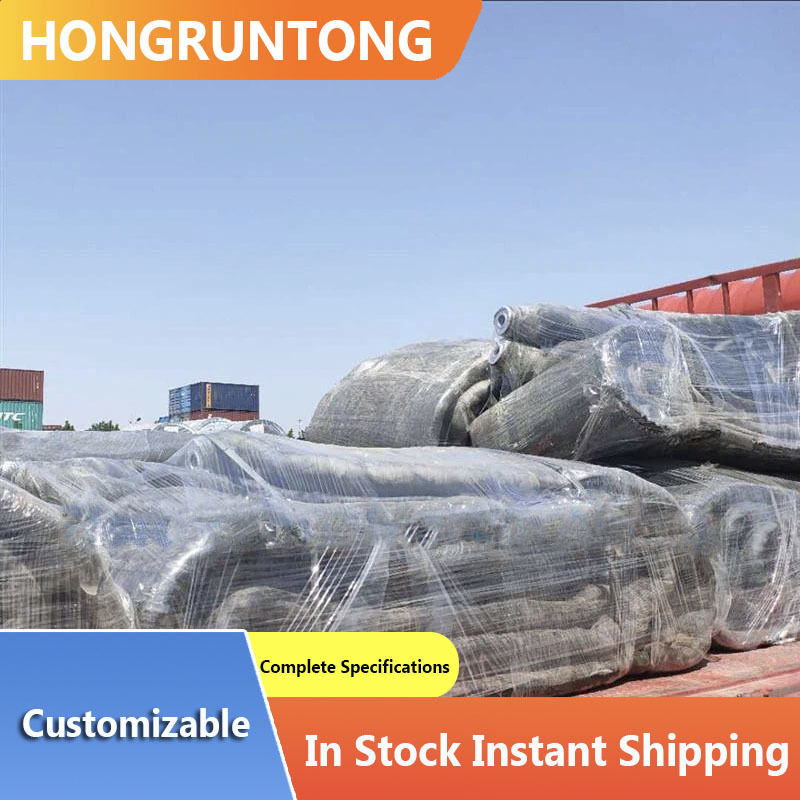
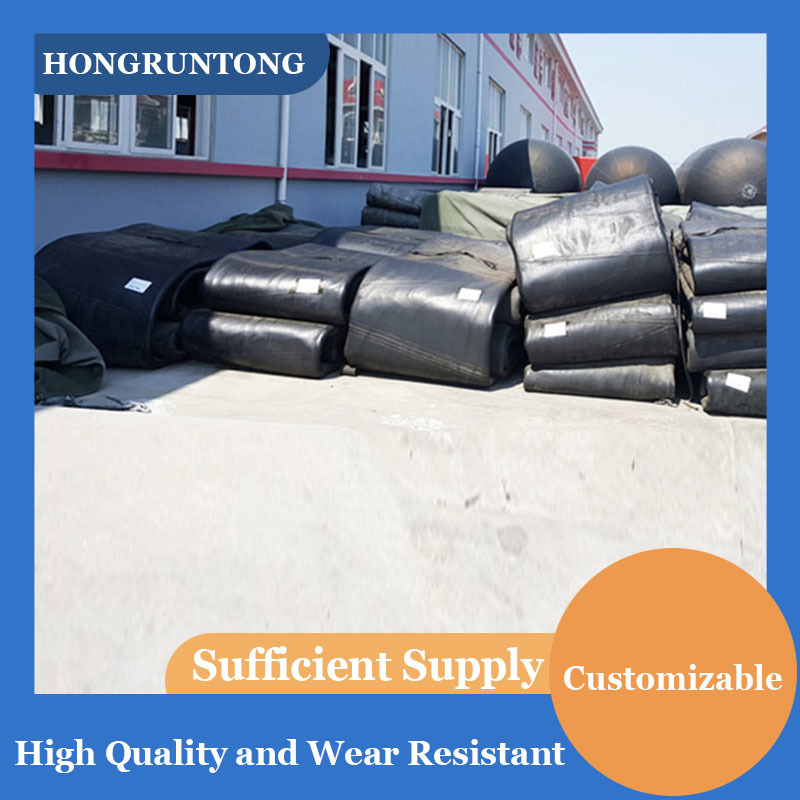
Hongruntong Marine ship launching airbags prepared for shipment with accessories
Recommended Products
Get in touch with us
Contact Person : Mr. William Lau
Tel : +8618910539783
Fax : 86-10-89461910
Characters Remaining(20/3000)