Product Overview
Marine Airbags — Wear Resistant, Flexible Inflation, Stable Bearing
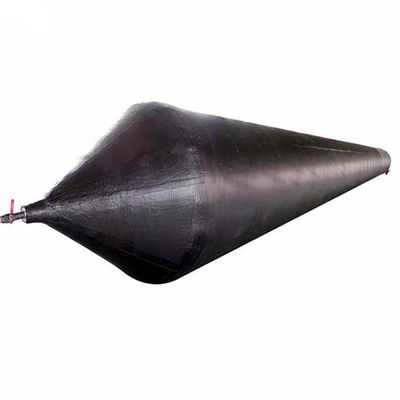
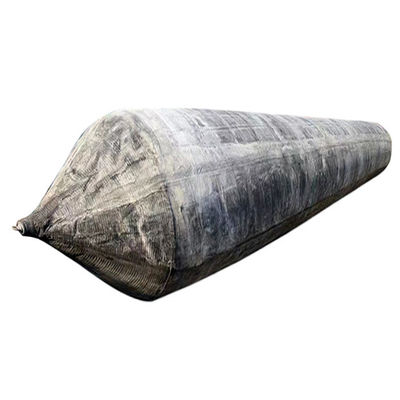
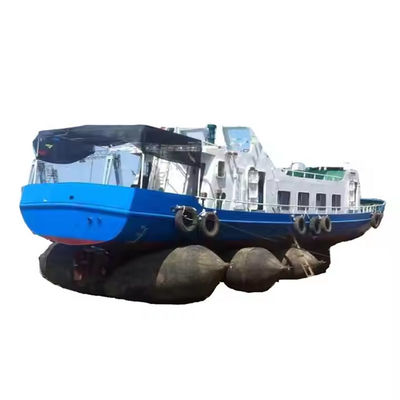
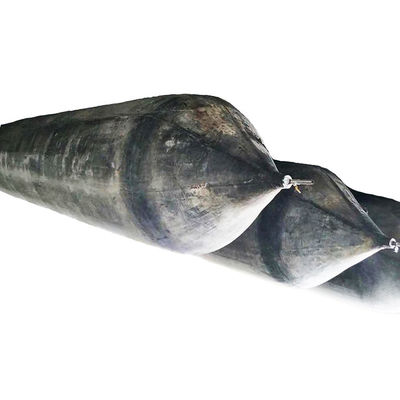
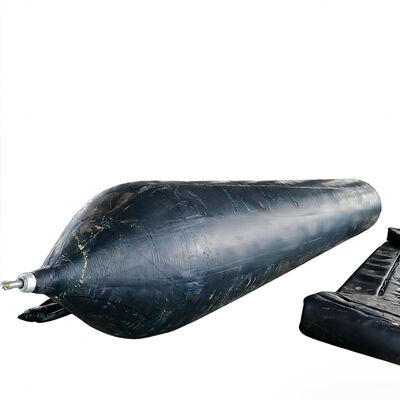
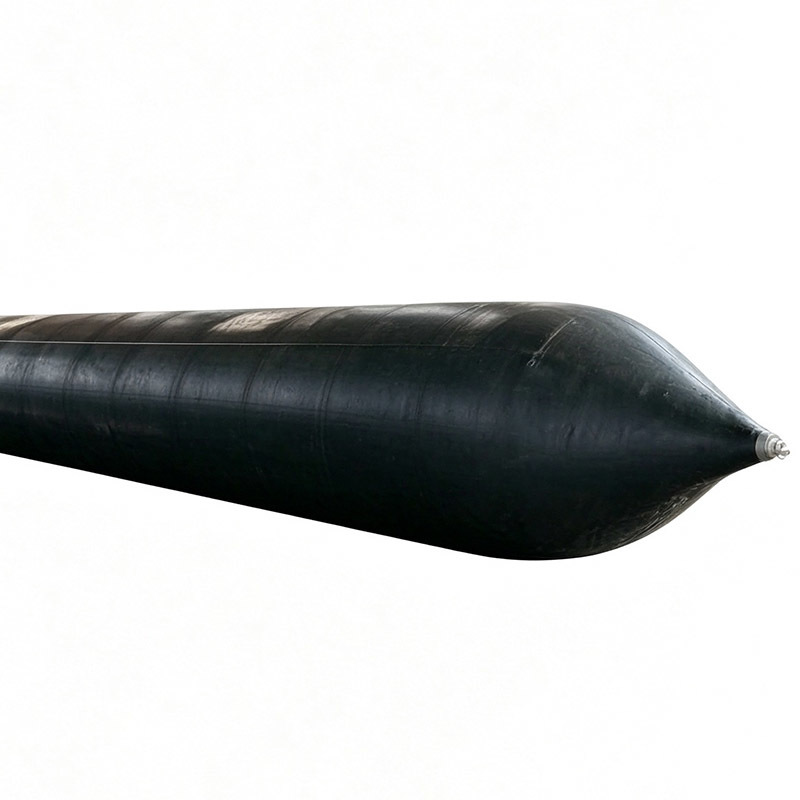
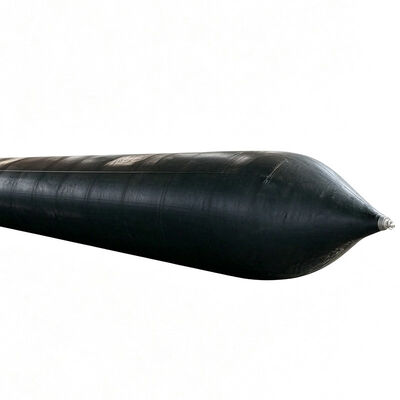
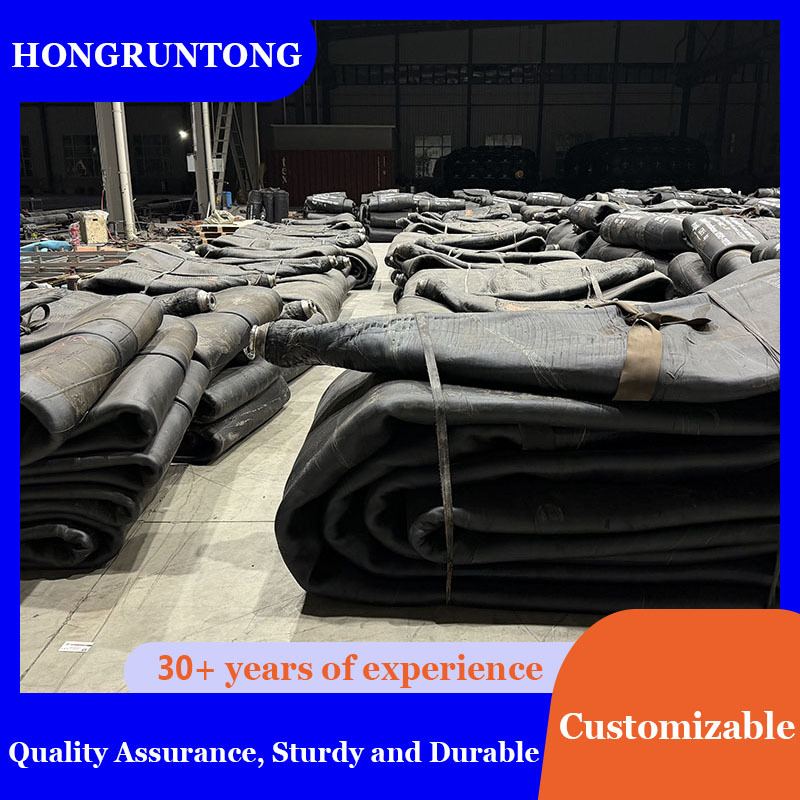
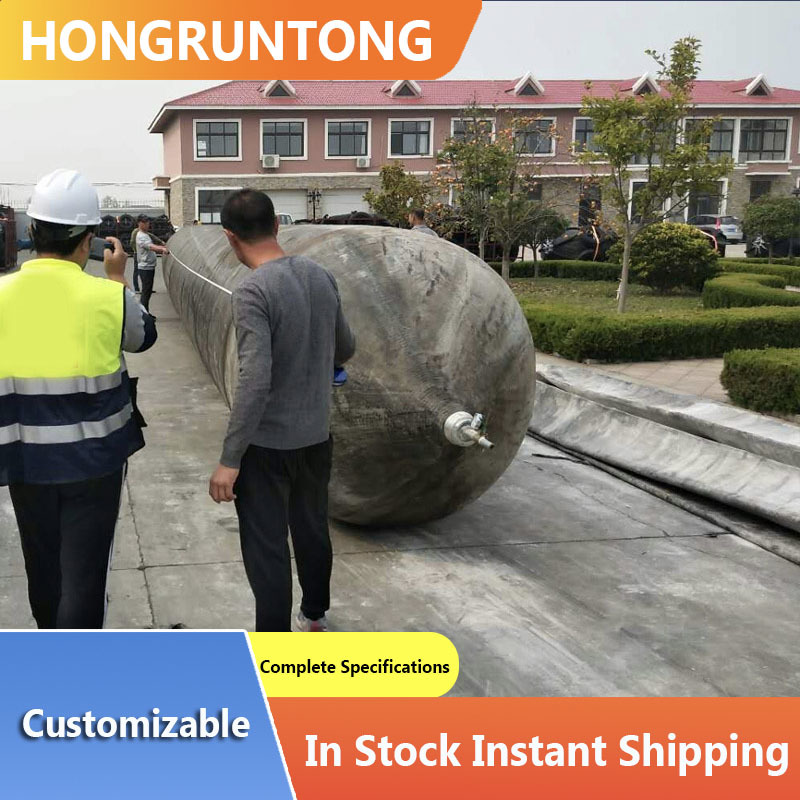
Ship Launching Airbags are heavy-duty pneumatic support systems designed for launching and relocating vessels under a wide range of shipyard and marine engineering conditions. They provide a flexible supporting surface beneath the hull, allowing vessels to move along a prepared launching route without relying entirely on conventional fixed slipways or permanent launching structures.
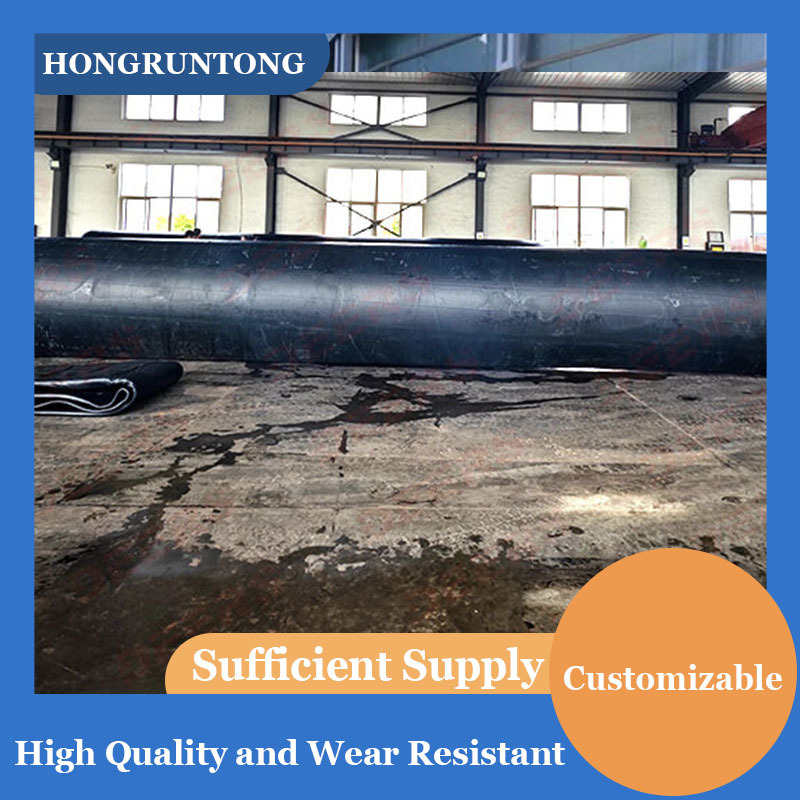
The airbags are manufactured using high-strength synthetic tire cord fabric and specially formulated rubber compounds. Their multilayer construction is engineered to withstand internal inflation pressure, external compression, and repeated rolling movement. The combination of reinforcement fabric and protective rubber layers delivers the strength and flexibility required for demanding shipyard operations.
Available in various diameters, effective lengths, and reinforcement configurations, Ship Launching Airbags can be selected according to vessel displacement, hull dimensions, launching distance, and ground conditions. Customized specifications can also be considered for large vessels and projects involving unusual hull configurations.
For larger vessels, the arrangement of airbags is particularly important. Their number, spacing, supporting positions, and operating pressure must be determined through engineering calculations. The launching surface must also provide sufficient bearing capacity and suitable traction conditions.
Ship Launching Airbags are widely applied in commercial shipyards, barge manufacturing facilities, coastal engineering projects, and marine equipment relocation. Their adaptability allows shipyards to organize launching operations according to available space and project requirements, while their reusable construction helps improve equipment utilization.
Case Study: Launching a 5,000-Ton Flat-Bottom Barge
A marine construction company was preparing to launch a 5,000-ton flat-bottom barge at a shipyard located near an industrial harbor. The vessel's considerable width and weight created challenges for the existing launching arrangement. The shipyard also had limited space for installing additional permanent mechanical infrastructure.
The engineering team evaluated the vessel's overall dimensions, structural supporting points, displacement, ground bearing capacity, and launching route. A customized pneumatic launching arrangement was developed using reinforced Ship Launching Airbags with suitable dimensions and load-bearing characteristics.
Because of the vessel's wide hull, the positioning plan required particular attention to balanced support. Airbag spacing and working pressure were determined according to the project calculations. The ground surface was inspected and prepared to provide a stable path for rolling movement.
Before launching, the team conducted a complete inspection of the airbags, inflation connections, and pressure monitoring equipment. The vessel was gradually transferred onto the airbag system and moved under controlled traction.
During the operation, personnel monitored the supporting arrangement and maintained communication between the winching team and the launching supervisors. The vessel was successfully moved toward the water without requiring major modifications to the shipyard's permanent facilities.
After completion, the airbags were deflated, cleaned, inspected, and stored for subsequent use. The customer considered the solution suitable for future barge and workboat projects, particularly where launching space and infrastructure investment were important considerations.
Specifications
| Item |
Description |
| Place of Origin |
China |
| Brand Name |
Hongruntong Marine |
| Product Name |
Ship Launching Airbags |
| Material |
Top-Notch Natural Rubber |
| Diameter |
0.5m–3.0m, or as requested |
| Length |
1.0m–28.0m, or as requested |
| Working Pressure |
0.05–0.25 MPa |
| Technics |
High Pressure, Overall Winding, Explosion-Proof |
| Use |
Ship launching and docking |
| Thickness |
5–15 ply |
| Standard |
Conducted by ISO14409 and GB/T1590-2006 system |
| Accessories |
Q355/SS304/SS316, Pressure Gauge, Tee, Plug, Switch, Inflation Tube |
| Packaging |
Inner plastic bag; outer standard wooden pallets |
| Keywords |
Marine Rubber Airbags for Ship Launching |
| Certificates |
ABS, BV, KR, LR, GL, NK, RINA, DNV, RMRS |
| MOQ |
1 |
| OEM |
Welcome |
Bearing Capacity Reference
| Diameter |
Working Pressure |
Working Height |
Bearing Capacity (KN/m) |
Bearing Capacity (Ton/m) |
| D=1.0m |
0.14 MPa |
0.6m |
87.96 |
8.98 |
| D=1.0m |
0.14 MPa |
0.5m |
109.96 |
11.22 |
| D=1.0m |
0.14 MPa |
0.4m |
131.95 |
13.46 |
| D=1.2m |
0.12 MPa |
0.7m |
94.25 |
9.62 |
| D=1.2m |
0.12 MPa |
0.6m |
113.10 |
11.54 |
| D=1.2m |
0.12 MPa |
0.5m |
131.95 |
13.46 |
| D=1.2m |
0.12 MPa |
0.4m |
150.80 |
15.39 |
| D=1.5m |
0.10 MPa |
0.9m |
94.25 |
9.62 |
| D=1.5m |
0.10 MPa |
0.8m |
109.96 |
11.22 |
| D=1.5m |
0.10 MPa |
0.7m |
125.66 |
12.82 |
| D=1.5m |
0.10 MPa |
0.6m |
141.37 |
14.43 |
| D=1.5m |
0.10 MPa |
0.5m |
157.08 |
16.03 |
| D=1.8m |
0.09 MPa |
1.1m |
98.96 |
10.10 |
| D=1.8m |
0.09 MPa |
1.0m |
113.10 |
11.54 |
| D=1.8m |
0.09 MPa |
0.9m |
127.33 |
12.98 |
| D=1.8m |
0.09 MPa |
0.8m |
141.37 |
14.43 |
| D=1.8m |
0.09 MPa |
0.7m |
155.51 |
15.87 |
| D=1.8m |
0.09 MPa |
0.6m |
169.65 |
17.31 |
| D=2.0m |
0.08 MPa |
1.2m |
100.53 |
10.26 |
| D=2.0m |
0.08 MPa |
1.1m |
113.10 |
11.54 |
| D=2.0m |
0.08 MPa |
1.0m |
125.66 |
12.82 |
| D=2.0m |
0.08 MPa |
0.9m |
138.23 |
14.11 |
| D=2.0m |
0.08 MPa |
0.8m |
150.80 |
15.39 |
| D=2.0m |
0.08 MPa |
0.7m |
163.36 |
16.67 |
| D=2.0m |
0.08 MPa |
0.6m |
175.93 |
17.95 |
Other sizes can be produced according to client requirements.
Key Features
High Load Capacity for Heavy Marine Structures
Ship Launching Airbags are designed to provide pneumatic support for vessels with different displacement requirements. Their load-bearing performance depends on internal pressure, effective contact area, reinforcement strength, and the distribution of the vessel's weight.
For heavy vessels such as barges and commercial ships, selecting suitable airbag dimensions and quantities is essential. The supporting arrangement must account for the vessel's center of gravity, hull geometry, structural strength, and expected load distribution.
The reinforced construction provides tensile resistance under internal pressure, while the rubber exterior accommodates the deformation associated with loading and rolling. Engineering calculations should determine the working conditions and allowable loading limits before the system is put into operation.
Adaptability to Wide and Flat Hull Structures
Flat-bottom barges, dredging vessels, and certain workboats often have different supporting characteristics from conventional cargo ships. Their hull width and weight distribution may require a more carefully arranged pneumatic support system.
Ship Launching Airbags can be positioned at calculated intervals to distribute the load across suitable hull contact areas. Their flexible cylindrical structure supports rolling movement and allows the launching arrangement to be adapted to the vessel's dimensions.
Correct spacing is important to avoid excessive local loading and uneven support. The design should also consider hull strength and the possibility of changes in loading distribution during movement.
Structural Flexibility Under Compression
During launching, airbags experience continuous changes in shape as the vessel advances. Their multilayer construction is intended to accommodate normal elastic deformation while maintaining the required structural strength.
High-strength reinforcement fabric supports the internal pressure, while the rubber covering provides flexibility and surface protection. Proper bonding between layers is important to prevent separation under repeated compression.
The airbag arrangement must operate within the specified working limits. Excessive pressure, improper positioning, or unsuitable ground conditions can create additional stress and reduce service life.
Adaptation to Different Launching Environments
Shipyards may operate on concrete platforms, prepared soil surfaces, or other engineered launching areas. Ship Launching Airbags offer flexibility in equipment arrangement, but the ground must still be evaluated for bearing capacity, stability, and surface condition.
The system can be configured according to the available launching route and vessel dimensions. This adaptability is particularly valuable for shipyards that handle different vessel types or conduct projects at temporary construction sites.
Applications
- Large barge and flat-bottom vessel launching — Suitable for launching barges, dredging vessels, and selected flat-bottom marine structures. Flexible positioning allows the supporting arrangement to be designed around wide hull dimensions and distributed loading requirements.
- Commercial vessel construction — Cargo ships, coastal transport vessels, and marine service vessels can use pneumatic airbags as part of an engineered launching system. Product dimensions and quantity are selected according to vessel weight and launching conditions.
- Offshore and coastal construction support — Marine contractors can use suitable pneumatic airbags for moving selected floating structures and marine equipment across prepared working surfaces. Project-specific engineering assessment is required to establish safe supporting and movement conditions.
Why Choose Hongruntong Marine
Extensive Manufacturing Experience in Marine Engineering Products
Hongruntong Marine has more than 30 years of manufacturing experience. Its background in marine rubber products provides an understanding of the material and structural requirements associated with shipyard equipment.
For large-vessel launching applications, product consistency is particularly important. Airbags must be manufactured with suitable reinforcement strength, rubber thickness, dimensional accuracy, and bonding quality. Differences between individual units may influence the overall supporting arrangement.
Hongruntong Marine focuses on these manufacturing considerations to provide products suitable for coordinated marine engineering applications.
Customized Solutions for Large and Special Vessels
Large barges, dredging vessels, and commercial ships often require more detailed equipment planning than small boats. Their dimensions, displacement, center of gravity, hull configuration, and launching route all influence product selection.
Hongruntong Marine can evaluate customer requirements and discuss customized airbag dimensions and construction specifications. Customers can provide technical drawings, vessel information, and operating conditions to support product selection.
This process helps establish a suitable specification before production and allows the customer to coordinate equipment procurement with the launching plan.
Production Quality and Structural Reliability
The performance of a Ship Launching Airbag is determined by its complete construction rather than a single material characteristic. Reinforcement fabric, rubber compounds, bonding, end sealing, and valve installation all contribute to the finished product's structural integrity.
Hongruntong Marine emphasizes manufacturing process control and appropriate product inspections. Depending on the agreed requirements, inspection may include dimensions, appearance, valve condition, and pressure-related testing.
These procedures help customers verify that supplied products meet the agreed specifications and are suitable for their intended applications.
Responsive Technical Communication and Project Coordination
Large launching projects involve cooperation between shipyards, engineering contractors, procurement teams, and equipment suppliers. Clear communication is important when confirming product dimensions, quantities, technical documents, delivery schedules, and operating requirements.
Hongruntong Marine provides technical communication during the quotation and procurement process. Customers can discuss their project conditions and obtain assistance with product specification confirmation.
The company also provides after-sales communication regarding inspection, maintenance, and storage. This helps customers manage equipment beyond the initial purchase and prepare for future launching projects.
Frequently Asked Questions
1. Can Ship Launching Airbags be used for 5,000-ton vessels?
They may be suitable for projects involving vessels of this scale, subject to detailed engineering calculations. The required quantity, dimensions, working pressure, hull support arrangement, and ground conditions must be evaluated.
2. Are larger airbags always better for heavy vessels?
Not necessarily. Diameter and length must be selected according to effective supporting area, vessel geometry, pressure limits, and launching conditions. A complete engineering assessment is required.
3. Can the airbags operate on uneven ground?
The system can accommodate moderate variations in prepared surfaces, but serious unevenness, sharp objects, soft ground, or insufficient bearing capacity can create safety risks. Ground preparation is essential.
4. How is stability maintained during launching?
Stability depends on correct airbag positioning, load distribution, controlled traction, ground conditions, and continuous monitoring. The launching operation should follow an approved engineering procedure.
5. Can special dimensions be manufactured for large barges?
Yes. Hongruntong Marine can discuss customized diameter, effective length, reinforcement construction, and other specifications according to the vessel and project requirements.


 Your message must be between 20-3,000 characters!