Product Overview
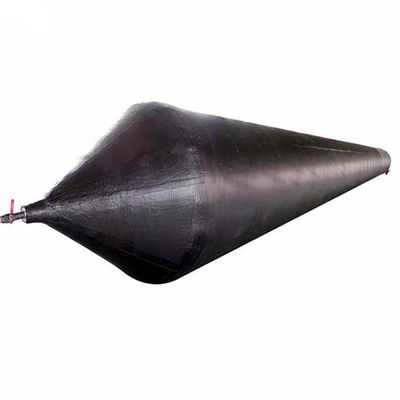
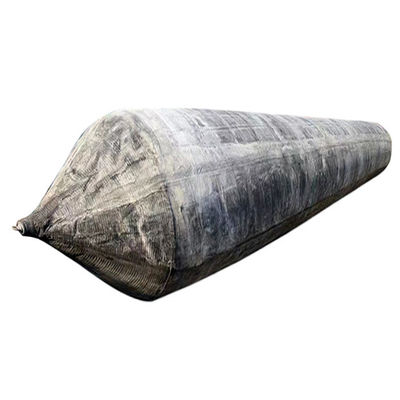
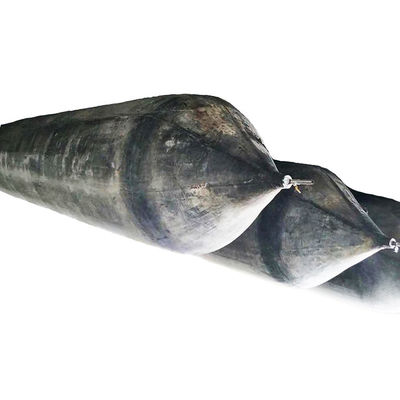
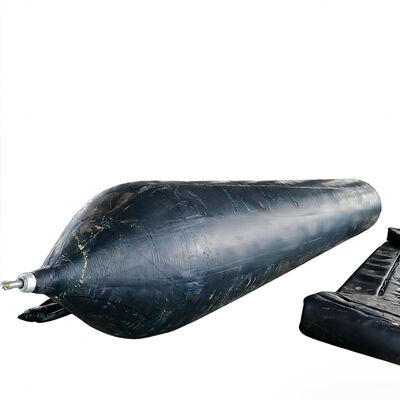
Ship Launching Airbags are engineered pneumatic rubber products designed to support efficient vessel launching, movement, and transfer in shipbuilding and marine construction environments. Their flexible load-bearing structure provides an adaptable solution for shipyards seeking to simplify launching arrangements and improve the utilization of marine handling equipment.
The product uses a multilayer reinforced construction consisting of high-strength synthetic tire cord fabric and specially formulated rubber compounds. The reinforcement fabric provides the tensile strength required to withstand internal air pressure, while the rubber layers protect the internal structure against abrasion, moisture, and mechanical contact.
Ship Launching Airbags are manufactured in different diameters, effective lengths, and construction specifications. Product selection can be customized according to vessel displacement, hull dimensions, operating pressure, launching distance, and site conditions. Suitable configurations can be developed for fishing boats, cargo vessels, barges, dredging vessels, and other marine structures.
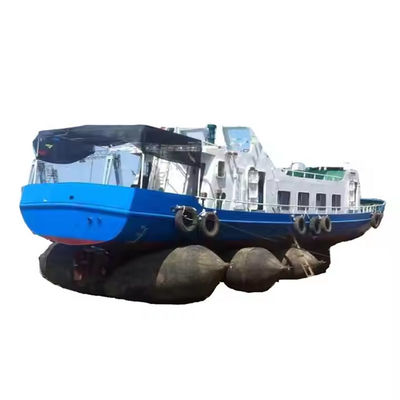
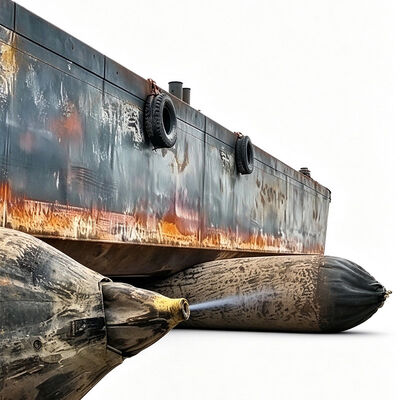
A complete airbag launching system normally includes multiple airbags, inflation equipment, pressure monitoring devices, traction equipment, and supporting operational procedures. The airbags are positioned beneath the vessel according to an engineered layout and inflated to the specified operating conditions.
Compared with permanent launching installations, pneumatic airbags offer advantages in transportation, storage, equipment reuse, and adaptability. Their application can help shipyards reduce infrastructure dependence and organize vessel launching according to individual project requirements.
Case Study: Launching a 1,200-Ton Fishing Support Vessel
A medium-sized shipyard was planning to launch a 1,200-ton fishing support vessel. The facility handled several types of vessels annually, but its existing launching equipment was not sufficiently flexible for different hull configurations. The management team wanted a reusable solution that could support future projects without requiring a separate permanent installation for each vessel type.
After reviewing the vessel dimensions, estimated displacement, hull structure, and available launching area, the shipyard selected a customized Ship Launching Airbag arrangement.
The project team confirmed the required diameters, effective lengths, and reinforcement specifications. Particular attention was given to compatibility between the airbags and the vessel's supporting points. The launching surface was prepared, and the required inflation and traction equipment was arranged before the operation.
The airbags were inspected individually before installation. Their external rubber surfaces, inflation valves, and overall dimensions were checked. The units were then positioned according to the launching plan and inflated under controlled conditions.
During launching, the vessel moved gradually along the prepared route. The operating team monitored airbag positions, pressure conditions, and vessel movement throughout the process. Communication between the launching supervisor and equipment operators helped maintain coordinated control.
After the vessel entered the water, the airbags were deflated, cleaned, and inspected. The shipyard organized the equipment for storage and future deployment.
The customer valued the ability to reuse the same equipment across different shipbuilding projects. The project also demonstrated how proper product selection, maintenance planning, and standardized operating procedures can improve long-term equipment utilization.
Specifications
| Item |
Description |
| Place of Origin |
China |
| Brand Name |
Hongruntong Marine |
| Product Name |
Ship Launching Airbags |
| Material |
Top-Notch Natural Rubber |
| Diameter |
0.5m–3.0m, or As Request |
| Length |
1.0m–28.0m, or As Request |
| Working Pressure |
0.05–0.25 MPa |
| Technics |
High Pressure, Overall Winding, Explosion-Proof |
| Use |
Ship launching and docking |
| Thickness |
5–15 ply |
| Standard |
Conducted by ISO14409 and GB/T1590-2006 system |
| Accessories |
Q355/SS304/SS316, Pressure Gauge, Tee, Plug, Switch, Inflation Tube |
| Packaging |
Inner-Plastic Bag; Outer-Standard Wooden Pallets |
| Keywords |
Marine Rubber Airbags for Ship Launching |
| Certificates |
ABS, BV, KR, LR, GL, NK, RINA, DNV, RMRS |
| MOQ |
1 |
| OEM |
Welcome |
Bearing Capacity Reference
| Diameter |
Working Pressure |
Working Height |
Bearing Capacity (KN/m) |
Bearing Capacity (Ton/m) |
| D=1.0m |
0.14 MPa |
0.6m |
87.96 |
8.98 |
| 0.5m |
109.96 |
11.22 |
| 0.4m |
131.95 |
13.46 |
| D=1.2m |
0.12 MPa |
0.7m |
94.25 |
9.62 |
| 0.6m |
113.10 |
11.54 |
| 0.5m |
131.95 |
13.46 |
| 0.4m |
150.80 |
15.39 |
| D=1.5m |
0.10 MPa |
0.9m |
94.25 |
9.62 |
| 0.8m |
109.96 |
11.22 |
| 0.7m |
125.66 |
12.82 |
| 0.6m |
141.37 |
14.43 |
| 0.5m |
157.08 |
16.03 |
| D=1.8m |
0.09 MPa |
1.1m |
98.96 |
10.10 |
| 1.0m |
113.10 |
11.54 |
| 0.9m |
127.33 |
12.98 |
| 0.8m |
141.37 |
14.43 |
| 0.7m |
155.51 |
15.87 |
| 0.6m |
169.65 |
17.31 |
| D=2.0m |
0.08 MPa |
1.2m |
100.53 |
10.26 |
| 1.1m |
113.10 |
11.54 |
| 1.0m |
125.66 |
12.82 |
| 0.9m |
138.23 |
14.11 |
| 0.8m |
150.80 |
15.39 |
| 0.7m |
163.36 |
16.67 |
| 0.6m |
175.93 |
17.95 |
Other sizes can be produced according to client requirements.
Key Features
Engineered Construction for Marine Operating Conditions
Ship Launching Airbags are manufactured using a reinforced rubber structure designed to withstand the mechanical demands of vessel launching. The synthetic tire cord fabric provides tensile resistance, while the rubber covering protects the internal reinforcement against abrasion and environmental exposure.
The construction must maintain a suitable balance between strength and flexibility. Excessive rigidity may affect the airbag's ability to deform under load, while insufficient reinforcement may compromise its structural performance.
Hongruntong Marine focuses on the relationship between reinforcement construction, rubber properties, and manufacturing quality when discussing product specifications. This helps customers select products according to actual vessel requirements rather than relying only on nominal dimensions.
Customized Specifications for Different Projects
Shipyards rarely work with only one vessel configuration. Differences in vessel displacement, hull width, keel structure, and launching route can require different airbag dimensions and supporting arrangements.
Customized diameter and effective length allow the equipment to be selected according to individual project conditions. Reinforcement construction and other technical details can also be discussed according to the intended operating requirements.
Customization is particularly important for customers managing multiple vessel types. It helps coordinate product specifications with the launching plan and supports more efficient equipment allocation.
Reusable Equipment with Practical Maintenance Requirements
Ship Launching Airbags are designed for repeated operation when maintained and used according to the manufacturer's instructions. Their flexible structure allows them to be deflated and removed after launching, making them suitable for storage and transportation.
Regular maintenance should include checking the outer rubber surface, reinforcement condition where visible, valves, connections, and signs of abnormal deformation. Cleaning after use helps remove mud, salt, and other contaminants that may affect the rubber surface during storage.
The airbags should be stored in a clean, dry location away from sharp objects, excessive heat, direct damaging exposure, and incompatible chemicals. Proper maintenance helps protect the equipment and improve its useful service life.
Compatibility with Different Launching Arrangements
Ship Launching Airbags can be integrated into different engineered launching arrangements according to the vessel and site conditions. Their positioning and quantity can be adjusted to match hull geometry, load distribution, and launching direction.
The system can be used together with suitable winching equipment, inflation devices, pressure gauges, and other necessary accessories. The complete operation must follow an approved engineering plan.
This compatibility provides shipyards with flexibility when organizing equipment for different projects, while maintaining the importance of proper load calculation and operating control.
Applications
Fishing Vessel and Workboat Manufacturing
Fishing boats, offshore support boats, and marine workboats can use pneumatic airbags for launching and transferring vessels from construction areas to waterways. Their reusable structure is particularly useful for manufacturers with recurring production schedules.
Shipyard Equipment Standardization
Shipyards handling multiple vessel types can establish standardized airbag equipment arrangements for different launching projects. Appropriate product specifications and maintenance records help improve equipment management and planning.
Vessel Relocation and Marine Repair
Selected vessels undergoing repair, maintenance, or relocation may use Ship Launching Airbags as part of an engineered movement system. Product selection must account for vessel weight, support points, hull structure, and ground conditions.
Why Choose Hongruntong Marine
More Than 30 Years of Manufacturing Experience
Hongruntong Marine has more than 30 years of manufacturing experience in marine rubber products. This experience provides a foundation for understanding the material selection, reinforcement construction, and production requirements of pneumatic marine equipment.
Ship Launching Airbags require consistent manufacturing quality because their performance depends on multiple interconnected structural elements. Rubber formulation, fabric reinforcement, bonding, curing, and sealing quality all influence the finished product.
The company's manufacturing background supports a practical approach to these requirements and helps customers obtain products developed for marine engineering applications.
Customized Product Development and Specification Confirmation
A suitable Ship Launching Airbag should match the actual operating conditions. Vessel displacement alone is not sufficient to determine the correct product specification. Hull geometry, contact area, launching slope, ground bearing capacity, airbag spacing, and working pressure must also be considered.
Hongruntong Marine can discuss customer drawings, technical specifications, and project requirements before production. Customized dimensions and construction details can be evaluated according to the agreed application.
This process helps reduce specification mismatches and provides customers with a clearer basis for procurement decisions.
Quality-Oriented Manufacturing and Inspection
Product quality depends on the consistency of raw materials and manufacturing procedures. For reinforced rubber airbags, the important factors include fabric quality, rubber properties, layer arrangement, bonding, curing, valve installation, and dimensional accuracy.
Hongruntong Marine focuses on these manufacturing details and can arrange inspections according to agreed technical requirements. Relevant checks may include visual inspection, dimensional verification, connection inspection, and pressure-related testing.
Clear inspection requirements help customers evaluate product conformity and support quality management during purchasing and delivery.
Customer Support from Selection to After-Sales Service
Shipyard customers may require assistance at different stages, including technical inquiry, specification confirmation, production coordination, shipping arrangements, and equipment maintenance.
Hongruntong Marine provides communication throughout the purchasing process to help customers clarify product requirements and coordinate delivery details. Technical discussions can cover operating conditions, storage, routine inspection, and maintenance considerations.
After delivery, customers can also communicate with the company regarding product use and future procurement requirements. This continuous support helps establish a more organized approach to equipment management and long-term cooperation.
Frequently Asked Questions
1. What information should be provided when requesting a quotation?
Customers should provide the vessel type, estimated displacement, vessel dimensions, hull configuration, launching conditions, required airbag diameter and length if known, and expected quantity. Drawings and photographs can help with technical evaluation.
2. How do I select the correct airbag diameter and length?
Selection depends on the vessel's weight, effective supporting area, hull structure, operating pressure, and ground conditions. Engineering calculations should determine the appropriate dimensions and arrangement.
3. How frequently should Ship Launching Airbags be inspected?
They should be inspected before and after every operation. Periodic inspections should also be conducted during storage. Particular attention should be given to surface damage, valve condition, leakage, and abnormal deformation.
4. Do Ship Launching Airbags require special storage conditions?
Yes. They should be cleaned, completely deflated as instructed, and stored in a dry, ventilated area. Avoid sharp objects, excessive heat, damaging sunlight exposure, and chemicals that may deteriorate rubber.
5. Can Hongruntong Marine provide product documentation and quality certificates?
Available documentation depends on the product specification and project requirements. Customers can discuss inspection records, technical data sheets, pressure test documentation, and applicable certificates with Hongruntong Marine before ordering.


 Your message must be between 20-3,000 characters!