Product Overview
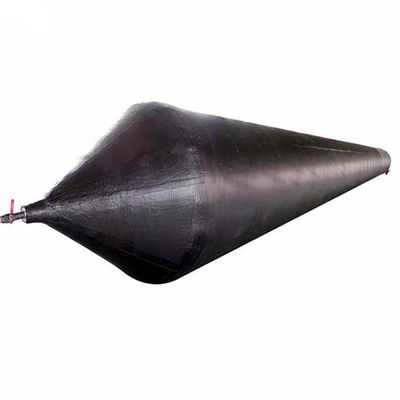
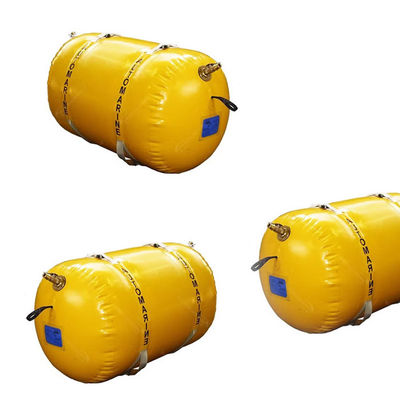
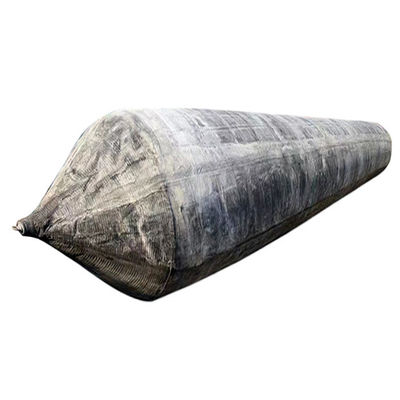
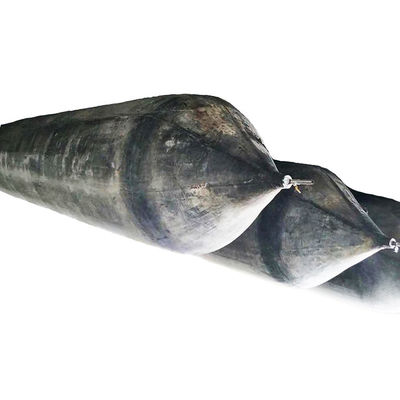
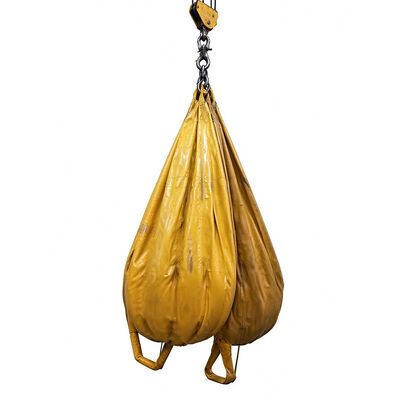
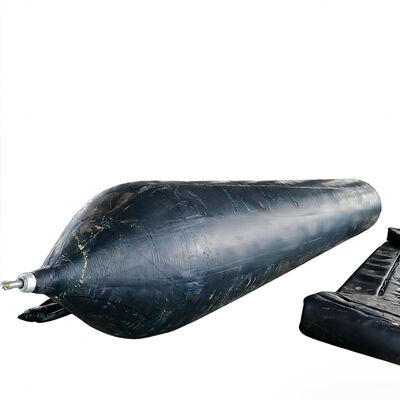
Inflatable Salvage Tubes are inflatable flotation and buoyancy devices designed to support marine recovery, submerged object recovery, and selected underwater engineering operations. By introducing compressed air into the tube structure, the equipment generates buoyant force that can assist in lifting, stabilizing, or repositioning submerged objects under controlled operating conditions. The product is suitable for salvage contractors, marine engineering companies, shipyards, port authorities, and offshore service providers requiring flexible buoyancy equipment for temporary recovery tasks.
The tube body is generally manufactured from high-strength synthetic fabric coated with a suitable elastomer or polymer, such as PVC or polyurethane, depending on the intended application and required performance. The reinforced fabric construction provides tensile strength, flexibility, and resistance to abrasion during handling and deployment. Seams, end closures, inflation connections, lifting points, and reinforcement areas must be designed according to the intended working pressure, buoyancy capacity, environmental exposure, and recovery arrangement.
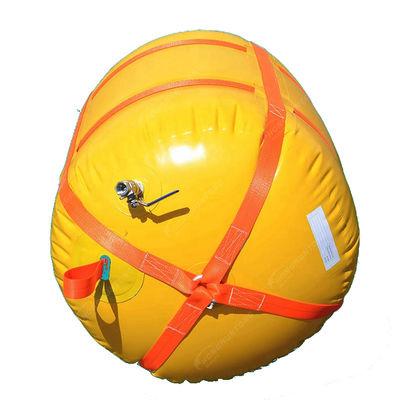
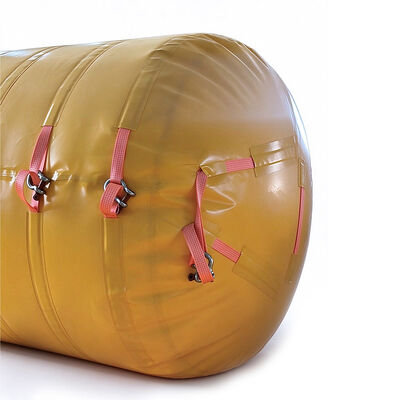
Inflatable Salvage Tubes are available in different lengths, diameters, buoyancy capacities, and connection configurations. Actual specifications should be determined according to the submerged load, water depth, operating environment, available lifting equipment, and required safety margin. Depending on the design, the tubes may be supplied with integrated lifting slings, reinforced attachment points, inflation valves, pressure-control components, and drainage or deflation connections. These components support practical installation, controlled inflation, and subsequent recovery of the equipment.
Compared with rigid flotation equipment, inflatable tubes can be deflated for storage and transportation, reducing the space required for logistics and onboard inventory. Their flexible structure also allows deployment in locations where rigid lifting equipment is difficult to position. During operation, buoyancy must be controlled through a planned inflation sequence, appropriate air supply arrangements, and continuous monitoring of the lifting configuration. The equipment is not a substitute for a complete engineered lifting system; rigging, attachment points, load distribution, and underwater conditions must be evaluated before use.
Inflatable Salvage Tubes can support the recovery of submerged marine components, damaged floating structures, small vessels, pipelines, and other objects when the selected product configuration is suitable for the load and environment. Their principal value lies in providing adjustable buoyancy, reducing dependence on certain conventional lifting arrangements, and enabling recovery teams to adapt equipment deployment to changing site conditions.
Case Study: Damaged Workboat Recovery
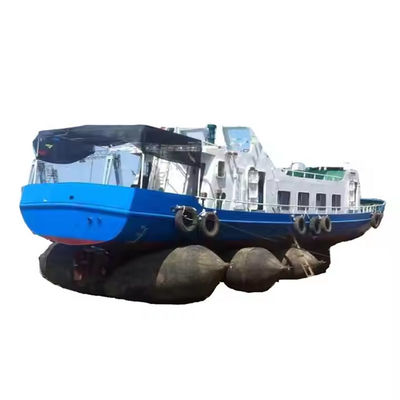
A marine recovery contractor operating in Southeast Asia was assigned to recover a damaged steel workboat from a sheltered harbor basin. The vessel had an approximate displacement of 85 tonnes and had partially submerged after taking on water near a maintenance berth. Its position close to the quay restricted the use of a large floating crane, while the irregular seabed and the presence of nearby harbor infrastructure complicated conventional lifting operations. The recovery team required a supplementary buoyancy system that could be transported to the site, installed underwater, and adjusted progressively during the recovery process.
After an engineering inspection, the contractor developed a recovery arrangement using multiple Inflatable Salvage Tubes positioned at designated support locations around the vessel. The arrangement was designed around the estimated submerged weight, hull condition, anticipated load distribution, water depth, and available attachment points. Before deployment, divers inspected the accessible hull sections and confirmed that the selected contact areas could accommodate the proposed rigging without creating unacceptable local stresses.
The tubes were connected to the approved rigging system and inflated in controlled stages. The recovery team monitored pressure, tube position, hull movement, and the condition of the attachment points throughout the operation. Rather than attempting to raise the entire vessel in one step, the team used progressive buoyancy adjustment to reduce the effective submerged load and stabilize the workboat sufficiently for the next recovery stage. Once the vessel reached the planned recovery position, a floating crane completed the transfer to a suitable maintenance area.
The inflatable system helped reduce the crane capacity required during the initial recovery stage and improved access to the confined work area. It also allowed the contractor to adjust the buoyancy arrangement without transporting large rigid flotation units to the harbor. After deflation, the tubes were cleaned, inspected, and stored for subsequent projects.
For repeatability, the contractor documented the inflation sequence, rigging arrangement, pressure readings, inspection findings, and operational limitations. The resulting procedure provided a reference for similar vessel recovery work, although each subsequent project still required a new load assessment and engineering review. The contractor reported that the flexible equipment arrangement simplified site logistics and supported more controlled recovery planning.
Key Features
High-Strength Reinforced Fabric Construction
The structural performance of an Inflatable Salvage Tube depends on the strength of its base fabric, the properties of its coating, and the quality of its reinforced connections. High-tenacity synthetic fabrics, including polyester-based reinforcement, can provide the tensile strength required to maintain structural integrity during inflation, handling, and buoyancy-assisted recovery. A PVC or polyurethane coating can improve resistance to water penetration, surface abrasion, and environmental exposure, depending on the selected material formulation. The fabric and coating combination should be selected according to the intended water conditions, expected contact surfaces, operating temperature, and required service life.
Reinforcement is particularly important around lifting eyes, end closures, inflation ports, and other areas where loads or stresses may concentrate. These areas should be designed to distribute forces into the surrounding structure rather than transferring the entire load to a small section of coated fabric. Manufacturing controls should include verification of seam quality, inspection of reinforcement alignment, and examination of potential leakage paths. For projects involving contact with steel structures, concrete surfaces, or marine debris, additional abrasion protection may be specified where necessary. The final construction should match the actual recovery arrangement instead of relying on material thickness alone as an indicator of overall load capacity.
Adjustable Buoyancy for Controlled Recovery
Inflatable Salvage Tubes generate buoyancy by displacing water when inflated. Their effective lifting contribution depends on the external volume submerged, the surrounding water density, the weight of the equipment itself, and the amount of air retained under operating conditions. This principle allows recovery teams to introduce buoyancy progressively instead of applying the entire lifting force at the beginning of an operation. A controlled sequence can help reduce sudden movement, uneven loading, and unnecessary stress on damaged objects.
The required buoyancy should be calculated using the estimated submerged weight of the target, including trapped water, attached equipment, and any additional loads that may remain connected during recovery. Engineers must also account for the possibility of load changes as water drains from compartments or as the object changes position. Multiple tubes can be arranged at different locations to distribute buoyancy, but the arrangement must be checked for stability, load sharing, and potential interference with rigging. Inflation procedures should specify the sequence, monitoring requirements, and conditions under which the operation must be paused.
The tube's nominal volume alone does not establish a safe working load. Actual capacity must be confirmed from the manufacturer's technical specifications, and the usable lifting contribution must be determined for the specific configuration and operating depth. This approach supports predictable recovery planning and helps operators maintain control over the transition from a submerged condition to a partially or fully recovered position.
Reinforced Attachment Points and Practical Deployment
Attachment points form a critical interface between the inflatable tube and the surrounding lifting system. They must accommodate the forces expected from the selected rigging arrangement, including uneven loading caused by changes in tube orientation or the geometry of the recovered object. Reinforced lifting eyes, webbing assemblies, and compatible connection hardware can be incorporated according to the design requirements. Their arrangement should allow divers or surface personnel to position the equipment while minimizing twisting, localized loading, and unintended contact with sharp edges.
Practical deployment also depends on the accessibility of inflation connections, the ability to inspect the equipment underwater, and the suitability of the deflation arrangement. Valve locations should be selected to support the planned inflation sequence and remain accessible to the intended operators. Where several tubes are used together, their connections and rigging should be clearly identified to reduce the possibility of incorrect installation. Protective sleeves or additional contact protection may be necessary when the tubes operate near damaged hull plates, exposed reinforcement, or rough seabed materials.
Before each deployment, the recovery team should examine lifting attachments, fabric surfaces, seams, valves, and connection hardware. The team should also confirm that the selected rigging components are compatible with the expected forces and environmental conditions. A properly configured attachment system improves handling efficiency and supports more consistent deployment across different salvage sites.
Compact Storage and Repeated Operational Use
The inflatable structure allows the equipment to be deflated after use, reducing its storage volume compared with equivalent rigid flotation devices. This characteristic is useful for salvage contractors that transport equipment between ports, maintain recovery kits onboard workboats, or operate from vessels with limited deck space. Deflated tubes can be packaged for transport, organized by size or capacity, and stored until required for another project. Actual packing dimensions depend on the tube design, fabric construction, fittings, and accessories supplied.
Repeated use depends on correct handling, inspection, cleaning, and storage. After recovery operations, the equipment should be rinsed with fresh water when appropriate, especially after exposure to salt water, sediment, oil-contaminated surfaces, or other substances that may affect the coating. It should then be inspected for cuts, punctures, seam separation, coating deterioration, damaged valves, and deformation around the lifting points. Repairs should follow the manufacturer's approved procedures, and damaged equipment should not return to service until its condition has been assessed and the required checks completed.
Storage conditions also influence service life. The tubes should be protected from prolonged direct sunlight, excessive heat, sharp objects, and chemicals incompatible with the coating material. Folding and packing procedures should avoid unnecessary creasing or concentrated pressure on fittings and reinforced areas. Maintaining inspection records, repair histories, and deployment records helps operators evaluate equipment condition over time and plan replacement before deterioration compromises safe use.
Applications
Submerged Vessel and Marine Equipment Recovery
Inflatable Salvage Tubes can be used as supplementary buoyancy equipment during the recovery of small workboats, service craft, submerged pontoons, and other marine equipment. They are particularly useful when restricted access, shallow water, or limited crane availability makes a conventional lifting arrangement difficult to implement. The tubes can be positioned at selected support locations to assist with stabilization and progressive recovery. Before use, the team must assess the object's condition, estimated submerged weight, attachment strength, and potential hazards such as trapped water, unstable cargo, or damaged structural members. The final arrangement should be established through an engineered recovery plan.
Port Maintenance and Shipyard Recovery Work
Ports and shipyards regularly handle submerged tools, maintenance components, floating structures, and equipment accidentally lost during operations. Inflatable Salvage Tubes can provide temporary buoyancy during the retrieval of suitable objects from berths, docks, maintenance basins, and sheltered waterways. Their compact storage requirements make them practical for maintenance teams that need equipment available without dedicating substantial space to rigid lifting devices. Deployment should be coordinated with port traffic controls, diver safety procedures, and restrictions on underwater work. Where recovered objects contain hazardous substances or have damaged lifting points, additional containment and rigging measures may be necessary.
Offshore Construction and Underwater Engineering
In offshore construction, Inflatable Salvage Tubes may support the recovery or repositioning of selected subsea components, temporary structures, and marine installation equipment. They can be considered for operations where adjustable buoyancy provides a useful supplement to cranes, winches, or other approved lifting systems. The equipment configuration must account for water depth, current conditions, visibility, seabed contact, and the movement of the target object during lifting. Offshore projects require particular attention to pressure-related limitations, dynamic loading, connection integrity, and contingency procedures. Suitability should be established through project-specific engineering assessment rather than assuming that one tube configuration is appropriate for all subsea operations.
Why Choose Hongruntong Marine
Marine Product Manufacturing Experience
Hongruntong Marine has more than 30 years of manufacturing experience, providing a foundation for understanding the material, construction, and operational requirements of marine equipment. For Inflatable Salvage Tubes, manufacturing experience is relevant to the selection of reinforced fabrics, the design of attachment areas, the arrangement of inflation connections, and the control of seams and structural interfaces. These factors influence how the equipment performs during repeated handling and buoyancy-assisted recovery operations.
Marine recovery products must be assessed as complete assemblies rather than as inflatable fabric bodies alone. The tube structure, reinforcement system, connection hardware, valves, and accessories must function together under the specified operating conditions. A manufacturing approach that considers these interfaces can help customers identify practical requirements before production begins. For contractors managing multiple recovery projects, consistent product configurations and clear technical specifications also support equipment planning, maintenance, and operator training.
Hongruntong Marine can work with customers to clarify intended applications, target object characteristics, available installation space, operating depth, and required buoyancy. These details provide the basis for selecting a suitable configuration. The final specification should be confirmed against actual engineering requirements, including working capacity, material compatibility, attachment loads, and applicable inspection criteria. This process helps reduce the risk of selecting equipment solely on the basis of external dimensions or general product descriptions.
Application-Based Customization and Configuration
Salvage operations differ significantly according to the object being recovered, the accessibility of attachment locations, the water depth, and the lifting equipment available at the site. A tube intended for recovering a compact steel component may require a different length, diameter, attachment arrangement, and protection system from one used to assist in stabilizing a submerged vessel. Hongruntong Marine can discuss these variables with customers when determining the appropriate product configuration.
Customization may involve tube dimensions, nominal buoyancy capacity, fabric and coating selection, reinforcement layout, lifting-point positions, valve configuration, and connection accessories, subject to manufacturing feasibility. For projects involving abrasive surfaces, additional protection may be considered around contact zones. For operations requiring multiple tubes, consistent identification and compatible connection arrangements can help operators position the equipment according to the approved recovery plan.
Effective customization requires technical information from both the manufacturer and the customer. Customers should provide the estimated submerged weight, object dimensions, operating depth, expected environmental exposure, and details of the intended rigging system wherever available. The manufacturer can then review the requested configuration and identify any information needed before finalizing the specification. This collaborative process supports a more appropriate equipment selection and reduces uncertainty during procurement and deployment.
Material Selection and Manufacturing Quality Control
The material system directly affects the service performance of Inflatable Salvage Tubes. Base fabric strength, coating adhesion, seam construction, and reinforcement design all contribute to the product's ability to retain air and withstand handling loads. Hongruntong Marine can evaluate material options according to the intended service conditions, including exposure to salt water, repeated contact with marine structures, and the storage requirements associated with mobile salvage operations.
Quality control should address the complete construction process. Relevant checks may include verification of incoming material specifications, inspection of fabric and coating condition, examination of seams and attachment reinforcements, and testing of inflation integrity according to the applicable product specification. Dimensional checks and inspection of valves and connection components can further support consistency between the ordered configuration and the finished product. The applicable inspection and test plan should be agreed according to the design and customer requirements.
Material selection should also consider maintenance and repair. A suitable coating can help resist environmental exposure, but no inflatable product is immune to puncture, abrasion, chemical attack, or deterioration caused by inappropriate storage. Clear operating and maintenance instructions therefore remain important to achieving the intended service life. By discussing both initial product requirements and expected maintenance practices, Hongruntong Marine can help customers evaluate the practical implications of different configurations.
Technical Communication and After-Sales Support
Inflatable Salvage Tubes are normally incorporated into a wider recovery arrangement that includes rigging, lifting equipment, air supply components, divers, and surface supervision. Technical communication is therefore essential before the product is deployed. Customers need to understand the rated capacity, working limitations, connection requirements, inspection procedures, and operating restrictions associated with the selected model.
Hongruntong Marine can support specification clarification and product-related technical communication during the procurement process. Depending on the agreed supply scope, documentation may include dimensional information, material details, capacity specifications, handling guidance, inspection recommendations, and relevant test records. These documents help procurement teams, engineers, and operators review the product against project requirements before equipment is accepted for service.
After delivery, customers should retain the product identification and inspection records and follow the manufacturer's instructions for inflation, deployment, deflation, cleaning, and storage. Any evidence of damage or abnormal deformation should be assessed before the next operation. Where project requirements call for third-party inspection, certification, or specific testing, the applicable requirements should be identified and confirmed before the order is finalized. This approach helps establish clear responsibilities and supports consistent equipment management throughout its service life.
Frequently Asked Questions
1. What materials are used to manufacture Inflatable Salvage Tubes?
Inflatable Salvage Tubes are commonly manufactured from reinforced synthetic fabrics coated with PVC or polyurethane, depending on the required performance and application. The selected material should provide suitable tensile strength, coating integrity, flexibility, and resistance to the expected marine environment. Customers should confirm the exact material specification before ordering.
2. How do I determine the required buoyancy capacity?
Start by estimating the submerged weight of the object and evaluating its condition, water depth, and intended lifting arrangement. The calculation should include attached equipment, retained water, load distribution, and other relevant variables. The selected tube capacity must be verified against the manufacturer's specifications, and the overall recovery system should be reviewed by a qualified engineer.
3. Can Inflatable Salvage Tubes be reused?
Yes, reusable models can be used for multiple operations when their design permits repeated service and they remain in acceptable condition. After each deployment, inspect the fabric, seams, valves, lifting points, and connection hardware. Clean and store the tubes according to the manufacturer's instructions, and remove damaged equipment from service until it has been properly assessed.
4. Can the dimensions and attachment points be customized?
Dimensions, buoyancy capacity, reinforcement locations, valves, and attachment configurations may be customized according to the manufacturer's available designs and production capabilities. Customers should provide the target object's dimensions, estimated submerged weight, operating depth, and intended rigging arrangement so the configuration can be evaluated before production.
5. What safety checks are required before underwater deployment?
Inspect the tube for cuts, leakage, damaged seams, deteriorated coatings, and defective valves. Verify the rated capacity, rigging compatibility, attachment strength, inflation equipment, and operating limitations. Establish an approved recovery plan with controlled inflation, load monitoring, communication procedures, and contingency measures. Never exceed the manufacturer's specified limits or use an inflatable tube as a substitute for an engineered lifting system.


 Your message must be between 20-3,000 characters!