Product Overview
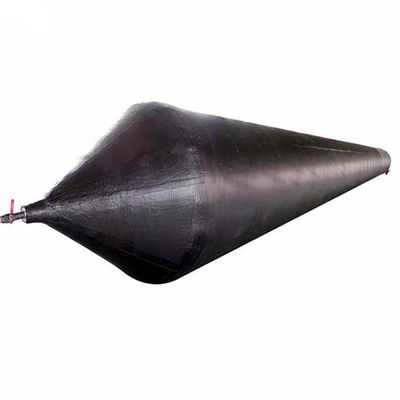
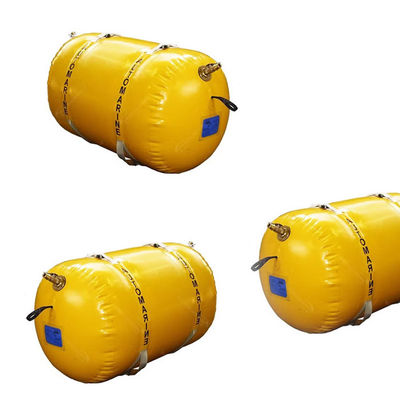
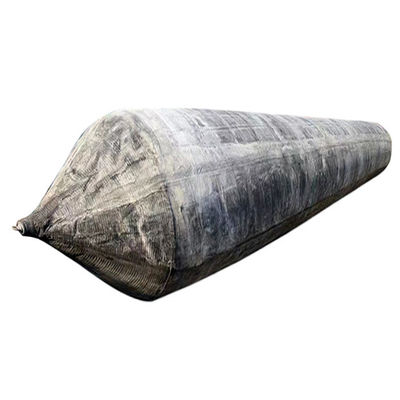
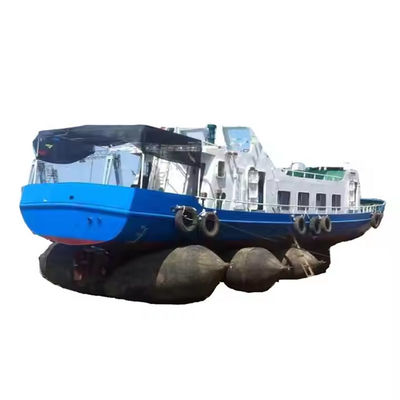
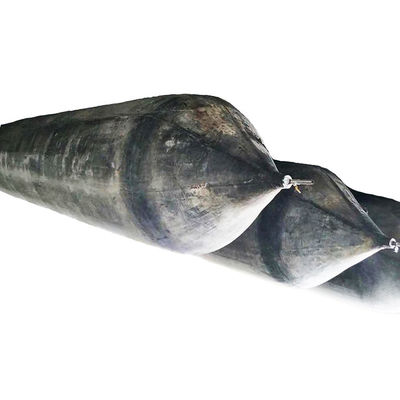
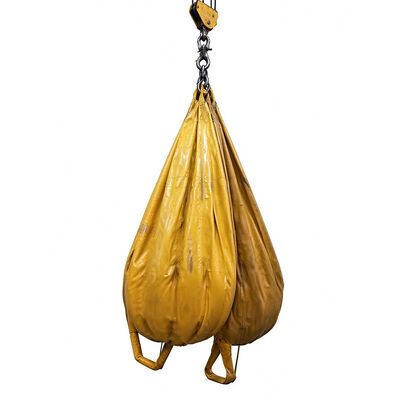
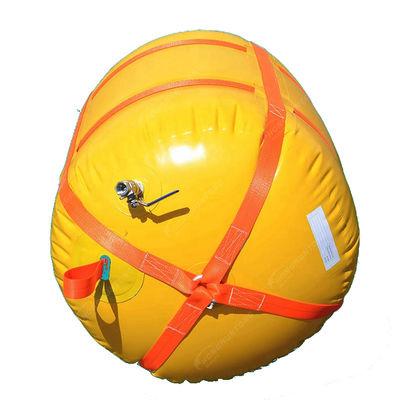
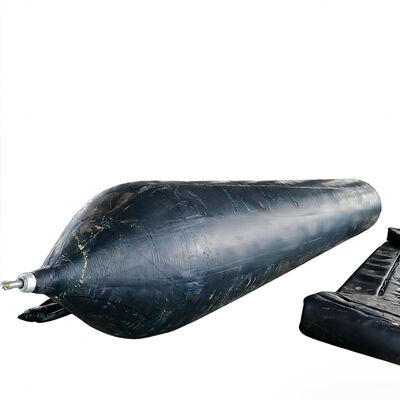
Inflatable Salvage Tubes are flexible buoyancy devices designed to support marine salvage, underwater recovery, subsea lifting, and the controlled movement of submerged equipment. Their inflatable structure allows the tubes to be transported, positioned, and deployed in confined marine environments where rigid lifting equipment may be difficult to handle. When filled with air, they generate buoyant force that can assist in raising submerged objects, reducing effective underwater weight, and supporting staged recovery operations.
The tubes are generally manufactured from high-strength synthetic fabric reinforced with a protective PVC or polyurethane coating, depending on the operating environment and project requirements. The fabric reinforcement provides tensile strength, while the coated surface helps resist water penetration, abrasion, and routine handling damage. Material selection should consider working depth, load requirements, exposure to seawater, contact with sharp edges, and the expected frequency of deployment.
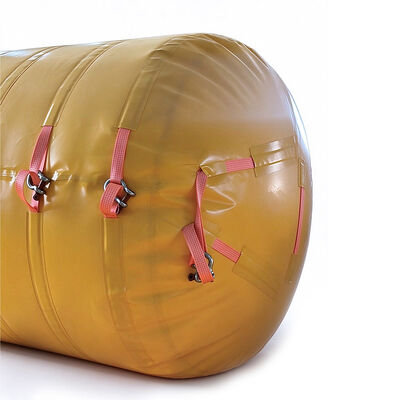
Inflatable Salvage Tubes can be supplied in different diameters, lengths, buoyancy capacities, and connection configurations. Lifting points, end closures, inflation valves, pressure-relief components, and attachment hardware can be configured according to the intended application. Correct sizing is essential because buoyancy depends on the displaced water volume, while the actual lifting arrangement must also account for the submerged load, rigging weight, water conditions, and dynamic forces.
During underwater recovery, the tubes can be attached to machinery, steel structures, pipelines, vessel components, or other suitable loads using engineered slings and connection points. Air is introduced gradually to increase buoyancy in a controlled manner. Depending on the project, several tubes may be distributed across a load to improve balance and reduce localized stress. This approach can help divers and salvage teams manage recovery operations where conventional cranes, winches, or rigid lifting frames have limited access.
Inflatable Salvage Tubes are suitable for marine contractors, salvage companies, offshore service providers, port operators, and subsea engineering teams. They can support equipment recovery, underwater construction, temporary buoyancy assistance, and the relocation of submerged components. Their practical value depends on proper engineering calculations, inspection, compatible rigging, and compliance with the lifting procedures established for each project.
Case Study: Controlled Recovery of a Submerged Steel Frame
A marine engineering contractor was assigned to recover a submerged steel support frame from a coastal construction site after temporary securing equipment failed during installation. The frame had an estimated dry weight of approximately 8 tonnes and was resting unevenly on the seabed at a depth of around 15 metres. Sediment had accumulated around part of the structure, and several sections were positioned close to existing underwater services. Direct lifting with a crane barge presented challenges because the load was not level, and a single concentrated lifting point could have caused excessive stress or uncontrolled rotation.
The project team selected a distributed buoyancy arrangement using multiple Inflatable Salvage Tubes attached to designated structural points. Before deployment, the contractor assessed the frame geometry, estimated submerged weight, attachment locations, seabed contact, and possible interference with nearby infrastructure. The recovery plan also considered the effects of trapped sediment, water movement, and changes in load distribution as the frame separated from the seabed.
Divers installed the lifting slings and secured the tubes according to the approved rigging arrangement. The tubes were positioned to provide buoyancy at several locations rather than concentrating the lifting force at one point. Inflation began gradually under the supervision of the surface team, allowing the divers to observe the frame's response and identify any unexpected movement. The team paused inflation when necessary to verify that the load remained stable and that the connection points were not experiencing abnormal movement.
As buoyancy increased, the steel frame gradually became lighter in the water and began to separate from the seabed. The recovery team adjusted the lifting sequence to compensate for the uneven distribution of sediment and the frame's original resting position. Once sufficient clearance had been achieved, the crane barge took over the controlled transfer of the frame toward the designated recovery area. The inflatable equipment provided buoyancy assistance during the initial release phase, while the crane and rigging system managed the subsequent movement.
The operation was completed without requiring divers to manually reposition the entire structure. The distributed lifting arrangement helped reduce the risk of sudden rotation and provided the team with better control during the most sensitive stage of recovery. Following the operation, the tubes were inspected for abrasion, valve condition, seam integrity, and attachment-point damage before being prepared for future deployment. The project demonstrated how properly selected Inflatable Salvage Tubes can support controlled underwater recovery when used as part of a coordinated engineering and lifting plan.
Specifications
| Product Name |
Inflatable Salvage Tubes |
| Raw Material |
PVC Coating Fabric |
| Type |
Cylindrical |
| Size |
500kg, 1000kg, 5000kg, 10000kg, etc. |
| Thickness |
0.4–1.2mm, or as requested |
| Color |
Yellow, Blue, Black, etc. |
| Density |
0.33–0.9 g/cm³ |
| Safety Factor |
7:1 |
| Tolerances |
±0.03 on densities; ±0.2 mm on thickness; ±0 to +3 mm on width; ±0 to +3 mm on length |
Cylindrical Model Selection Chart
| Model |
Buoyancy [kg] |
Buoyancy [lbs] |
Diameter [mm] |
Length [mm] |
Approx. Weight [kg] |
| HM-IST1 |
200 |
441 |
500 |
1,000 |
5 |
| HM-IST02 |
500 |
1,103 |
800 |
1,000 |
8 |
| HM-IST03 |
1,000 |
2,205 |
1,000 |
1,500 |
11 |
| HM-IST04 |
2,000 |
4,410 |
1,300 |
1,500 |
20 |
| HM-IST05 |
4,000 |
8,820 |
1,600 |
2,000 |
50 |
| HM-IST06 |
6,000 |
13,230 |
2,000 |
2,000 |
66 |
| HM-IST07 |
8,000 |
17,640 |
2,000 |
2,600 |
75 |
| HM-IST08 |
10,000 |
22,050 |
2,400 |
2,400 |
80 |
| HM-IST09 |
15,000 |
33,075 |
2,600 |
3,000 |
110 |
| HM-IST10 |
20,000 |
44,100 |
3,000 |
3,000 |
130 |
| HM-IST11 |
30,000 |
66,150 |
3,000 |
4,500 |
170 |
| HM-IST12 |
50,000 |
110,250 |
4,000 |
4,000 |
220 |
| HM-IST13 |
70,000 |
154,350 |
4,000 |
5,700 |
310 |
| HM-IST14 |
100,000 |
220,500 |
4,000 |
8,000 |
450 |
| HM-IST15 |
150,000 |
330,750 |
5,000 |
8,000 |
660 |
| HM-IST16 |
200,000 |
441,000 |
5,000 |
10,000 |
900 |
Note: Other sizes can be customized according to your requirements.
Key Features
Reinforced Fabric Construction for Marine Service
Inflatable Salvage Tubes use reinforced fabric construction to combine flexibility with the tensile strength required for buoyancy-assisted recovery. The reinforcement carries the primary structural loads, while the external coating provides a protective barrier against water exposure and routine surface abrasion. PVC-coated and polyurethane-coated fabrics may be considered according to the required flexibility, wear resistance, environmental exposure, and project specifications.
Fabric selection should be based on the tube's intended working conditions rather than appearance alone. Relevant parameters include tensile strength, coating adhesion, tear resistance, seam construction, and compatibility with seawater and other substances that may be encountered during use. Where tubes may contact steel structures, concrete edges, or marine debris, additional protective measures may be necessary to reduce localized damage.
Manufacturing controls should address fabric preparation, seam alignment, welding or bonding procedures, and inspection of critical connection areas. Consistent construction helps maintain predictable inflation behavior and reduces the likelihood of premature leakage during deployment. The finished product should be inspected and tested in accordance with the applicable product specification and project requirements.
Configurable Buoyancy Capacity and Dimensions
Tube dimensions directly influence displacement volume and the buoyant force available when the device is immersed. Length, diameter, operating pressure, and immersion conditions must therefore be considered together when determining the appropriate configuration. Hongruntong Marine can assess project-specific dimensional requirements to support the selection of suitable tube sizes and buoyancy capacities.
For recovery operations involving irregular loads, multiple tubes may be arranged at different positions to help manage balance and reduce concentrated forces. The number and placement of tubes should be determined through an engineering assessment of the load's geometry, estimated submerged weight, attachment strength, and intended movement. Buoyancy capacity must not be treated as the same as a complete system's safe working load.
Project-specific configurations may include different lengths, diameters, end structures, inflation connections, and lifting attachments. These options allow the equipment to be matched to the available working space and the characteristics of the submerged object. Final selection should include appropriate safety margins and consideration of the operational effects of waves, currents, and load movement.
Secure Attachment and Inflation Arrangements
Attachment points and inflation components are essential to the safe operation of Inflatable Salvage Tubes. Lifting connections must transfer forces into suitable structural areas without causing excessive local stress or damaging the reinforced fabric. Depending on the application, the equipment may incorporate engineered lifting eyes, reinforced webbing, end fittings, or other connection arrangements compatible with the specified rigging system.
Inflation valves should allow controlled air supply and support the operating procedures established for the project. Pressure-relief provisions may be incorporated where appropriate to help manage overpressure risk. The inflation system, hoses, connectors, and valves should be compatible with the specified operating pressure and inspected before each deployment.
Correct attachment and inflation procedures are particularly important when recovering loads that may shift as they leave the seabed. Inflation should be gradual and monitored so that the team can identify uneven lifting, unexpected rotation, or abnormal pressure changes. The tubes should be used only within their documented operating limits, with suitable rigging and an appropriate recovery plan.
Reusable Design and Practical Maintenance
Inflatable Salvage Tubes can be deflated after use, making them easier to transport and store than many rigid buoyancy structures of comparable capacity. This feature is useful for marine contractors who move equipment between ports, shipyards, offshore work sites, and salvage locations. Their compact storage profile can reduce transport and handling requirements when the tubes are not deployed.
Reuse depends on operating conditions, handling practices, inspection results, and maintenance procedures. After each operation, the tubes should be cleaned using compatible methods and checked for cuts, punctures, coating separation, seam defects, valve damage, and deterioration around attachment points. Any suspected structural damage should be assessed before the equipment is returned to service.
Storage should follow the manufacturer's recommendations, with the tubes protected from sharp objects, excessive heat, prolonged sunlight where relevant, and damaging chemicals. Records of inspections, repairs, pressure tests, and deployments can help operators monitor equipment condition over time. A documented maintenance process supports more reliable reuse and helps identify when repair or replacement is necessary.
Applications
Underwater Recovery of Steel Structures and Machinery
Inflatable Salvage Tubes can provide buoyancy assistance when recovering submerged steel frames, machinery, construction components, and other heavy objects. They can help reduce the effective underwater weight of a load before a crane or winch completes the lifting operation. This approach is useful when the object is difficult to access directly or when the recovery team needs to control the initial release from the seabed.
Marine Infrastructure and Pipeline Maintenance
During underwater maintenance, the tubes may support the repositioning or temporary lifting of selected pipeline sections, support frames, and other compatible infrastructure components. Their dimensions and attachment arrangements should be selected according to the load geometry and the clearance available around existing structures. Engineering review is particularly important where recovery operations take place near active pipelines, cables, or other sensitive underwater assets.
Shipwreck and Offshore Equipment Salvage
Salvage contractors may use Inflatable Salvage Tubes to assist with recovering vessel components, submerged equipment, and materials lost during offshore operations. Multiple tubes can be positioned to provide distributed buoyancy where the load requires additional stability. The recovery procedure should account for corrosion, structural degradation, trapped water or sediment, and the possibility that the object may not retain its original strength.
Why Choose Hongruntong Marine
More Than 30 Years of Manufacturing Experience
Hongruntong Marine has more than 30 years of manufacturing experience, providing a foundation for understanding the production requirements of marine and industrial equipment. For Inflatable Salvage Tubes, manufacturing experience is relevant to fabric selection, reinforcement layout, seam processing, connection design, and inspection of pressure-containing structures.
Marine recovery equipment operates in demanding environments where material consistency and construction quality influence service life. A manufacturing process that emphasizes defined specifications and repeatable production procedures helps reduce variation between units. Product requirements can be reviewed with the customer to establish appropriate dimensions, materials, connection arrangements, and inspection criteria.
Project-Based Product Customization
Salvage operations vary significantly in load geometry, working depth, access conditions, and required buoyancy. Hongruntong Marine can discuss project-specific requirements for tube length, diameter, buoyancy capacity, material options, inflation connections, and attachment configurations. This allows the proposed product to be assessed against the actual operating conditions rather than selected solely by nominal dimensions.
Customers should provide available information about the submerged object, estimated weight, working depth, operating environment, lifting arrangement, and deployment method. Where the project involves irregular structures or sensitive infrastructure, additional engineering information may be needed before a configuration can be finalized. Customized dimensions do not replace the need for a complete lifting-system assessment.
Material and Manufacturing Quality Control
Quality control for Inflatable Salvage Tubes should cover the main fabric, coating condition, seam construction, valve installation, attachment reinforcement, and finished-product inspection. Each element contributes to the equipment's ability to retain air and transfer loads under the intended operating conditions. Inspection criteria should be aligned with the agreed product specification and the applicable requirements for the project.
Material traceability, production records, and documented inspection procedures can help customers evaluate product consistency. The appropriate testing method depends on the product design and intended service. Before deployment, operators should also confirm that the delivered equipment matches the approved configuration and that its documentation is suitable for the planned operation.
Technical Communication and After-Sales Support
Selecting salvage equipment requires coordination between the manufacturer, marine contractor, lifting supervisor, and end user. Hongruntong Marine can work with customers to clarify product dimensions, operating requirements, material choices, connection details, and maintenance considerations during the specification process.
Clear technical communication helps reduce misunderstandings about buoyancy ratings, working pressure, attachment limitations, and the distinction between individual tube capacity and total system lifting capacity. Customers should establish the intended application and operating limits before ordering. Product inspection and maintenance guidance can also support appropriate handling, storage, and reuse throughout the equipment's service life.
Frequently Asked Questions
1. How do Inflatable Salvage Tubes generate lifting force?
When immersed and inflated, the tubes displace water and generate buoyant force. The usable lifting assistance depends on the displaced volume, water density, tube configuration, and operating conditions. The required buoyancy should be calculated against the submerged load and the complete rigging arrangement.
2. Can the tubes be used to recover irregularly shaped objects?
Yes, they may be arranged at different locations around a suitable load to help distribute buoyancy. However, attachment positions must be evaluated to prevent local structural damage and excessive rotation. Irregular or degraded objects require additional assessment before lifting.
3. What information is needed to select a suitable tube?
Important information includes the estimated load weight, working depth, dimensions of the object, required buoyancy, available installation space, operating environment, and connection method. Photographs or drawings can help clarify the arrangement, but final selection should be based on verified technical requirements.
4. Can Inflatable Salvage Tubes be reused?
They may be reused when their condition remains acceptable and inspection confirms that they are suitable for further service. After deployment, inspect the fabric, seams, valves, attachment points, and protective coating. Damaged equipment should not be returned to operation until it has been appropriately assessed and repaired.
5. Can Hongruntong Marine customize the tubes for a specific recovery project?
Hongruntong Marine can discuss customized dimensions, materials, buoyancy capacities, and connection arrangements based on the project's requirements. Customers should provide the relevant load and operating information so that the proposed configuration can be reviewed against the intended application and applicable safety requirements.


 Your message must be between 20-3,000 characters!