Product Overview
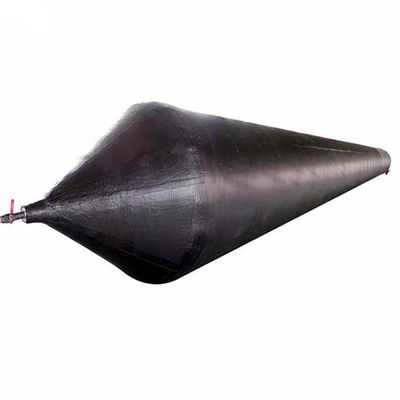
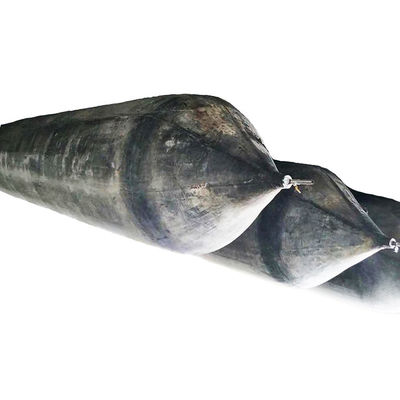
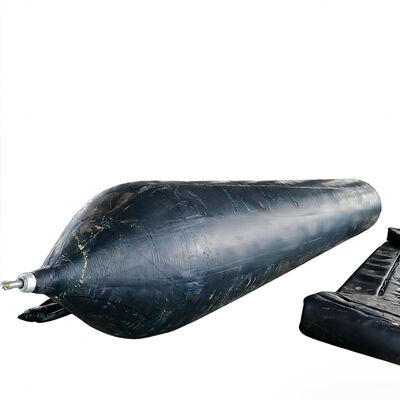
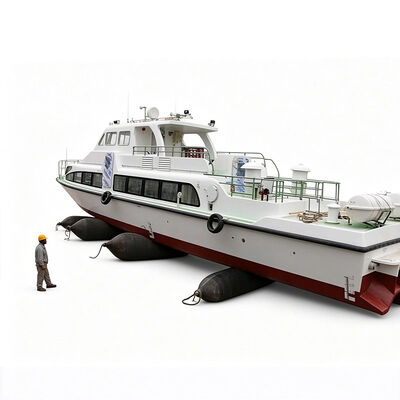
The Airbag Launching Ship is an inflatable support system engineered for marine vessel launching, beaching, and shipyard handling. It provides a flexible method of transferring vessels between land and water through the controlled rolling movement of reinforced rubber airbags.
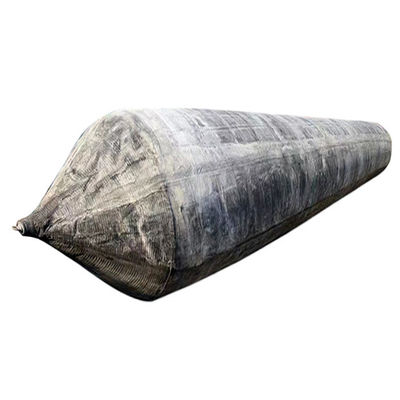
Manufactured using high-strength synthetic tire-cord fabric and specialized rubber compounds, the product integrates multiple reinforcement layers into the rubber body to resist tensile stress, inflation pressure, compression, and repeated deformation. The outer rubber surface provides additional protection against abrasion and environmental exposure.
A key characteristic of this system is its ability to accommodate different vessel geometries. The cylindrical airbag structure can deform under load while maintaining its supporting function within specified operating limits, making it suitable for various hull configurations and launching arrangements.
The product is available in different diameters, effective lengths, and structural configurations. Selection should consider vessel displacement, hull support requirements, ground conditions, and launching distance. Proper engineering calculations and pressure monitoring are essential to ensure safe operation.
The Airbag Launching Ship is widely applicable to shipbuilding, marine repair, coastal engineering, and vessel relocation projects. Its reusable design and flexible deployment offer shipyards a practical alternative to fixed launching infrastructure.
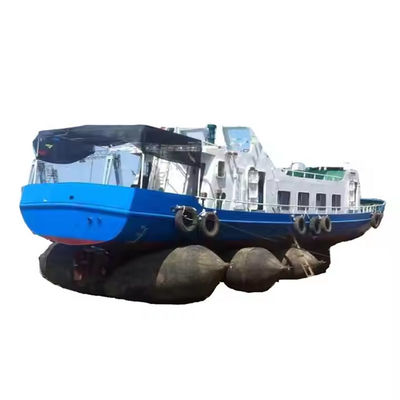
Case Study: 900-Ton Utility Support Vessel Launch
An offshore service company needed to move a 900-ton utility support vessel from a coastal maintenance yard into the water after completing structural repairs. The site had a relatively narrow launching route, and the vessel's bottom structure required careful support during movement.
The company selected Hongruntong Marine airbag launching equipment based on its vessel specifications and available operating space. The supplied airbags were configured to meet the project's supporting requirements, with attention given to effective length, diameter, and reinforcement construction.
Before deployment, the engineering team evaluated the vessel's weight distribution and prepared a suitable launching arrangement. The working surface was cleaned and inspected, and the support positions were checked before inflation.
During the operation, the airbags provided rolling support beneath the vessel. The maintenance team monitored the movement direction, inflation pressure, and position of each airbag to maintain controlled progress.
The project was completed without requiring a permanent launching track. The customer valued the flexibility of the equipment, particularly because the same system could be considered for subsequent vessel relocation projects after inspection and maintenance.
Specifications
| Place of Origin |
China |
| Brand Name |
Hongruntong Marine |
| Material |
Industrial Grade Natural Rubber |
| Diameter |
0.5m–3.0m, or as Request |
| Length |
1.0m–28.0m, or as Request |
| Working Pressure |
0.05–0.25 MPa |
| Technics |
High Pressure, Overall Winding, Explosion-Proof |
| Use |
Ship Launching and Docking |
| Thickness |
5–13 ply |
| Standard |
Conducted by ISO14409 and GB/T1590-2006 system |
| Accessories |
Q355/SS304/SS316, Pressure Gauge, Tee, Plug, Switch, Inflation Tube |
| Packaging |
Inner-Plastic Bag; Outer-Standard Wooden Pallets |
| Keywords |
Airbag Launching Ship |
| Certificates |
ABS, BV, KR, LR, GL, NK, RINA, DNV, RMRS |
| MOQ |
1 |
| OEM |
Welcome |
Load Capacity Reference
| Diameter |
Working Pressure |
Working Height |
Bearing Capacity (KN/m) |
Bearing Capacity (Ton/m) |
| D=1.0m |
0.14 MPa |
0.6m |
87.96 |
8.98 |
| 0.5m |
109.96 |
11.22 |
| 0.4m |
131.95 |
13.46 |
| D=1.2m |
0.12 MPa |
0.7m |
94.25 |
9.62 |
| 0.6m |
113.10 |
11.54 |
| 0.5m |
131.95 |
13.46 |
| 0.4m |
150.80 |
15.39 |
| D=1.5m |
0.10 MPa |
0.9m |
94.25 |
9.62 |
| 0.8m |
109.96 |
11.22 |
| 0.7m |
125.66 |
12.82 |
| 0.6m |
141.37 |
14.43 |
| 0.5m |
157.08 |
16.03 |
| D=1.8m |
0.09 MPa |
1.1m |
98.96 |
10.10 |
| 1.0m |
113.10 |
11.54 |
| 0.9m |
127.33 |
12.98 |
| 0.8m |
141.37 |
14.43 |
| 0.7m |
155.51 |
15.87 |
| 0.6m |
169.65 |
17.31 |
| D=2.0m |
0.08 MPa |
1.2m |
100.53 |
10.26 |
| 1.1m |
113.10 |
11.54 |
| 1.0m |
125.66 |
12.82 |
| 0.9m |
138.23 |
14.11 |
| 0.8m |
150.80 |
15.39 |
| 0.7m |
163.36 |
16.67 |
| 0.6m |
175.93 |
17.95 |
Other sizes can be produced according to client requirements.
Key Features
Flexible Deformation and Hull Compatibility
The Airbag Launching Ship uses a cylindrical inflatable structure that can deform according to the contact pressure generated by the vessel. This characteristic allows the equipment to adapt to different hull bottom configurations more effectively than rigid support components.
The flexible structure is particularly useful when handling vessels with different keel arrangements and bottom geometries. However, the contact width and deformation characteristics must remain within the specified design limits. Correct airbag positioning and load calculations are necessary to maintain appropriate support conditions.
Abrasion Protection for Repeated Ground Contact
During launching operations, airbags experience repeated contact with the shipyard surface. The outer rubber compound is therefore selected to provide suitable abrasion resistance and protection against external damage.
The reinforced rubber body is designed to withstand normal handling and rolling conditions when used correctly. Surface durability depends on material formulation, rubber thickness, ground preparation, and operating procedures. Removing sharp debris and maintaining a suitable launching route are important measures for protecting the equipment.
Engineered Load Capacity and Reinforcement Structure
Airbag load capacity is determined by several interconnected parameters, including diameter, effective length, internal pressure, contact width, and reinforcement strength. Hongruntong Marine can discuss different structural configurations according to the intended operating conditions.
A suitable reinforcement structure helps the airbag withstand internal pressure and external mechanical stress. Multiple airbags must be arranged according to an appropriate engineering plan to distribute the vessel load and maintain stability during movement.
Convenient Transportation and Equipment Reuse
Inflatable launching airbags can be deflated and transported after completing an operation. Their flexible construction makes them easier to store than many large rigid launching components.
For shipyards that handle multiple vessel types, reusable equipment can improve resource utilization and reduce the need to maintain extensive permanent launching infrastructure. Inspection and maintenance after each operation are essential for determining whether the airbags remain suitable for future use.
Applications
Offshore Support Vessel Handling
Used for launching and relocating utility vessels, offshore support craft, and service boats at coastal maintenance facilities. Airbag dimensions and arrangements can be selected according to vessel specifications.
Beach Landing and Vessel Recovery
Applicable to suitable beaching and recovery operations where vessels need to move between water and prepared land surfaces. The operating route and support conditions must be assessed before deployment.
Marine Equipment Transportation
Can be used in selected shipyard transportation arrangements where heavy marine structures and vessels require controlled movement across prepared surfaces.
Why Choose Hongruntong Marine
Technical Understanding of Marine Applications
Hongruntong Marine has more than 30 years of manufacturing experience in the marine equipment industry. We understand that marine airbags are subjected to demanding conditions involving pressure, compression, friction, moisture, and repeated handling.
Our product development approach considers the relationship between material characteristics and actual operating requirements. This helps customers select suitable reinforced rubber products for their vessel launching and marine handling projects.
Customized Reinforcement and Structural Design
Different vessel types require different support arrangements. Hongruntong Marine can discuss customized reinforcement structures and product dimensions according to customer requirements.
The design process may consider airbag diameter, effective length, reinforcement layers, working pressure, and expected operating conditions. These factors help establish a suitable product configuration and reduce the risk of selecting equipment that does not match the intended application.
Consistent Material and Production Management
The reliability of a marine airbag is closely related to the quality of its rubber compounds and reinforcement materials. Hongruntong Marine emphasizes material selection and manufacturing consistency to support the performance of finished products.
Production management includes attention to fabric positioning, rubber bonding, product shaping, and inspection. These processes help ensure that the finished equipment meets the agreed manufacturing specifications.
Practical Support Throughout the Project
We provide communication and technical assistance during product selection and order preparation. Customers can discuss vessel dimensions, operating requirements, product specifications, and accessory configurations with our team.
We also emphasize the importance of correct operation and maintenance. Information about pressure control, surface inspection, storage, and handling can help customers maintain equipment condition and improve long-term utilization.
Frequently Asked Questions
1. Can Airbag Launching Ship be used for offshore support vessels?
Yes. It can be configured for suitable offshore support vessels according to their displacement, hull structure, and launching conditions.
2. What determines the load capacity of one airbag?
Important factors include diameter, effective length, internal pressure, contact width, and reinforcement construction.
3. Can the airbags accommodate different hull shapes?
Yes. Their flexible structure allows adaptation to different hull configurations, provided that the support arrangement is properly engineered.
4. Do the products require regular inspection?
Yes. Surface condition, inflation fittings, signs of deformation, and possible reinforcement damage should be checked before and after use.
5. Can the airbags be supplied with accessories?
Yes. Suitable inflation fittings, pressure gauges, and related accessories can be discussed according to project requirements.


 Your message must be between 20-3,000 characters!