Ship Launching Balloon — Heavy Duty Reinforced Fabric, High Pressure
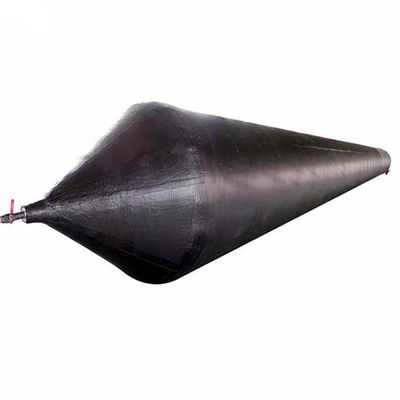
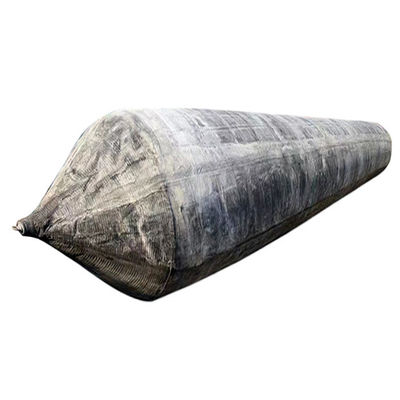
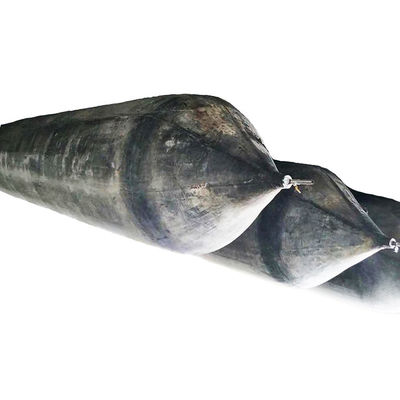
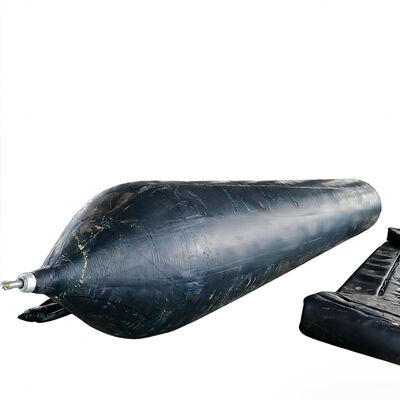
Airbag Launching Ship is a flexible marine handling system developed to support vessel launching and transportation without requiring extensive permanent launching infrastructure. It uses specially reinforced inflatable rubber airbags to carry vessel loads and provide controlled rolling movement during shipyard operations.
The product consists of a multilayer rubber structure reinforced with synthetic tire-cord fabric. Its construction is designed to combine tensile strength, flexibility, pressure resistance, and surface durability. Different product dimensions and reinforcement specifications are available to accommodate different vessel weights and working environments.
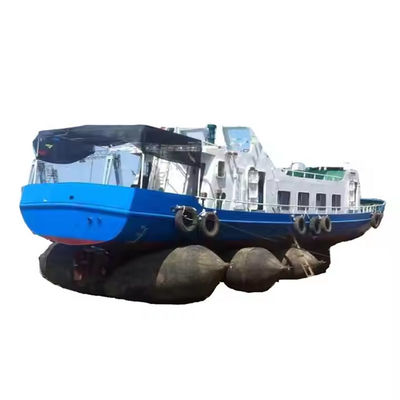
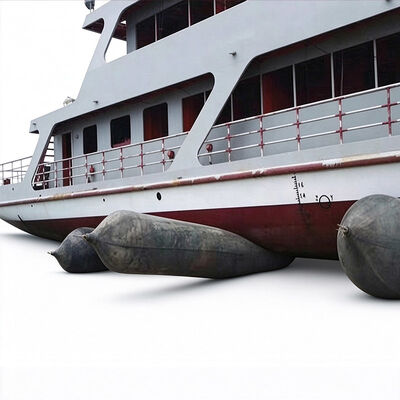
During use, airbags are arranged beneath the ship according to calculated load distribution requirements. Compressed air is introduced through dedicated inflation connections, allowing the airbags to expand and establish contact with the vessel bottom. As the vessel advances, the airbags rotate beneath the hull and support gradual movement toward the launching area.
The system is especially useful for shipyards that construct or repair multiple types of vessels. It offers flexibility in equipment arrangement, relatively convenient transportation, and reduced dependence on permanent launching facilities. With suitable engineering design and operating control, Airbag Launching Ship can support efficient vessel handling in different marine environments.
A ship repair company working at a regional fishing port needed to relocate a 650-ton steel fishing vessel from its maintenance area to a nearby launching basin. The existing facility had limited crane access, and installing a temporary steel track would have increased project preparation costs.
Hongruntong Marine supplied marine launching airbags selected according to the vessel's dimensions, estimated displacement, and ground conditions. The customer also received recommendations concerning airbag spacing, pressure management, and preparation of the moving route.
Before the operation, the repair team inspected the vessel bottom and prepared the launching surface to remove sharp objects and uneven obstacles. The airbags were positioned according to the engineering plan, and inflation was performed gradually to establish balanced support.
During vessel movement, the repair team monitored airbag positioning, pressure, and hull alignment. The rolling support arrangement allowed the vessel to move through the prepared route toward the water without constructing a permanent launching track.
The customer considered the equipment practical for future repair projects because the airbags could be deflated and stored after use. The project also demonstrated the importance of route preparation and controlled operation when launching vessels in facilities with limited infrastructure.
| Place of Origin | China |
|---|---|
| Brand Name | Hongruntong Marine |
| Material | Industrial Grade Natural Rubber |
| Diameter | 0.5m–3.0m, or as Request |
| Length | 1.0m–28.0m, or as Request |
| Working Pressure | 0.05–0.25 MPa |
| Technics | High Pressure, Overall Winding, Explosion-Proof |
| Use | Ship Launching and Docking |
| Thickness | 5–13 ply |
| Standard | Conducted by ISO14409 and GB/T1590-2006 system |
| Accessories | Q355/SS304/SS316, Pressure Gauge, Tee, Plug, Switch, Inflation Tube |
| Packaging | Inner-Plastic Bag; Outer-Standard Wooden Pallets |
| Keywords | Airbag Launching Ship |
| Certificates | ABS, BV, KR, LR, GL, NK, RINA, DNV, RMRS |
| MOQ | 1 |
| OEM | Welcome |
| Diameter | Working Pressure | Working Height | Bearing Capacity (KN/m) | Bearing Capacity (Ton/m) |
|---|---|---|---|---|
| D=1.0m | 0.14 MPa | 0.6m | 87.96 | 8.98 |
| D=1.0m | 0.14 MPa | 0.5m | 109.96 | 11.22 |
| D=1.0m | 0.14 MPa | 0.4m | 131.95 | 13.46 |
| D=1.2m | 0.12 MPa | 0.7m | 94.25 | 9.62 |
| D=1.2m | 0.12 MPa | 0.6m | 113.10 | 11.54 |
| D=1.2m | 0.12 MPa | 0.5m | 131.95 | 13.46 |
| D=1.2m | 0.12 MPa | 0.4m | 150.80 | 15.39 |
| D=1.5m | 0.10 MPa | 0.9m | 94.25 | 9.62 |
| D=1.5m | 0.10 MPa | 0.8m | 109.96 | 11.22 |
| D=1.5m | 0.10 MPa | 0.7m | 125.66 | 12.82 |
| D=1.5m | 0.10 MPa | 0.6m | 141.37 | 14.43 |
| D=1.5m | 0.10 MPa | 0.5m | 157.08 | 16.03 |
| D=1.8m | 0.09 MPa | 1.1m | 98.96 | 10.10 |
| D=1.8m | 0.09 MPa | 1.0m | 113.10 | 11.54 |
| D=1.8m | 0.09 MPa | 0.9m | 127.33 | 12.98 |
| D=1.8m | 0.09 MPa | 0.8m | 141.37 | 14.43 |
| D=1.8m | 0.09 MPa | 0.7m | 155.51 | 15.87 |
| D=1.8m | 0.09 MPa | 0.6m | 169.65 | 17.31 |
| D=2.0m | 0.08 MPa | 1.2m | 100.53 | 10.26 |
| D=2.0m | 0.08 MPa | 1.1m | 113.10 | 11.54 |
| D=2.0m | 0.08 MPa | 1.0m | 125.66 | 12.82 |
| D=2.0m | 0.08 MPa | 0.9m | 138.23 | 14.11 |
| D=2.0m | 0.08 MPa | 0.8m | 150.80 | 15.39 |
| D=2.0m | 0.08 MPa | 0.7m | 163.36 | 16.67 |
| D=2.0m | 0.08 MPa | 0.6m | 175.93 | 17.95 |
Other sizes can be produced according to client requirements.
The airbag body incorporates multiple synthetic tire-cord fabric layers embedded within rubber compounds. These reinforcement layers provide tensile strength and help resist the stresses generated by internal pressure and external vessel loads.
The arrangement and quantity of reinforcement layers can be adjusted according to the intended application. This allows different configurations to address varying requirements for load capacity, working pressure, and deformation resistance. The rubber layers protect the internal fabric against abrasion, moisture, and external environmental exposure.
The flexible cylindrical structure allows the airbag to establish contact with the vessel bottom over a relatively broad supporting area. When multiple airbags are correctly positioned, the vessel load can be distributed across several support points rather than concentrated on a limited number of rigid contact surfaces.
The supporting arrangement must consider vessel weight, center of gravity, hull geometry, airbag dimensions, and ground conditions. Correct positioning is essential to reduce uneven loading and maintain stable vessel support during movement.
Airbag Launching Ship can be configured for different shipyard layouts and vessel dimensions. Its inflatable construction makes it easier to transport and arrange compared with heavy permanent launching structures.
The equipment can be supplied in different diameters and effective lengths, allowing customers to select suitable configurations for specific projects. This flexibility is particularly useful for repair yards and coastal facilities where vessel sizes and launching locations may change frequently.
Inflation pressure is an important factor affecting load-bearing performance and deformation. The system can be equipped with suitable inflation fittings and pressure monitoring accessories to support controlled operation.
Operators should follow the specified pressure range and avoid excessive inflation. Pressure checks, regular surface inspections, and appropriate handling procedures help maintain structural reliability and reduce the risk of operational damage.
Hongruntong Marine has more than 30 years of manufacturing experience in marine rubber products. Our production experience covers material processing, reinforced rubber structures, and inflatable marine equipment.
This manufacturing background helps us understand the relationship between reinforcement design, rubber performance, and actual operating conditions. We focus on producing equipment that meets practical marine engineering requirements rather than simply supplying products based on external dimensions.
Shipyards do not always operate under identical conditions. Vessel displacement, hull shape, launching distance, and ground characteristics can vary significantly between projects. Hongruntong Marine provides product configuration options to help customers select suitable dimensions and structural specifications.
Technical discussions can cover airbag diameter, effective length, reinforcement requirements, working pressure, and connection arrangements. This process helps establish a more suitable product specification before manufacturing begins.
The performance of reinforced rubber airbags depends on material quality and manufacturing consistency. Our production process emphasizes rubber preparation, reinforcement fabric arrangement, bonding, shaping, and finished-product inspection.
Attention to these processes helps reduce inconsistencies that could affect the product's performance under pressure. Inspection procedures are also important for identifying surface defects and checking the overall manufacturing condition before delivery.
Hongruntong Marine understands that customers need more than product specifications when purchasing ship launching equipment. They also require technical information that supports equipment selection, preparation, and operation.
Our team can communicate with customers regarding vessel parameters, application requirements, accessories, and maintenance considerations. We aim to provide clear product information and responsive support throughout the cooperation process, helping customers manage their equipment more effectively.
It supports ship launching and vessel transportation by using inflatable reinforced rubber airbags that roll beneath the hull.
Yes. Different diameters and effective lengths can be manufactured according to vessel specifications and project requirements.
Yes. The surface should be reasonably level, sufficiently stable, and free from sharp objects or obstacles that could damage the airbags.
They should be cleaned, dried, properly deflated, and stored in a suitable environment away from sharp objects, excessive heat, and direct sunlight.
Yes. Customized specifications can be discussed according to vessel dimensions, load requirements, operating pressure, and project conditions.