logo

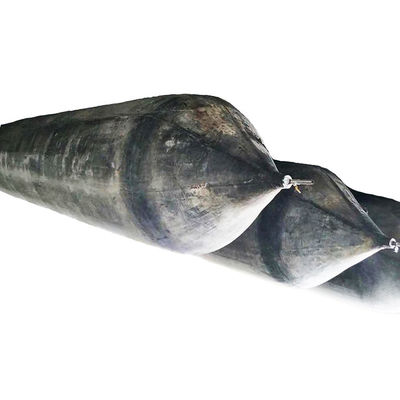
High Strength Flexible Durable Ship Launching Airbag Marine Rubber Airbag for Vessel Launching Docking

1
MOQ
$USD18-$USD365
Price
High Strength Flexible Durable Ship Launching Airbag Marine Rubber Airbag for Vessel Launching Docking
Features Gallery Product Description Request A Quote
Features
Specifications
Application: Ship Vessel Boat Launching Docking
Layers: 5-13Ply, Or As Request
Length: 3M-28M, Or As Request
Working Pressure: 0.05-0.25 MPA
Color: Black Or Customized
Product Name: Airbag Launching Ship
Packaging: Pallets, Wooden Box
Diameter: 0.5M-3.0M, Or As Request
Feature: Durable Construction
Reinforcement: Tyre Cord Fabric Layer
Material: NBR
Highlight:

High Strength Ship Launching Airbag

,

Flexible Marine Rubber Airbag

,

Durable Ship Launching Airbag

Basic Infomation
Place of Origin: China
Brand Name: Hongruntong Marine
Certification: ISO, BV, ABS, DNV, LR, SGS, CCS, RMRS
Model Number: HM-ALS6
Payment & Shipping Terms
Packaging Details: Wooden Pallets, Wooden Box
Delivery Time: 5-7 Work Days
Payment Terms: L/C,D/A,D/P,T/T,Western Union,
Supply Ability: 1220 Pcs Per Month
Product Description
Product Overview

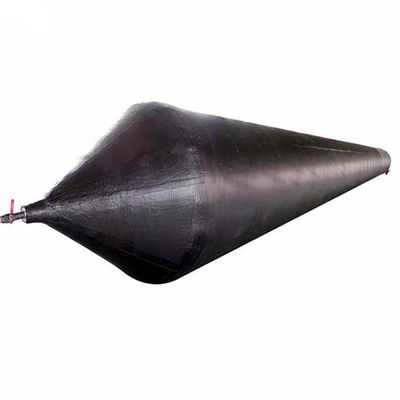
The Airbag Launching Ship is an inflatable marine launching system engineered for ship launching, hauling, landing, and shipyard transportation operations. It offers a flexible and efficient alternative to conventional launching methods by using compressed air-filled rubber airbags to support and move vessels between land and water. The system is well suited to shipyards, coastal facilities, repair yards, and marine construction projects that require adaptable vessel handling solutions.

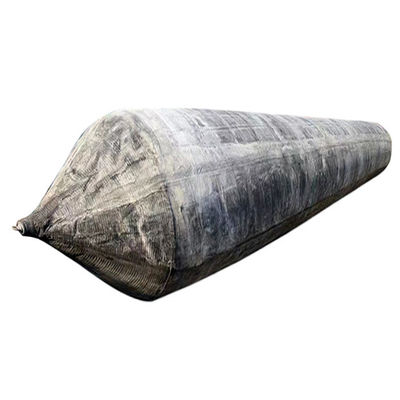
The airbags are typically manufactured from high-strength synthetic tire-cord fabric reinforced rubber. Their multilayer construction delivers structural strength, pressure resistance, flexibility, and abrasion protection. The outer rubber layer shields the internal reinforcement from seawater, sunlight, friction, and repeated ground contact. A range of diameters, effective lengths, working pressures, and load capacities can be selected to match specific vessel dimensions and launching requirements.

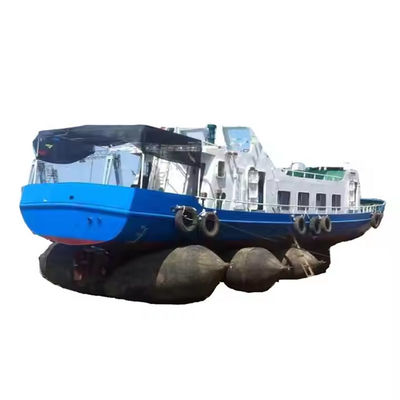
During operation, multiple airbags are positioned beneath the vessel at calculated support intervals. Once inflated, they distribute the vessel's weight across the supporting surfaces. As the ship moves forward, the airbags rotate and roll beneath the hull, reducing sliding friction and enabling controlled movement toward the water. This operating principle helps reduce dependence on permanent launching tracks and large mechanical lifting systems.

Airbag launching systems can be configured for fishing vessels, cargo ships, tugboats, workboats, and other marine vessels. Their flexible arrangement allows shipyards to adapt the launching process to different hull shapes, vessel weights, and site conditions. With proper engineering calculations, pressure control, and operating procedures, the Airbag Launching Ship provides a practical solution for improving shipyard flexibility, equipment utilization, and launching efficiency.

Case Study

A coastal shipyard undertook the construction of a 1,200-ton general cargo vessel and required an economical launching solution. The facility had limited space for installing a permanent launching railway, while conventional launching equipment would have demanded significant investment and long preparation time.

Hongruntong Marine supplied a customized airbag launching system based on the vessel's displacement, hull dimensions, bottom configuration, and launching ground conditions. The project included reinforced marine airbags, inflation accessories, and technical recommendations for airbag positioning and operating pressure.

Before launching, the shipyard prepared and inspected the ground surface, calculated the required supporting arrangement, and positioned the airbags beneath the vessel. Inflation was conducted in a controlled sequence, with pressure and vessel alignment monitored throughout the preparation process.

During the launching operation, the airbags provided flexible support and enabled the vessel to move gradually toward the water. The shipyard benefited from reduced dependence on fixed launching infrastructure and greater flexibility in organizing future vessel construction projects.

Following the successful operation, the customer continued using the same launching method for other vessels within the facility's operating capacity. The project demonstrated the value of an appropriately engineered airbag system in improving shipyard resource utilization and reducing infrastructure requirements.

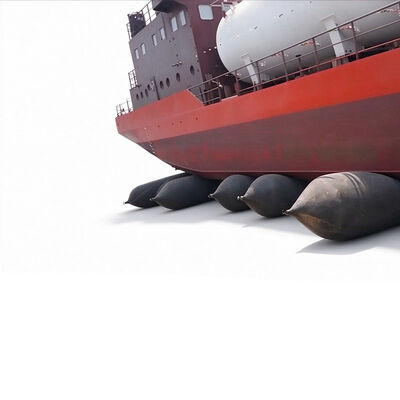
Marine airbags positioned beneath a cargo vessel during shipyard launching preparation Inflated ship launching airbags supporting a vessel hull during controlled movement toward water
Specifications
Item Description
Place of Origin China
Brand Name Hongruntong Marine
Material Industrial Grade Natural Rubber
Diameter 0.5m–3.0m, or as Request
Length 1.0m–28.0m, or as Request
Working Pressure 0.05–0.25 MPa
Technics High Pressure, Overall Winding, Explosion-Proof
Use Ship Launching and Docking
Thickness 5–13 ply
Standard Conducted by ISO14409 and GB/T1590-2006 system
Accessories Q355/SS304/SS316, Pressure Gauge, Tee, Plug, Switch, Inflation Tube
Packaging Inner-Plastic Bag; Outer-Standard Wooden Pallets
Keywords Airbag Launching Ship
Certificates ABS, BV, KR, LR, GL, NK, RINA, DNV, RMRS
MOQ 1
OEM Welcome
Load Capacity Reference
Diameter Working Pressure Working Height Bearing Capacity (KN/m) Bearing Capacity (Ton/m)
D=1.0m 0.14 MPa 0.6m 87.96 8.98
D=1.0m 0.14 MPa 0.5m 109.96 11.22
D=1.0m 0.14 MPa 0.4m 131.95 13.46
D=1.2m 0.12 MPa 0.7m 94.25 9.62
D=1.2m 0.12 MPa 0.6m 113.10 11.54
D=1.2m 0.12 MPa 0.5m 131.95 13.46
D=1.2m 0.12 MPa 0.4m 150.80 15.39
D=1.5m 0.10 MPa 0.9m 94.25 9.62
D=1.5m 0.10 MPa 0.8m 109.96 11.22
D=1.5m 0.10 MPa 0.7m 125.66 12.82
D=1.5m 0.10 MPa 0.6m 141.37 14.43
D=1.5m 0.10 MPa 0.5m 157.08 16.03
D=1.8m 0.09 MPa 1.1m 98.96 10.10
D=1.8m 0.09 MPa 1.0m 113.10 11.54
D=1.8m 0.09 MPa 0.9m 127.33 12.98
D=1.8m 0.09 MPa 0.8m 141.37 14.43
D=1.8m 0.09 MPa 0.7m 155.51 15.87
D=1.8m 0.09 MPa 0.6m 169.65 17.31
D=2.0m 0.08 MPa 1.2m 100.53 10.26
D=2.0m 0.08 MPa 1.1m 113.10 11.54
D=2.0m 0.08 MPa 1.0m 125.66 12.82
D=2.0m 0.08 MPa 0.9m 138.23 14.11
D=2.0m 0.08 MPa 0.8m 150.80 15.39
D=2.0m 0.08 MPa 0.7m 163.36 16.67
D=2.0m 0.08 MPa 0.6m 175.93 17.95

Other sizes can be produced according to client requirements.

Key Features
High-Strength Reinforced Rubber Construction

The airbag body is manufactured using multiple layers of synthetic tire-cord fabric combined with specially formulated rubber compounds. The reinforcement layers are designed to withstand internal inflation pressure and external loading during vessel movement. This construction helps maintain structural stability when the airbags are subjected to repeated compression, rolling, and contact with shipyard surfaces.

The rubber covering provides resistance to abrasion, moisture, seawater exposure, and environmental aging. Reinforcement design and rubber thickness can be adjusted according to the required load capacity and operating conditions. Proper bonding between the rubber and reinforcement layers is essential for maintaining overall structural integrity during repeated launching operations.

High Load-Bearing Capacity and Pressure Stability

Airbag launching systems are designed to support substantial vessel loads through a calculated distribution of multiple airbags. Each airbag must operate within its specified working pressure and deformation limits to ensure reliable load transfer. The actual supporting capacity depends on diameter, effective length, internal pressure, contact width, and the number of airbags used.

A properly engineered arrangement helps distribute vessel weight more evenly and reduces excessive loading on individual support points. Controlled inflation and continuous pressure monitoring contribute to stable support during vessel positioning and movement.

Flexible Rolling Performance and Adaptable Configuration

Unlike rigid launching equipment, inflatable airbags can deform according to the contact surface and hull geometry. This flexibility helps accommodate different vessel bottom configurations and ground conditions. During movement, the airbags rotate beneath the hull, providing a rolling support mechanism that reduces resistance compared with conventional sliding arrangements.

The number, spacing, and dimensions of airbags can be selected according to the vessel's structural characteristics and launching requirements. This adaptability makes the system suitable for shipyards handling different vessel types and construction schedules.

Reusable Design and Convenient Maintenance

Airbag launching equipment can be deflated, inspected, stored, and reused after completing an operation, provided that its structural condition remains acceptable. Compared with permanent launching infrastructure, inflatable equipment requires less fixed space for storage and can be transported between different working locations.

Regular inspection should include checking the rubber surface, inflation fittings, reinforcement condition, and signs of abnormal deformation. Proper cleaning, drying, pressure management, and storage help extend service life and maintain operational reliability.

Applications
  • Shipyard Newbuild Launching: Used for launching newly constructed fishing boats, cargo vessels, tugboats, and other marine craft. The system provides flexible vessel support and helps shipyards reduce dependence on permanent launching facilities.
  • Ship Repair and Maintenance Facilities: Suitable for moving vessels during docking, repair, and maintenance operations. Airbags can support controlled vessel transportation where conventional lifting equipment or fixed tracks are difficult to arrange.
  • Coastal and Small Port Operations: Applicable to coastal shipbuilding facilities and smaller ports that require adaptable vessel launching equipment. The inflatable configuration helps reduce infrastructure requirements and improves equipment mobility.
Why Choose Hongruntong Marine
More Than 30 Years of Manufacturing Experience

Hongruntong Marine has more than 30 years of manufacturing experience in marine rubber products and inflatable engineering equipment. This background provides a deep understanding of the material selection, reinforcement structures, production processes, and performance requirements associated with marine airbags.

Our manufacturing experience supports product development for different vessel dimensions and operating environments. We understand that ship launching equipment must withstand considerable mechanical loading, repeated deformation, and exposure to demanding marine conditions. Therefore, product design focuses on structural reliability, material consistency, and practical operating requirements.

Customized Engineering and Product Configuration

Different shipyards have different launching conditions, vessel specifications, and ground characteristics. Hongruntong Marine can provide customized airbag dimensions and configurations based on customer requirements. Diameter, effective length, reinforcement construction, and working pressure can all be considered during product selection.

This approach helps customers avoid relying on a single standard configuration for every vessel. Proper technical communication before production also helps identify important operating parameters and ensures that the supplied equipment matches the intended application.

Controlled Material Selection and Manufacturing Quality

Material quality directly affects airbag performance and service life. Hongruntong Marine focuses on suitable rubber compounds and high-strength reinforcement fabrics for marine applications. Manufacturing procedures emphasize dimensional consistency, reinforcement alignment, bonding quality, and inspection of finished products.

Quality control is critical because launching airbags operate under substantial loads and pressure. Each production stage contributes to the final product's structural integrity and operational reliability.

Technical Support and Long-Term Cooperation

Hongruntong Marine provides technical communication throughout product selection, manufacturing, and delivery. Our team can assist customers with understanding product specifications, selecting suitable configurations, and preparing for installation and operation.

We also value after-sales communication and maintenance guidance. By helping customers understand inspection requirements, storage conditions, and proper operating procedures, we aim to support long-term equipment utilization and establish stable cooperation with shipyards and marine engineering companies.

Frequently Asked Questions
1. What materials are used for the Airbag Launching Ship?

The airbags are generally manufactured from high-strength synthetic tire-cord fabric reinforced rubber, with protective outer rubber layers designed for marine environments.

2. Can the airbags launch different types of vessels?

Yes. They can be configured for fishing boats, cargo vessels, tugboats, workboats, and other ships according to vessel weight, dimensions, and launching conditions.

3. How do I select the correct airbag size?

Selection depends on vessel displacement, hull dimensions, required supporting capacity, ground conditions, and the number of airbags. Engineering calculations are recommended before ordering.

4. Can the airbags be reused?

Yes. They are designed for repeated use when properly operated, inspected, maintained, and stored. Any damaged airbag should be removed from service until professionally assessed.

5. What safety measures are required during launching?

Operators should follow an approved launching plan, maintain controlled inflation pressure, inspect the ground and airbags, establish an exclusion zone, and monitor vessel movement throughout the operation.

Product Gallery
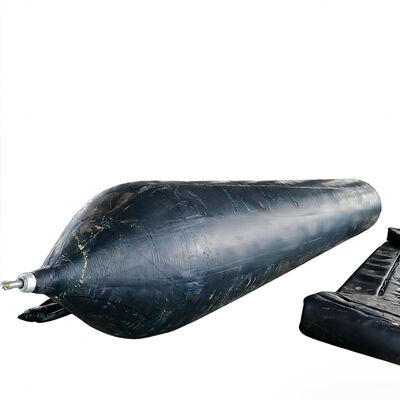
High-strength rubber ship launching airbags stacked at a shipyard facility Close-up view of reinforced marine airbag surface and inflation fittings
Hongruntong Marine airbag launching system in operation at a coastal shipyard
Recommended Products
Get in touch with us
Contact Person : Mr. William Lau
Tel : +8618910539783
Fax : 86-10-89461910
Characters Remaining(20/3000)