Product Overview
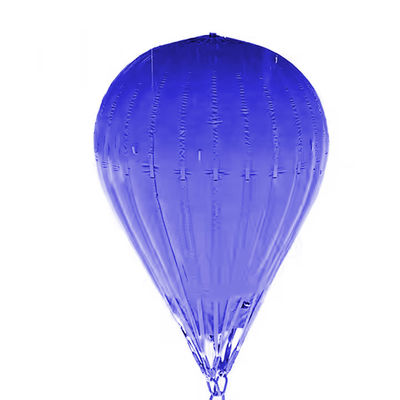
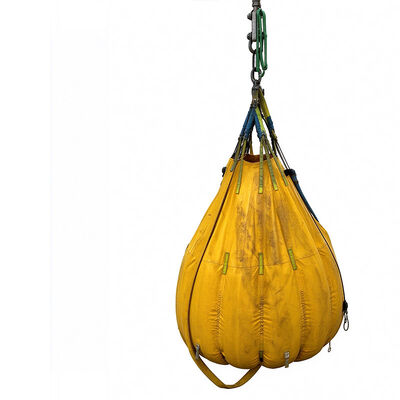
Factory Price Wholesale Tear-Resistant Marine Hardware Load Test Water Bags
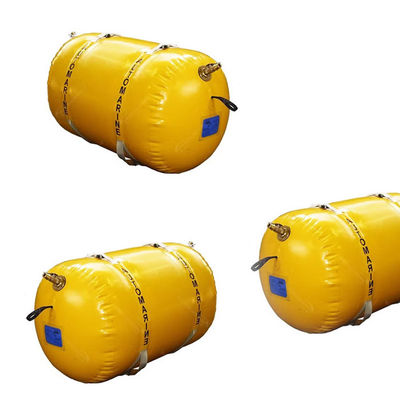
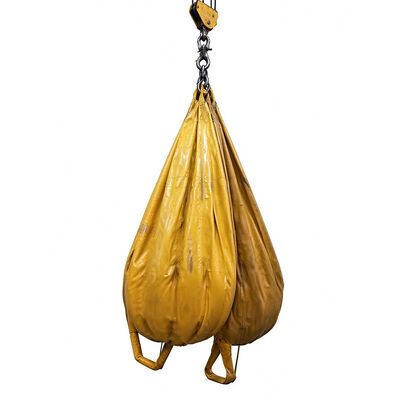
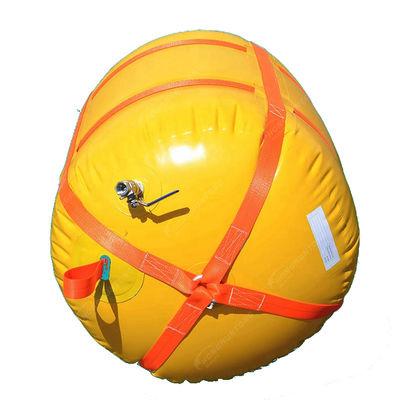
Load Testing Water Bags are flexible load-testing devices designed for proof load testing, working load verification, and performance evaluation of lifting equipment and load-bearing systems. They are commonly used with overhead cranes, gantry cranes, marine davits, deck cranes, winches, hoists, and offshore lifting equipment. By filling the bags with water to a specified test weight, operators can apply a controlled load without transporting and positioning large quantities of solid test weights.
Manufactured from PVC-coated fabric, Load Testing Water Bags combine flexibility, water resistance, and practical handling characteristics for industrial and marine environments. The PVC coating helps protect the reinforced fabric from moisture and routine environmental exposure, while the fabric structure provides the flexibility required for filling, lifting, draining, and storage. Material strength, seam construction, coating integrity, and lifting attachment design are essential considerations when evaluating the suitability of a bag for a particular testing application.
Load Testing Water Bags are available in different capacities, dimensions, and configurations to accommodate varying equipment ratings and testing requirements. Capacity selection should be based on the required test load, lifting height, available working clearance, rigging arrangement, and applicable testing procedure. For higher load requirements, multiple bags may be used together when the complete arrangement has been appropriately assessed. The combined load must include the mass of the filled bags and all associated lifting accessories.
During operation, water is introduced through the designated filling connection until the required test weight is achieved. The load is then applied according to the approved testing procedure, allowing qualified personnel to evaluate the equipment's lifting, braking, load-holding, and structural performance. After the test, the water is discharged through the designated outlet, and the bags can be removed for inspection and storage. This operating method can reduce the handling operations associated with conventional solid test weights and improve the flexibility of testing arrangements.
The use of Load Testing Water Bags requires appropriate engineering assessment and operational controls. The lifting equipment, suspension points, rigging accessories, and supporting structures must be suitable for the intended load. Operators should consider water filling rates, load stability, bag clearance, drainage arrangements, and personnel exclusion zones before beginning the test. The bag must remain within its specified capacity and operating limitations throughout the procedure.
For shipyards, ports, offshore facilities, and industrial maintenance departments, Load Testing Water Bags provide a practical approach to recurring lifting-equipment verification. Their flexible construction supports efficient transportation when empty, while controlled water filling allows the test load to be established at the worksite. When correctly selected, inspected, and operated, they help streamline testing preparation, reduce material-handling requirements, and support documented equipment maintenance procedures.
Case Study: 40-Tonne Overhead Crane Proof Load Test
A shipbuilding and repair facility in Southeast Asia needed to conduct proof load testing on a 40-tonne overhead crane used to move steel sections, prefabricated assemblies, and heavy machinery components within its fabrication workshop. The crane had recently undergone maintenance on its hoisting mechanism and braking system. Before returning the equipment to routine operation, the engineering department required a controlled load test to verify its performance in accordance with the approved inspection procedure.
The facility had traditionally used solid steel test weights. Although this method was familiar to the maintenance team, it required dedicated storage space, suitable equipment for transporting the weights, and several lifting operations to assemble the test load. The workshop was also operating on a tight production schedule, making it necessary to reduce unnecessary equipment movements and minimize disruption to nearby fabrication activities.
The engineering team evaluated PVC-coated Load Testing Water Bags as an alternative. The required capacity was determined from the approved test load, the crane's rated capacity, and the planned suspension arrangement. Before the operation, the team checked the crane specifications, lifting accessories, available headroom, and the condition of the testing area. The selected bags were inspected for fabric damage, leakage, seam condition, and the integrity of their lifting attachments.
The testing area was isolated from normal workshop traffic. The bags were connected to the approved lifting arrangement and filled progressively using a controlled water supply. The test team monitored the load throughout filling and checked the crane's response against the established procedure. Particular attention was given to hoisting operation, braking performance, load stability, and any abnormal movement or visible structural response. Personnel remained outside the restricted area while the load was suspended.
After the specified test stages were completed, the crane's performance was evaluated by the responsible engineering personnel. The bags were then drained through the designated discharge system, lowered safely, and removed from the workshop floor. Compared with the previous method, the water-bag arrangement reduced the need to transport and reposition numerous solid weights, simplified test preparation, and made it easier to clear the work area after testing.
Following the operation, the maintenance department established a storage and inspection procedure for future use. This included checking the PVC-coated fabric, inspecting seams and lifting attachments, ensuring complete drainage, and storing the bags away from sharp objects and unsuitable environmental conditions. The facility also retained records of the test configuration and inspection findings to support future maintenance planning.
The customer found the water-bag approach practical for recurring lifting-equipment tests, provided that each operation was planned according to the equipment rating and applicable requirements. The project demonstrated that flexible test loads can improve testing logistics without replacing the need for competent personnel, approved procedures, and independent verification of the complete lifting arrangement. The same approach could subsequently be assessed for other cranes and lifting devices within the facility.
Specifications
| Name |
Load Testing Water Bags |
| Application |
Proof Load Testing, Offshore Load Testing, Structural Load Testing, Ship Load Testing, Industrial Equipment Testing, Research and Development |
| Content |
100% Polyvinyl Chloride (PVC) |
| Phthalate |
7P Phthalate Free (includes all phthalates listed in CAL Prop 65, CPSIA, and REACH) |
| Backing Material Size |
1.8/2.0 mm × 1.55 m; thickness produced as per your request |
| Weight |
37.1 oz per square yard / 1450 ± 50 GSM |
| Special Properties |
UV resistant
7P Phthalate Free (includes all phthalates listed in CAL Prop 65, CPSIA, and REACH)
BPA Free / Tris Free / Formaldehyde Free
Does not contain conflict minerals |
| Care Instructions |
Rinse with fresh water and air dry. Do not store with seawater and keep away from heat sources. |
| Available Sizes |
5,000 kg
8,000 kg
10,000 kg
15,000 kg
20,000 kg
30,000 kg
50,000 kg
100,000 kg
Special sizes can be customized |
| OEM |
Supported |
Model & Dimension Table
| Model |
Weight (kg / lbs) |
Volume (Liters / m³ / USG) |
Empty Height / Length (m / ft) |
Filled Height / Length (m / ft) |
Max Diameter ø (m / ft) |
Dry Weight without Accessories (kg / lbs) |
| HM-1T |
1,000 / 2,204 |
1,000 / 1 / 264 |
2.52 / 8.27 |
2.23 / 7.33 |
1.39 / 4.56 |
36 / 80 |
| HM-2T |
2,000 / 4,409 |
2,000 / 2 / 528 |
2.87 / 9.41 |
2.6 / 8.5 |
1.65 / 5.43 |
41 / 90 |
| HM-3T |
3,000 / 6,613 |
3,000 / 3 / 792 |
3.38 / 11.11 |
2.97 / 9.75 |
1.82 / 6.0 |
50 / 110 |
| HM-4T |
4,000 / 8,818 |
4,000 / 4 / 1,056 |
3.41 / 11.22 |
3.07 / 10.1 |
1.88 / 6.16 |
64 / 141 |
| HM-5T |
5,000 / 11,023 |
5,000 / 5 / 1,320 |
4.14 / 13.60 |
3.52 / 11.58 |
2.13 / 7.0 |
80 / 176 |
| HM-6T |
6,000 / 13,227 |
6,000 / 6 / 1,585 |
4.39 / 14.41 |
3.91 / 12.83 |
2.28 / 7.48 |
86 / 189 |
| HM-8T |
8,000 / 17,636 |
8,000 / 8 / 2,113 |
4.54 / 14.91 |
3.93 / 12.91 |
2.52 / 8.27 |
104 / 230 |
| HM-10T |
10,000 / 22,046 |
10,000 / 10 / 2,641 |
5.18 / 17.0 |
4.49 / 14.75 |
2.70 / 8.90 |
130 / 286 |
| HM-12.5T |
12,500 / 27,558 |
12,500 / 12.5 / 3,302 |
5.43 / 17.91 |
4.62 / 15.16 |
2.86 / 9.39 |
154 / 340 |
| HM-15T |
15,000 / 33,069 |
15,000 / 15 / 3,962 |
6.24 / 20.50 |
5.48 / 18.00 |
2.95 / 9.70 |
159 / 350 |
| HM-20T |
20,000 / 44,100 |
20,000 / 20 / 5,283 |
6.78 / 22.25 |
6.04 / 19.83 |
3.42 / 11.25 |
224 / 492 |
| HM-25T |
25,000 / 55,115 |
25,000 / 25 / 6,604 |
7.51 / 24.66 |
6.40 / 21.0 |
3.75 / 12.33 |
315 / 695 |
| HM-35T |
35,000 / 77,161 |
35,000 / 35 / 9,246 |
8.07 / 26.50 |
7.11 / 23.33 |
3.91 / 12.83 |
417 / 920 |
| HM-40T |
40,000 / 88,184 |
40,000 / 40 / 10,566 |
8.71 / 28.58 |
7.72 / 25.33 |
4.07 / 13.36 |
440 / 970 |
| HM-50T |
50,000 / 110,231 |
50,000 / 50 / 13,208 |
8.99 / 29.50 |
7.77 / 25.50 |
4.56 / 14.96 |
544 / 1,200 |
| HM-100T |
100,000 / 220,462 |
100,000 / 100 / 26,420 |
11.27 / 37.00 |
10.00 / 32.9 |
5.65 / 18.56 |
952 / 2,100 |
Note: Dimensions and weights are nominal and may vary by configuration. Confirm final specifications with the manufacturer before ordering.
Key Features
PVC-Coated Fabric Construction for Industrial Use
Load Testing Water Bags use PVC-coated fabric to provide a flexible water-containing structure suitable for repeated handling and testing operations. The textile reinforcement and protective coating perform complementary functions: the fabric contributes to the structural strength of the bag, while the PVC layer helps resist water penetration and protects the surface during normal use. This construction allows the empty bag to be folded or packed for transportation and storage, offering a practical alternative to rigid test weights when space and handling efficiency are important considerations.
Material performance depends on the fabric specification, coating quality, seam construction, and operating conditions. Exposure to sharp edges, excessive abrasion, unsuitable chemicals, extreme temperatures, or prolonged environmental degradation may affect serviceability. For this reason, material selection should be based on the intended application rather than on the coating material alone. Users should confirm the manufacturer's specifications for operating conditions and inspect the fabric before each test, particularly in areas exposed to rigging contact or repeated folding.
Controlled Water Filling and Load Adjustment
Water filling allows operators to establish the required test load progressively in accordance with an approved procedure. The amount of water introduced can be adjusted to suit different testing requirements, reducing the need to transport and position multiple solid weights. This feature is particularly useful for maintenance departments that conduct recurring tests on equipment with different rated capacities or operate at locations where handling heavy test materials is difficult.
For preliminary planning, one cubic metre of fresh water has a mass of approximately one tonne under typical conditions. However, the final applied load must account for the actual water quantity, water density where relevant, the bag's own mass, and the weight of all associated lifting components. When the test requires a defined accuracy, calibrated measuring equipment or an approved load-measurement method should be used. Filling rates and load increments should be established before testing to prevent uncontrolled loading and help maintain stability throughout the operation.
Reinforced Lifting Attachments and Load Distribution
The lifting attachments form a critical part of the load path between the filled bag and the equipment under test. Their design must be compatible with the bag's capacity, suspension geometry, and intended handling method. Reinforcement around attachment points, seam integrity, connection dimensions, and the arrangement of lifting accessories should be considered together to reduce localized stress and support predictable load transfer.
Before use, operators should confirm that hooks, shackles, slings, spreader beams, and other rigging components are suitable for the planned load and configuration. The working load limits of all components must be adequate, with sling angles and relevant loading effects taken into account by the responsible personnel. Attachments should be checked for abrasion, damaged stitching, deformation, corrosion, and other signs of deterioration. Improvised connections and lifting beyond the specified capacity can create serious hazards and must be avoided.
Reusable Construction and Inspection Requirements
Load Testing Water Bags can support repeated testing when their materials, construction, inspection status, and operating conditions remain acceptable. Their reusable nature helps reduce the need to procure or transport separate solid test weights for every testing operation. However, repeated use must be supported by appropriate inspection, maintenance, and storage practices rather than assumed solely from the product's flexible construction.
After each test, the bag should be completely drained, checked for visible damage, and cleaned where necessary. It should be dried appropriately and stored in a clean area away from sharp objects, excessive heat, and conditions that could accelerate material deterioration. Inspection records can document usage, applied test load, visible defects, maintenance activities, and decisions regarding continued service. Any leakage, damaged seam, compromised lifting attachment, or uncertainty about structural integrity should be evaluated by qualified personnel before reuse. Repairs should follow approved manufacturer procedures, and any required reinspection must be completed before the bag returns to service.
Applications
Overhead Cranes and Industrial Lifting Equipment
Load Testing Water Bags are suitable for testing overhead cranes, gantry cranes, jib cranes, and other industrial lifting systems during commissioning, periodic inspection, or maintenance verification. Controlled water filling allows the test load to be established at the worksite, reducing the need to transport and position multiple solid weights. During testing, qualified personnel can evaluate hoisting performance, braking response, load holding, and other criteria defined by the applicable procedure. The test area must be isolated, and the crane, supporting structure, rigging, and water-bag configuration must be verified before loading begins.
Marine Davits and Shipboard Handling Systems
Marine davits, deck cranes, rescue-boat launching systems, and winches often operate in areas with limited deck space and restricted access. Load Testing Water Bags provide a flexible option for applying approved test loads without requiring large quantities of rigid test weights to be brought aboard. Before testing, the responsible team should confirm the required load, vessel operating conditions, lifting geometry, available clearance, and safe water discharge arrangements. The procedure must account for vessel movement, personnel access, and any relevant stability or operational restrictions.
Offshore Facilities and Maintenance Projects
Offshore platforms, marine terminals, and remote industrial facilities may face significant logistical challenges when transporting heavy test weights. Load Testing Water Bags can simplify test preparation by allowing water to be supplied at the worksite, provided that water availability, drainage, environmental restrictions, and lifting arrangements have been evaluated. Offshore procedures should also consider wind, movement of the supporting platform or vessel, restricted work areas, and emergency response requirements. The bags must be operated within their specified limitations, and the test results should be documented as part of the facility's maintenance and inspection records.
Why Choose Hongruntong Marine
More Than 30 Years of Manufacturing Experience
Hongruntong Marine has more than 30 years of manufacturing experience, providing a foundation for understanding the technical and operational requirements of industrial and marine equipment. For Load Testing Water Bags, product suitability depends on multiple factors, including PVC-coated fabric performance, seam integrity, lifting attachment configuration, nominal capacity, and the operating environment. Experience in manufacturing industrial products supports a systematic approach to evaluating these factors and communicating relevant technical information to customers.
Each testing application presents different requirements. A bag intended for a shipyard overhead crane may need a different capacity and handling configuration from one used for a marine davit or offshore lifting system. By reviewing the customer's intended application, required test load, available working space, and operating conditions, Hongruntong Marine can help clarify suitable product options and identify specifications that require confirmation before production. This process supports more informed purchasing decisions and reduces the risk of selecting equipment based solely on nominal capacity.
PVC Material Selection and Manufacturing Quality
The durability and water-containment performance of Load Testing Water Bags depend on the quality of the PVC-coated fabric and the consistency of the manufacturing process. The reinforced fabric, protective coating, seams, and lifting attachment areas must function as an integrated structure. Weakness in any critical area can affect product serviceability, especially when the bag is repeatedly filled, suspended, drained, and transported.
Hongruntong Marine emphasizes material suitability and manufacturing workmanship when addressing customer requirements. Relevant considerations include fabric condition, coating consistency, seam quality, attachment reinforcement, and the finished product's overall construction. The precise inspection criteria and supporting documentation should be agreed upon according to the project requirements. Customers who require specific material records, dimensional checks, or inspection reports should identify these needs before ordering so that the applicable requirements can be reviewed and confirmed.
Application-Based Product Configuration
Load-testing projects vary in test weight, equipment type, rigging arrangement, available lifting height, and operating environment. A suitable configuration must therefore be selected according to the complete application rather than by capacity alone. Hongruntong Marine can review the information supplied by customers to help identify appropriate capacity options, dimensions, filling arrangements, discharge requirements, and lifting attachment configurations.
For specialized projects, the purchaser should provide the rated capacity of the equipment under test, the required proof load, the intended operating environment, and any applicable technical specifications. Additional information about working clearance, water supply, drainage, and rigging geometry may also be needed. The final arrangement must be verified by the responsible engineer, including the suitability of the lifting equipment, accessories, and supporting structure. This coordinated approach helps align product selection with the actual testing procedure and operational constraints.
Technical Communication and Long-Term Support
Reliable product supply includes clear communication before purchase and access to relevant product information during service. Customers may need assistance understanding capacity options, checking dimensions, reviewing material specifications, or planning routine inspection and storage. Hongruntong Marine supports product-related technical communication to help purchasers clarify these requirements and establish a clear specification before production and delivery.
For customers conducting recurring tests, retaining product specifications and inspection records can help improve consistency between maintenance cycles and repeat orders. A documented maintenance process should include checks of fabric condition, seams, lifting attachments, drainage arrangements, and storage conditions. Where defects or unusual operating conditions are identified, the product should be evaluated before further use. Manufacturer support can help clarify product-related questions, but it does not replace engineering approval, statutory inspections, or the competent assessment required for safe lifting operations.
Frequently Asked Questions
1. What is the primary purpose of a Load Testing Water Bag?
It is designed to provide a controllable test load for evaluating cranes, davits, winches, hoists, and other lifting equipment. Water is added to achieve the required load according to an approved test procedure. The equipment and complete rigging arrangement must be suitable for the intended operation.
2. What capacities are available for Load Testing Water Bags?
Capacity options depend on the product specification and project requirements. Customers should provide the required test weight, lifting equipment rating, working clearance, and intended application so that suitable options can be evaluated. The selected capacity must meet the approved testing requirements.
3. Are Load Testing Water Bags made from PVC?
Yes. This product specification uses PVC-coated fabric. The coating provides a water-resistant surface, while the reinforced fabric contributes to the bag's structure. Material performance and suitability should be confirmed against the actual operating environment and expected service conditions.
4. How should the bags be inspected and stored after use?
Completely drain the bag, inspect the fabric, seams, and lifting attachments, and clean and dry it as appropriate. Store it in a clean, dry location away from sharp objects and damaging environmental conditions. Any suspected structural damage or leakage should be evaluated before reuse.
5. Can these bags be used for certified lifting-equipment tests?
They may be used when their specifications and the complete testing arrangement satisfy the applicable requirements. Certification, inspection records, and third-party documentation depend on the project and governing regulations. Customers should confirm the required documents before ordering and obtain approval from the responsible inspection personnel.


 Your message must be between 20-3,000 characters!