Product Overview
Florescence Proof Load Test Water Bag with Hose for Crane and Lifting Equipment Inspection
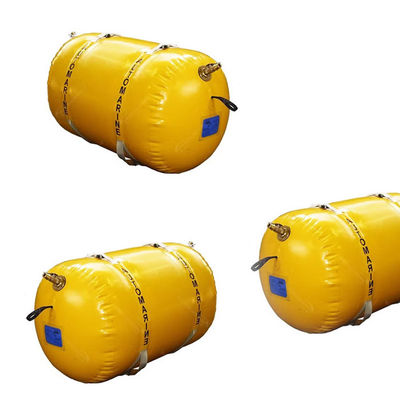
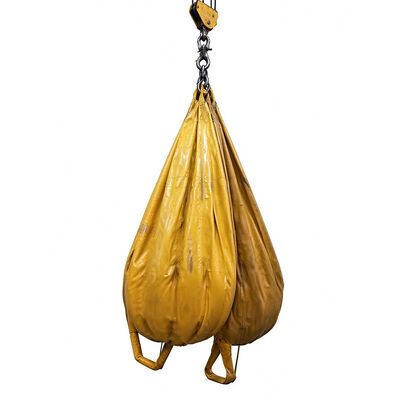
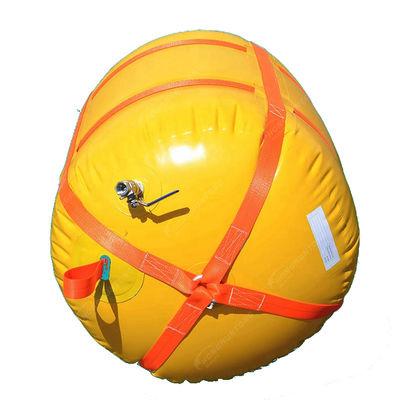
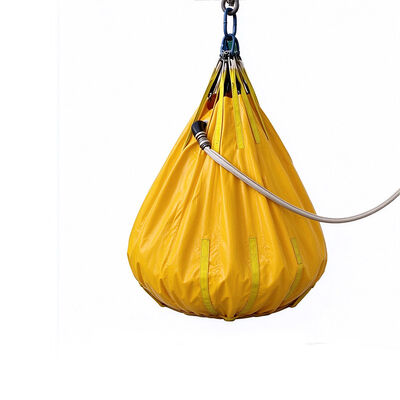
Load Testing Water Bags are flexible load-testing devices designed to provide controlled test loads for lifting equipment, structural systems, and mechanical handling installations. They are used to verify the performance of cranes, marine davits, offshore lifting systems, winches, hoists, and other load-bearing equipment during commissioning, periodic inspection, and maintenance procedures. By using water as the loading medium, these bags provide an alternative to conventional solid test weights, particularly at facilities where transportation, storage, and positioning of heavy weights create logistical challenges.
The bags are manufactured from PVC-coated fabric, combining textile reinforcement with a protective coating suitable for water-containing applications. The reinforced fabric contributes to the bag's structural strength, while the PVC coating helps resist moisture and routine environmental exposure. Product performance depends on fabric specifications, coating integrity, seam construction, attachment reinforcement, and the quality of the finished assembly. These characteristics should be evaluated against the intended load, operating environment, handling frequency, and maintenance requirements.
Load Testing Water Bags can be supplied in different capacities and dimensions to accommodate varying testing requirements. The appropriate configuration depends on the rated capacity of the equipment under test, the required proof load, available lifting height, rigging geometry, and site restrictions. For larger testing requirements, multiple bags may be used within an engineered arrangement, provided that the load distribution, suspension configuration, and capacity of all supporting components have been verified. The total suspended load must include the water, bag, rigging accessories, and other connected equipment.
The main operational advantage of water-based testing is the ability to establish the required load through controlled filling. Water can be introduced progressively, allowing the test team to follow the loading sequence specified in the approved procedure. After the test, the water is discharged through the designated outlet, allowing the bags to be lowered, recovered, and prepared for storage. This process can reduce the number of heavy solid items that must be transported and repositioned, improving logistical flexibility at ports, shipyards, offshore facilities, and industrial maintenance sites.
Case Study: 32-Tonne Marine Service Crane Verification
A coastal ship repair yard in South America was preparing to return a 32-tonne marine service crane to operation following a scheduled maintenance program. The crane was used to lift replacement engines, auxiliary machinery, workshop materials, and equipment transferred between the quay and vessels undergoing repair. During maintenance, technicians had serviced the hoisting mechanism and inspected the braking system. The yard's engineering department required a load test to verify the crane's performance before releasing it for routine service.
The yard faced two practical constraints. First, the maintenance area had limited space for storing large quantities of solid test weights. Second, the crane was positioned near a repair berth where access routes were shared by maintenance vehicles, technicians, and equipment deliveries. Moving heavy test weights into the area would require additional lifting operations and careful coordination with other work. The yard therefore evaluated Load Testing Water Bags as a means of simplifying test preparation and reducing unnecessary material handling.
The engineering contractor reviewed the crane's rated capacity, the prescribed test load, available lifting height, and the proposed suspension arrangement. PVC-coated Load Testing Water Bags were selected according to the project requirements. Before the test began, the team inspected the bags for fabric damage, leakage, seam deterioration, and defects around the lifting attachments. The rigging accessories were checked for compatibility and capacity, and the supporting structure and working area were assessed for the planned operation.
A designated water supply and drainage arrangement was prepared to prevent uncontrolled discharge around the repair berth. The bags were connected to the approved lifting system and filled progressively under the supervision of the test team. During loading, the crane operator and inspection personnel monitored hoisting performance, braking response, load stability, and visible structural behavior. The test area remained restricted, and personnel were kept clear of the suspended load throughout the operation.
Once the prescribed loading stages were completed, the responsible inspection personnel assessed the crane's response against the applicable acceptance criteria. The bags were then drained through the planned discharge system and lowered safely for removal. Using water bags reduced the need to bring multiple solid weights into the maintenance area and simplified the recovery process after testing. It also allowed the yard to use the same general loading method for other compatible equipment, subject to separate capacity calculations and test procedures.
Following the project, the maintenance department introduced a documented procedure for inspecting and storing the bags. The procedure covered pre-use condition checks, controlled filling, load verification, post-test drainage, drying, and protection against abrasion during storage. Inspection records were retained to support future maintenance planning and to help determine whether the bags remained suitable for continued use.
Specifications
| Name |
Load Testing Water Bags |
| Application |
Proof Load Testing, Offshore Load Testing, Structural Load Testing, Ship Load Testing, Industrial Equipment Testing, Research and Development |
| Content |
100% Polyvinyl Chloride |
| Phthalate |
7P Phthalate Free (Includes all Phthalates Listed in CAL Prop 65, CPSIA and REACH) |
| Backing Material Size |
1.8/2.0 mm × 1.55 m; thickness produced as per your request |
| Weight |
37.1 oz per square yard / 1450 ± 50 GSM |
| Special Properties |
UV Resistant
7P Phthalate Free (Includes all Phthalates Listed in CAL Prop 65, CPSIA and REACH)
BPA Free / Tris Free / Formaldehyde Free
Does not contain Conflict Minerals |
| Care Instructions |
Rinse with fresh water and air dry. Do not store with seawater and keep away from heat sources. |
| Available Sizes |
5,000 kg / 8,000 kg / 10,000 kg / 15,000 kg / 20,000 kg / 30,000 kg / 50,000 kg / 100,000 kg. Special sizes can be customized. |
| OEM |
Supported |
Model & Capacity Chart
| Model |
Weight |
Volume |
Empty Height (Length) |
Filled Height (Length) |
Max Diameter (ø) |
Dry Weight without Accessories |
| HM-1T |
1,000 kg
2,204 lbs |
1,000 L / 1 m³
264 USG |
2.52 m
8.27 ft |
2.23 m
7.33 ft |
1.39 m
4.56 ft |
36 kg
80 lbs |
| HM-2T |
2,000 kg
4,409 lbs |
2,000 L / 2 m³
528 USG |
2.87 m
9.41 ft |
2.6 m
8.5 ft |
1.65 m
5.43 ft |
41 kg
90 lbs |
| HM-3T |
3,000 kg
6,613 lbs |
3,000 L / 3 m³
792 USG |
3.38 m
11.11 ft |
2.97 m
9.75 ft |
1.82 m
6.0 ft |
50 kg
110 lbs |
| HM-4T |
4,000 kg
8,818 lbs |
4,000 L / 4 m³
1,056 USG |
3.41 m
11.22 ft |
3.07 m
10.1 ft |
1.88 m
6.16 ft |
64 kg
141 lbs |
| HM-5T |
5,000 kg
11,023 lbs |
5,000 L / 5 m³
1,320 USG |
4.14 m
13.60 ft |
3.52 m
11.58 ft |
2.13 m
7.0 ft |
80 kg
176 lbs |
| HM-6T |
6,000 kg
13,227 lbs |
6,000 L / 6 m³
1,585 USG |
4.39 m
14.41 ft |
3.91 m
12.83 ft |
2.28 m
7.48 ft |
86 kg
189 lbs |
| HM-8T |
8,000 kg
17,636 lbs |
8,000 L / 8 m³
2,113 USG |
4.54 m
14.91 ft |
3.93 m
12.91 ft |
2.52 m
8.27 ft |
104 kg
230 lbs |
| HM-10T |
10,000 kg
22,046 lbs |
10,000 L / 10 m³
2,641 USG |
5.18 m
17.0 ft |
4.49 m
14.75 ft |
2.70 m
8.90 ft |
130 kg
286 lbs |
| HM-12.5T |
12,500 kg
27,558 lbs |
12,500 L / 12.5 m³
3,302 USG |
5.43 m
17.91 ft |
4.62 m
15.16 ft |
2.86 m
9.39 ft |
154 kg
340 lbs |
| HM-15T |
15,000 kg
33,069 lbs |
15,000 L / 15 m³
3,962 USG |
6.24 m
20.50 ft |
5.48 m
18.00 ft |
2.95 m
9.70 ft |
159 kg
350 lbs |
| HM-20T |
20,000 kg
44,100 lbs |
20,000 L / 20 m³
5,283 USG |
6.78 m
22.25 ft |
6.04 m
19.83 ft |
3.42 m
11.25 ft |
224 kg
492 lbs |
| HM-25T |
25,000 kg
55,115 lbs |
25,000 L / 25 m³
6,604 USG |
7.51 m
24.66 ft |
6.40 m
21.0 ft |
3.75 m
12.33 ft |
315 kg
695 lbs |
| HM-35T |
35,000 kg
77,161 lbs |
35,000 L / 35 m³
9,246 USG |
8.07 m
26.50 ft |
7.11 m
23.33 ft |
3.91 m
12.83 ft |
417 kg
920 lbs |
| HM-40T |
40,000 kg
88,184 lbs |
40,000 L / 40 m³
10,566 USG |
8.71 m
28.58 ft |
7.72 m
25.33 ft |
4.07 m
13.36 ft |
440 kg
970 lbs |
| HM-50T |
50,000 kg
110,231 lbs |
50,000 L / 50 m³
13,208 USG |
8.99 m
29.50 ft |
7.77 m
25.50 ft |
4.56 m
14.96 ft |
544 kg
1,200 lbs |
| HM-100T |
100,000 kg
220,462 lbs |
100,000 L / 100 m³
26,420 USG |
11.27 m
37.00 ft |
10.00 m
32.9 ft |
5.65 m
18.56 ft |
952 kg
2,100 lbs |
Key Features
PVC-Coated Fabric Designed for Repeated Handling
Load Testing Water Bags use PVC-coated fabric to provide a flexible structure for containing water during lifting-equipment tests. The textile reinforcement contributes to the bag's structural characteristics, while the PVC coating provides a water-resistant external surface. This material construction allows the empty bag to be folded or packed for transportation, reducing storage demands compared with rigid test weights. It is particularly useful for maintenance contractors and marine facilities that move testing equipment between workshops, vessels, terminals, and offshore locations.
The suitability of PVC-coated fabric depends on more than its basic water resistance. Fabric strength, coating thickness and integrity, seam quality, reinforcement details, and exposure conditions all influence the product's serviceability. In marine and industrial environments, the bag may encounter sunlight, moisture, abrasion, temperature changes, and repeated contact with lifting accessories. These conditions should be considered when specifying the product for long-term use.
Progressive Filling for Controlled Load Application
The water-filling method allows the test load to be established in stages according to the approved testing procedure. Instead of positioning all solid test weights before an operation, the team can fill the bag progressively and adjust the water quantity to the required level. This approach can simplify the preparation of tests involving different load requirements and reduce the number of heavy items that must be moved around the worksite.
Water volume provides a practical basis for estimating the load. Under typical conditions, one cubic metre of fresh water has a mass of approximately one tonne. However, this relationship is only a preliminary calculation reference. The actual suspended load includes the mass of the bag, the water, and all associated lifting accessories. Where test accuracy is important, the load must be established using an approved measurement method appropriate to the relevant procedure. Calibrated load cells, weighing systems, or verified flow-measurement arrangements may be required depending on the application.
Reinforced Lifting Points and Rigging Compatibility
The lifting attachments are critical load-transfer components because they connect the filled bag to the equipment under test. Their configuration must be compatible with the intended load, bag geometry, and rigging arrangement. Reinforcement around the attachment points, joining quality, and the distribution of forces across the bag should be considered together to reduce localized stress and support stable suspension.
The complete lifting arrangement must be verified before use. This includes the bag's attachment points, hooks, shackles, slings, spreader beams, and other connection hardware. Each component must have an adequate working load limit for the actual configuration, with sling angles and relevant loading effects considered by qualified personnel. The supporting crane, davit, or other equipment must also be suitable for the intended test procedure.
Drainage, Recovery, and Service-Life Management
Load Testing Water Bags are designed to be emptied after use, allowing them to be recovered and prepared for subsequent testing. A suitable drainage arrangement is important because the bag must be emptied in a controlled manner without creating hazards around personnel, equipment, electrical installations, or sensitive work areas. The discharge location and water-management method should be established before testing begins.
After drainage, the bag should be inspected for fabric damage, leakage, seam deterioration, and problems around filling or discharge connections. Cleaning and drying should follow the manufacturer's recommendations, and the bag should be stored in conditions that protect the PVC coating and reinforced fabric from sharp objects, excessive heat, and unsuitable environmental exposure. Retained water should not be left in the bag during storage unless the product instructions specifically permit the relevant arrangement.
Applications
Ship Repair Yards and Vessel Maintenance Facilities
Ship repair yards routinely test cranes, davits, winches, and other lifting systems used to remove engines, handle machinery, and move maintenance equipment. Load Testing Water Bags provide a flexible loading method when transporting solid weights into confined repair areas is difficult. Their empty form simplifies storage between operations, while water filling allows the required test load to be established at the worksite. Testing teams must verify the bag configuration, rigging, crane rating, and drainage arrangements before beginning the procedure.
Marine Terminals and Cargo-Handling Installations
Ports and terminals operate lifting equipment under demanding schedules, often with limited space for maintenance activities. Load Testing Water Bags can support commissioning and periodic verification of suitable harbor cranes, gantry cranes, and cargo-handling systems. By reducing the need to transport and reposition numerous solid weights, they can simplify testing logistics and reduce interference with nearby operations. The work area must be isolated, and the testing procedure must address load measurement, water supply, discharge control, and the safety of personnel working around the equipment.
Offshore and Remote Industrial Maintenance
Offshore facilities and remote industrial projects may encounter high transportation costs and limited access for heavy test weights. Load Testing Water Bags provide an alternative where water can be supplied and managed safely at the testing location. Before use, the team should assess environmental conditions, lifting height, suspension geometry, platform or vessel movement, and any restrictions on water discharge. The equipment must be operated within its specified capacity and under an approved procedure, with inspection records retained for future maintenance and verification.
Why Choose Hongruntong Marine
More Than 30 Years of Manufacturing Experience
Hongruntong Marine has more than 30 years of manufacturing experience, providing a foundation for understanding the practical demands of marine and industrial equipment. Load Testing Water Bags require coordinated consideration of material performance, water containment, lifting attachments, capacity, and maintenance requirements. These characteristics must be evaluated in relation to the intended application because a product suitable for one testing arrangement may not automatically meet the requirements of another.
For customers working with shipyard cranes, port equipment, marine davits, or offshore lifting systems, the purchasing process should begin with clear technical requirements. Information about the equipment under test, required proof load, working environment, and intended frequency of use helps establish an appropriate product specification. Hongruntong Marine can review customer-provided requirements and clarify relevant capacity and configuration options before an order is finalized.
Material Selection and Manufacturing Workmanship
The performance of a Load Testing Water Bag depends on the combined characteristics of the PVC-coated fabric, reinforced seams, lifting attachments, and finished assembly. The fabric must be appropriate for the intended water-containing application, while the coating and joining methods must support the expected handling and operating conditions. Manufacturing workmanship is particularly important around seams and lifting points, where deterioration or defects may affect the bag's serviceability.
Hongruntong Marine considers material requirements and construction details when reviewing product specifications. Relevant considerations include fabric condition, coating integrity, seam workmanship, attachment reinforcement, dimensions, and the consistency of the finished product. The inspection process should be aligned with the product specification and the customer's agreed acceptance requirements. When specific documentation is required, such as material records or manufacturing inspection reports, the scope should be confirmed before production.
Configuration Based on Actual Testing Requirements
Choosing a water bag involves more than matching its nominal capacity to a crane's rated load. The required proof load, bag dimensions, lifting height, suspension geometry, water supply, drainage arrangements, and working-area restrictions can all affect the selection. An unsuitable configuration may complicate the testing operation even when the nominal capacity appears adequate.
Hongruntong Marine can review project information to help identify suitable product options. Depending on the application, discussions may include capacity range, dimensions, PVC-coated fabric specifications, filling and discharge connections, lifting attachment arrangements, and handling requirements. For applications involving multiple bags, the proposed arrangement should be assessed for load distribution and compatibility with the supporting equipment.
Technical Communication and Ongoing Product Support
Industrial customers often need product-related assistance beyond the initial quotation. Questions may concern capacity selection, dimensions, material suitability, inspection requirements, storage recommendations, or replacement planning. Hongruntong Marine supports technical communication to help customers understand the product specifications and identify the information needed for their intended application.
For repeat testing operations, documented inspection and maintenance practices can contribute significantly to long-term serviceability. Users should inspect the bag before and after use, drain it completely, clean and dry it as appropriate, and store it under suitable conditions. Records of use, inspection findings, and maintenance actions can help the responsible team determine whether the bag remains suitable for continued operation.
Frequently Asked Questions
1. How do Load Testing Water Bags simplify testing in shipyards?
They allow the test load to be established by filling the bags with water at the worksite. This can reduce the transportation, positioning, and storage requirements associated with solid test weights. The method is suitable only when the bag and complete lifting arrangement meet the approved test requirements.
2. What material should be specified for these water bags?
This product uses PVC-coated fabric. The material combines textile reinforcement with a water-resistant coating. Customers should confirm the material specifications and suitability for the intended environment, particularly when the bags will be exposed to abrasion, extreme temperatures, chemicals, or prolonged outdoor conditions.
3. Can several bags be connected for a higher test load?
Multiple bags may be used when the arrangement has been properly engineered and approved. The load distribution, attachment points, rigging geometry, and capacity of all supporting components must be verified. The combined suspended load must include the water, bags, and associated accessories.
4. How can the actual test load be verified?
Water volume provides an estimate of water mass, but the actual suspended load also includes the bag and rigging. Depending on the required accuracy, a calibrated load cell, weighing system, or another approved measurement method may be necessary. The applicable testing procedure determines the required verification method.
5. What documentation should be requested when purchasing?
Depending on the project, customers may require product specifications, material information, dimensional records, manufacturing inspection documents, or applicable test reports. Any certification or third-party inspection requirement should be confirmed before ordering, and the documents supplied should correspond to the actual product and applicable project requirements.


 Your message must be between 20-3,000 characters!