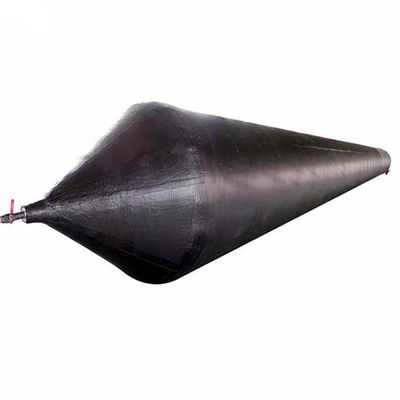
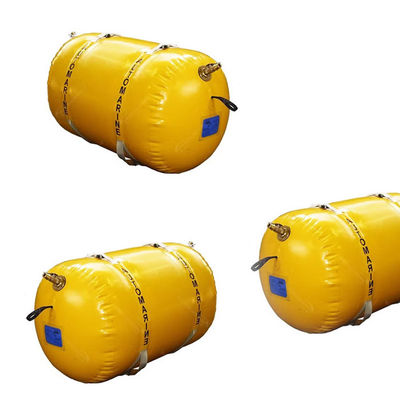
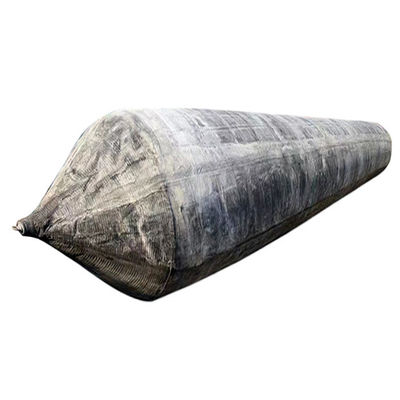
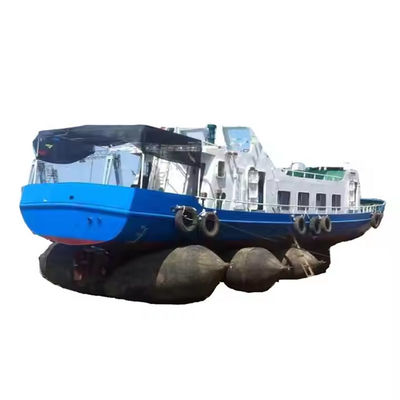
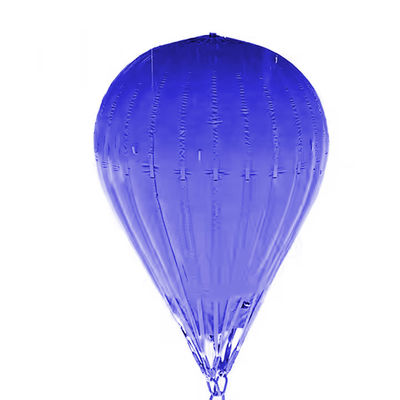
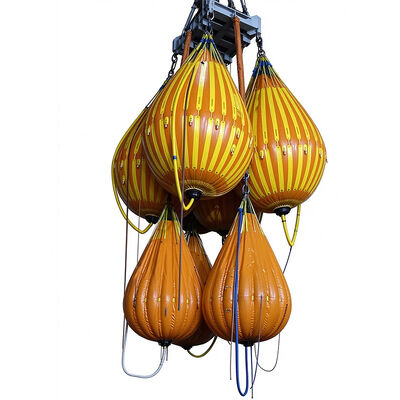
PVC Life Boat Test Water Weights Bag — Lifeboat Proof Load Bag with Customized Options
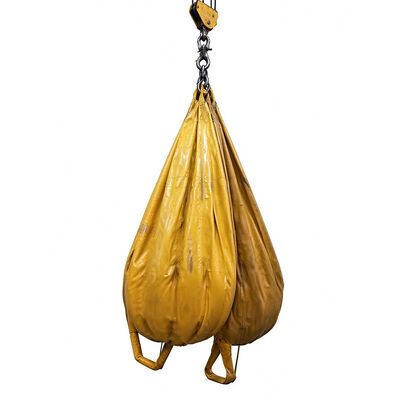
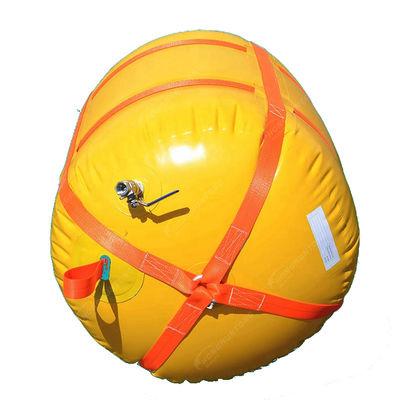
Load Testing Water Bags are flexible load testing devices designed for proof load testing and load verification of cranes, hoists, davits, lifting beams, and other lifting equipment. Manufactured from PVC-coated fabric, these bags use water as the test medium, allowing the load to be increased progressively and controlled according to the approved testing procedure.
Compared with traditional solid test weights, Load Testing Water Bags are easier to transport and store when empty. They are suitable for shipyards, offshore facilities, ports, and industrial plants where handling heavy test weights may require additional lifting equipment and storage space. The product can be configured according to the required test load, bag dimensions, lifting arrangement, and filling and drainage requirements.
During operation, the bag is connected to the lifting equipment and filled with water in controlled stages. The applied load is verified using an appropriate measurement method, and the equipment is monitored throughout the test. After the required test procedure is completed, the water is discharged through the designated outlet. Correct capacity selection, rigging compatibility, inspection, and compliance with the applicable safety requirements are essential for reliable operation.
A shipyard in Southeast Asia needed to conduct a proof load test on a 50-tonne gantry crane following maintenance of its hoisting system. The maintenance team wanted to reduce the time and handling operations associated with transporting solid test weights into the crane testing area. Limited storage space and ongoing ship repair work also required a testing solution that could be prepared and removed efficiently.
Hongruntong Marine supplied PVC-coated Load Testing Water Bags configured according to the customer's specified testing requirements. Before the operation, the team checked the crane's approved test procedure, suspension arrangement, required load measurement method, and available clearance. The bags and associated lifting components were inspected before installation.
Water was introduced gradually while qualified personnel monitored the applied load and crane response. The required test load was verified using suitable measuring equipment, and the specified holding procedure was completed under controlled conditions. After testing, the water was discharged, and the bags were inspected and prepared for storage.
The water-based method reduced the need to transport and handle multiple solid weights, helping the shipyard coordinate the test with its maintenance schedule. The project also demonstrated the importance of advance planning, appropriate equipment configuration, and documented inspection procedures when testing heavy lifting equipment.
| Name | Load Testing Water Bags |
|---|---|
| Application | Proof Load Testing, Offshore Load Testing, Structural Load Testing, Ship Load Testing, Industrial Equipment Testing, Research and Development |
| Content | 100% Polyvinyl Chloride (PVC) |
| Phthalate | 7P Phthalate Free (includes all phthalates listed in CAL Prop 65, CPSIA and REACH) |
| Backing Material Size | 1.8/2.0 mm × 1.55 m; thickness produced as per your request |
| Weight | 37.1 oz per square yard / 1450 ± 50 GSM |
| Special Properties | UV Resistant 7P Phthalate Free (includes all phthalates listed in CAL Prop 65, CPSIA and REACH) BPA Free / Tris Free / Formaldehyde Free Does not contain conflict minerals |
| Care Instructions | Rinse with fresh water and air dry. Do not store with seawater and keep away from heat sources. |
| Available Sizes | 5,000 kg · 8,000 kg · 10,000 kg · 15,000 kg · 20,000 kg · 30,000 kg · 50,000 kg · 100,000 kg Special sizes can be customized |
| OEM | Supported |
| Model | Weight | Volume | Empty Height (Length) | Filled Height (Length) | Max Diameter (ø) | Dry Weight without Accessories |
|---|---|---|---|---|---|---|
| kg / lbs | Liters / m³ · USG | m / ft | m / ft | m / ft | kg / lbs | |
| HM-1T | 1,000 / 2,204 | 1,000 / 1 · 264 | 2.52 / 8.27 | 2.23 / 7.33 | 1.39 / 4.56 | 36 / 80 |
| HM-2T | 2,000 / 4,409 | 2,000 / 2 · 528 | 2.87 / 9.41 | 2.60 / 8.50 | 1.65 / 5.43 | 41 / 90 |
| HM-3T | 3,000 / 6,613 | 3,000 / 3 · 792 | 3.38 / 11.11 | 2.97 / 9.75 | 1.82 / 6.00 | 50 / 110 |
| HM-4T | 4,000 / 8,818 | 4,000 / 4 · 1,056 | 3.41 / 11.22 | 3.07 / 10.10 | 1.88 / 6.16 | 64 / 141 |
| HM-5T | 5,000 / 11,023 | 5,000 / 5 · 1,320 | 4.14 / 13.60 | 3.52 / 11.58 | 2.13 / 7.00 | 80 / 176 |
| HM-6T | 6,000 / 13,227 | 6,000 / 6 · 1,585 | 4.39 / 14.41 | 3.91 / 12.83 | 2.28 / 7.48 | 86 / 189 |
| HM-8T | 8,000 / 17,636 | 8,000 / 8 · 2,113 | 4.54 / 14.91 | 3.93 / 12.91 | 2.52 / 8.27 | 104 / 230 |
| HM-10T | 10,000 / 22,046 | 10,000 / 10 · 2,641 | 5.18 / 17.00 | 4.49 / 14.75 | 2.70 / 8.90 | 130 / 286 |
| HM-12.5T | 12,500 / 27,558 | 12,500 / 12.5 · 3,302 | 5.43 / 17.91 | 4.62 / 15.16 | 2.86 / 9.39 | 154 / 340 |
| HM-15T | 15,000 / 33,069 | 15,000 / 15 · 3,962 | 6.24 / 20.50 | 5.48 / 18.00 | 2.95 / 9.70 | 159 / 350 |
| HM-20T | 20,000 / 44,100 | 20,000 / 20 · 5,283 | 6.78 / 22.25 | 6.04 / 19.83 | 3.42 / 11.25 | 224 / 492 |
| HM-25T | 25,000 / 55,115 | 25,000 / 25 · 6,604 | 7.51 / 24.66 | 6.40 / 21.00 | 3.75 / 12.33 | 315 / 695 |
| HM-35T | 35,000 / 77,161 | 35,000 / 35 · 9,246 | 8.07 / 26.50 | 7.11 / 23.33 | 3.91 / 12.83 | 417 / 920 |
| HM-40T | 40,000 / 88,184 | 40,000 / 40 · 10,566 | 8.71 / 28.58 | 7.72 / 25.33 | 4.07 / 13.36 | 440 / 970 |
| HM-50T | 50,000 / 110,231 | 50,000 / 50 · 13,208 | 8.99 / 29.50 | 7.77 / 25.50 | 4.56 / 14.96 | 544 / 1,200 |
| HM-100T | 100,000 / 220,462 | 100,000 / 100 · 26,420 | 11.27 / 37.00 | 10.00 / 32.90 | 5.65 / 18.56 | 952 / 2,100 |
Custom sizes and configurations are available on request. Final selection should be reviewed against the applicable testing procedure and site requirements.
The bags are manufactured from PVC-coated fabric designed for water containment and repeated handling under specified operating conditions. Fabric strength, coating quality, seam integrity, and reinforcement details are important considerations when selecting a bag for a particular test load. The product should be inspected before each use for cuts, abrasion, leakage, or other visible damage that could affect safe operation.
Water filling allows the test load to be increased progressively. Operators can monitor load measurements at designated stages and follow the sequence required by the approved testing procedure. The final load must be verified using a suitable measurement method rather than relying solely on estimated water volume. Controlled filling also provides opportunities to observe the equipment's response throughout the test.
The lifting arrangement is designed according to the specified product configuration and intended load. Reinforced lifting points help transfer forces through designated areas of the bag, while compatible slings and connectors support the complete suspension assembly. Before use, operators must verify component ratings, sling positioning, connection security, and load distribution. The bag must not be subjected to loads beyond its rated capacity.
After testing, the bag can be emptied through its designated drainage outlet, reducing the weight and simplifying handling. Proper cleaning, drying, inspection, and storage help maintain the condition of the PVC-coated fabric and associated fittings. Reuse should depend on inspection results and the manufacturer's instructions rather than an assumed number of operating cycles.
Load Testing Water Bags can be used to test gantry cranes and overhead cranes following installation, repair, or scheduled inspection. Their flexible configuration helps reduce the logistical requirements associated with solid test weights. The test area, suspension arrangement, water supply, and drainage route should be prepared before work begins.
Ports and marine facilities use cranes and lifting systems to handle cargo, maintenance equipment, and vessel components. Water bags provide a practical test-load option where space and transportation access are limited. Testing must follow the equipment's approved procedure and account for environmental conditions, load measurement, and personnel safety.
Factories and industrial plants may use Load Testing Water Bags to verify the performance of overhead cranes, hoists, and lifting beams after maintenance or modification. Progressive filling supports controlled load application, while drainage simplifies equipment removal after testing. Test results should be documented according to the facility's inspection and maintenance requirements.
Hongruntong Marine has more than 30 years of manufacturing experience in marine and industrial products. This experience supports practical consideration of material selection, product construction, lifting arrangements, and handling requirements. For Load Testing Water Bags, the objective is to provide a configuration that corresponds to the customer's specified application and operating conditions.
PVC-coated fabric, seam construction, reinforcement, and connection components are important factors in product performance. Manufacturing and inspection procedures should address these areas to help ensure consistency with the agreed specification. Customers can confirm their required technical parameters and inspection documentation before production.
Different lifting systems require different bag capacities, dimensions, and suspension arrangements. Hongruntong Marine can discuss the intended equipment, target test load, available space, and filling and drainage conditions to help determine a suitable configuration. Final selection should be reviewed against the applicable testing procedure and site requirements.
Clear communication helps customers confirm product specifications before ordering and prepare for safe use after delivery. Hongruntong Marine can provide product information and discuss configuration requirements, inspection considerations, and handling arrangements. Customers should communicate any project-specific documentation or acceptance requirements in advance so they can be reviewed before manufacture.
Load Testing Water Bags are manufactured from PVC-coated fabric. The material specification and construction depend on the required capacity and operating conditions.
Selection should be based on the required test load, lifting equipment, suspension arrangement, and approved testing procedure. Confirm the final configuration with the responsible engineer before use.
Water is added progressively, and the applied load is verified using a suitable measurement method. Operators should follow the approved procedure and record measurements at the required stages.
Yes, where the product remains in suitable condition and reuse is consistent with the manufacturer's instructions. Inspect the fabric, seams, lifting points, and fittings after each test.
Provide the required test load, lifting equipment type, operating environment, preferred bag configuration, and any special requirements for lifting connections, filling, drainage, or inspection documentation.