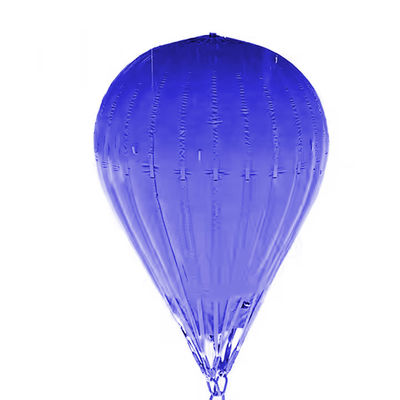
Product Overview
Water Filled Load Test Water Weight Bags — Safety Lifting Bags for Davit Cranes
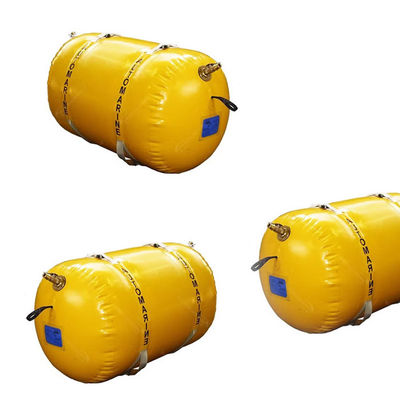
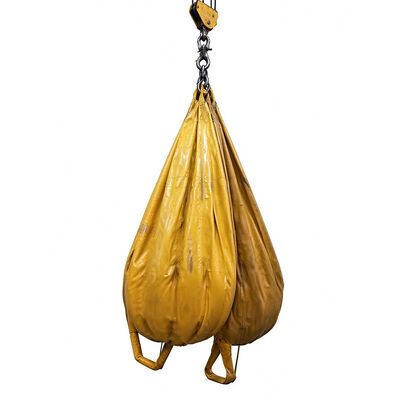
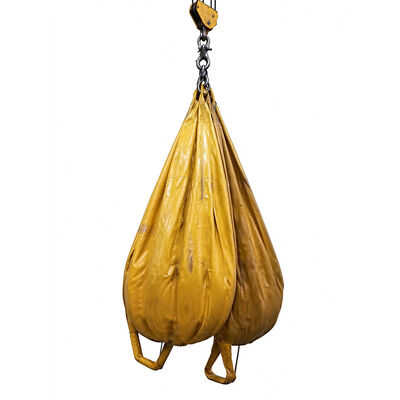
Load Testing Water Bags are flexible, water-filled load testing devices designed for proof load testing and safe working load verification of lifting equipment, including cranes, davits, hoists, lifting beams, and other load-bearing systems. Using water as the test medium provides a controllable test load that can be increased progressively and adjusted according to the requirements of the test procedure.
Compared with solid test weights, water bags simplify transportation, handling, and site preparation — particularly where heavy lifting equipment must be tested in shipyards, offshore facilities, industrial plants, and other locations with limited storage or access.
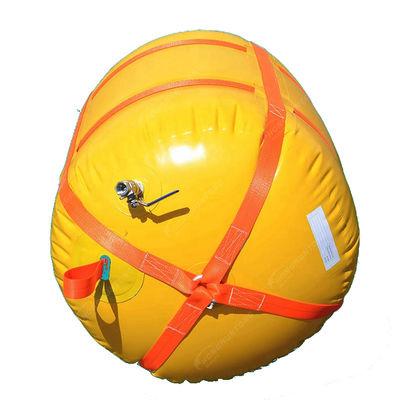
Manufactured from PVC-coated fabric, Load Testing Water Bags combine flexible construction with reliable water containment performance suitable for designated load testing applications. Fabric specification, coating properties, seam construction, lifting arrangement, and connection components are selected according to the intended working load, operating environment, and applicable project requirements. Reinforced lifting points and a coordinated suspension arrangement help distribute the applied load through the designated structural components. Bag configurations can be adapted to different rated capacities and installation conditions, subject to engineering assessment and manufacturing specifications.
During testing, the bag is suspended from the equipment under examination and filled with water in a controlled sequence. The test load is established by the water quantity and verified through suitable weighing or measurement procedures. Operators can increase the load in defined stages, inspect the lifting system at each stage, and maintain the specified load for the required period. After testing, water is discharged through the designated outlet, allowing the bag to be emptied and prepared for transport or subsequent inspection. The exact filling rate, holding period, and test sequence should follow the approved procedure for the equipment being tested.
Load Testing Water Bags provide a practical option for projects where test loads must be transported to the site, applied under controlled conditions, and removed without handling large quantities of solid weights. Their flexible form supports efficient storage when empty, while the water-based loading method reduces the logistical demands associated with transporting equivalent solid test masses. For dependable operation, users must confirm rated capacity, suspension compatibility, water supply and drainage arrangements, and the suitability of the supporting structure before testing. Hongruntong Marine can configure products according to specified load requirements and project conditions, helping customers establish a practical testing arrangement for lifting equipment inspection and commissioning.
Case Study: Offshore Wind Farm Service Crane Testing
A maintenance contractor operating an offshore wind farm in Northern Europe required a load testing solution for a service crane installed on a maintenance support vessel. The crane had a rated capacity of 25 tonnes and was scheduled for a major inspection following maintenance of its hoisting mechanism and associated load-bearing components. The project team needed to complete the prescribed proof load test while limiting additional deck loading, reducing equipment transportation requirements, and maintaining safe access for inspection personnel. Transporting conventional solid test weights to the vessel would have required multiple lifting operations, temporary storage arrangements, and careful coordination with other maintenance activities.
The contractor selected PVC-coated Load Testing Water Bags with a configuration appropriate for the planned test load and available deck space. Before installation, the engineering team reviewed the crane's approved testing procedure, the proposed suspension arrangement, the required load measurement method, and the vessel's stability and deck-loading restrictions. The test equipment was inspected before use, with particular attention given to fabric condition, seams, lifting points, connectors, and discharge fittings. The crane's supporting structure and the surrounding work area were also checked to confirm that the test could proceed within the approved operational limits.
The bags were attached using the designated lifting arrangement and filled gradually under the supervision of qualified personnel. Load measurements were recorded at predetermined stages, allowing the inspection team to verify the applied load and monitor the crane's response. Personnel maintained a controlled exclusion zone beneath and around the suspended test assembly, while the crane operator followed the approved movement and holding sequence. Once the specified test condition had been achieved and maintained for the required period, the load was reduced in a controlled manner by discharging water. The bags were then inspected and drained before being prepared for removal from the vessel.
The water-based approach reduced the need to transport and handle numerous solid weights and helped the contractor coordinate testing with the vessel's limited deck space and maintenance schedule. The recorded measurements and inspection observations were incorporated into the maintenance documentation for review by the responsible technical personnel. The project demonstrated how appropriately specified Load Testing Water Bags can support offshore crane testing when transport limitations, controlled loading, and efficient equipment recovery are important considerations. The same planning principles can be applied to future maintenance activities, provided that each test is assessed against the equipment's approved procedure and site-specific safety requirements.
Specifications
| Name |
Load Testing Water Bags |
| Application |
Proof Load Testing, Offshore Load Testing, Structural Load Testing, Ship Load Testing, Industrial Equipment Testing, Research and Development |
| Content |
100% Polyvinyl Chloride (PVC) |
| Phthalate |
7P Phthalate Free (includes all phthalates listed in CAL Prop 65, CPSIA and REACH) |
| Backing Material Size |
1.8 / 2.0 mm × 1.55 m; thickness produced as per your request |
| Weight |
37.1 oz per square yard / 1450 ± 50 GSM |
| Special Properties |
UV Resistant
7P Phthalate Free (includes all phthalates listed in CAL Prop 65, CPSIA and REACH)
BPA Free / Tris Free / Formaldehyde Free
Does not contain conflict minerals |
| Care Instructions |
Rinse with fresh water and air dry. Do not store with seawater and keep away from heat sources. |
| Available Sizes |
5,000 kg · 8,000 kg · 10,000 kg · 15,000 kg · 20,000 kg · 30,000 kg · 50,000 kg · 100,000 kg
Special sizes can be customized |
| OEM |
Supported |
Model & Dimension Table
| Model |
Weight (kg / lbs) |
Volume (Liters / m³ / USG) |
Empty Height / Length (m / ft) |
Filled Height / Length (m / ft) |
Max Diameter ø (m / ft) |
Dry Weight without Accessories (kg / lbs) |
| HM-1T |
1,000 / 2,204 |
1,000 / 1 / 264 |
2.52 / 8.27 |
2.23 / 7.33 |
1.39 / 4.56 |
36 / 80 |
| HM-2T |
2,000 / 4,409 |
2,000 / 2 / 528 |
2.87 / 9.41 |
2.60 / 8.50 |
1.65 / 5.43 |
41 / 90 |
| HM-3T |
3,000 / 6,613 |
3,000 / 3 / 792 |
3.38 / 11.11 |
2.97 / 9.75 |
1.82 / 6.00 |
50 / 110 |
| HM-4T |
4,000 / 8,818 |
4,000 / 4 / 1,056 |
3.41 / 11.22 |
3.07 / 10.10 |
1.88 / 6.16 |
64 / 141 |
| HM-5T |
5,000 / 11,023 |
5,000 / 5 / 1,320 |
4.14 / 13.60 |
3.52 / 11.58 |
2.13 / 7.00 |
80 / 176 |
| HM-6T |
6,000 / 13,227 |
6,000 / 6 / 1,585 |
4.39 / 14.41 |
3.91 / 12.83 |
2.28 / 7.48 |
86 / 189 |
| HM-8T |
8,000 / 17,636 |
8,000 / 8 / 2,113 |
4.54 / 14.91 |
3.93 / 12.91 |
2.52 / 8.27 |
104 / 230 |
| HM-10T |
10,000 / 22,046 |
10,000 / 10 / 2,641 |
5.18 / 17.00 |
4.49 / 14.75 |
2.70 / 8.90 |
130 / 286 |
| HM-12.5T |
12,500 / 27,558 |
12,500 / 12.5 / 3,302 |
5.43 / 17.91 |
4.62 / 15.16 |
2.86 / 9.39 |
154 / 340 |
| HM-15T |
15,000 / 33,069 |
15,000 / 15 / 3,962 |
6.24 / 20.50 |
5.48 / 18.00 |
2.95 / 9.70 |
159 / 350 |
| HM-20T |
20,000 / 44,100 |
20,000 / 20 / 5,283 |
6.78 / 22.25 |
6.04 / 19.83 |
3.42 / 11.25 |
224 / 492 |
| HM-25T |
25,000 / 55,115 |
25,000 / 25 / 6,604 |
7.51 / 24.66 |
6.40 / 21.00 |
3.75 / 12.33 |
315 / 695 |
| HM-35T |
35,000 / 77,161 |
35,000 / 35 / 9,246 |
8.07 / 26.50 |
7.11 / 23.33 |
3.91 / 12.83 |
417 / 920 |
| HM-40T |
40,000 / 88,184 |
40,000 / 40 / 10,566 |
8.71 / 28.58 |
7.72 / 25.33 |
4.07 / 13.36 |
440 / 970 |
| HM-50T |
50,000 / 110,231 |
50,000 / 50 / 13,208 |
8.99 / 29.50 |
7.77 / 25.50 |
4.56 / 14.96 |
544 / 1,200 |
| HM-100T |
100,000 / 220,462 |
100,000 / 100 / 26,420 |
11.27 / 37.00 |
10.00 / 32.90 |
5.65 / 18.56 |
952 / 2,100 |
Custom sizes and configurations are available upon request. All dimensions are nominal and subject to manufacturing tolerances.
Key Features
PVC-Coated Fabric for Water Containment
Load Testing Water Bags are manufactured from PVC-coated fabric selected according to the specified capacity and intended operating conditions. The coated surface provides the water containment function required for controlled filling and discharge, while the flexible textile structure allows the bag to change shape as the internal water volume increases. Fabric strength, coating adhesion, seam design, and reinforcement details are important factors in determining whether the finished product is suitable for its designated loading conditions. Material selection should therefore be based on technical requirements rather than appearance alone.
The manufacturing process must maintain consistency across fabric panels, welded or otherwise specified seams, reinforced areas, and connection points. Particular attention is required at locations where the bag's shape or loading arrangement creates concentrated stresses. A suitable design considers the interaction between water pressure, bag geometry, suspension forces, and handling conditions during filling, lifting, holding, and drainage. The selected PVC-coated fabric should also be assessed for compatibility with the expected ambient temperature, exposure conditions, and maintenance practices.
Progressive Loading and Measurable Test Conditions
The water-filling method allows the test load to be increased in controlled stages rather than requiring the entire target mass to be positioned at once. This is useful when an inspection procedure requires intermediate load checks, equipment response monitoring, or a defined holding period at a specified test load. By controlling the quantity of water introduced into the bag, the testing team can establish a sequence that corresponds to the approved procedure and the capability of the equipment being tested.
Water volume alone should not automatically be treated as the final verified test load. The testing arrangement must account for the measurement method, the actual quantity of water, and any additional suspended components included in the load. Suitable calibrated instruments or an approved weighing method should be used where required. The test team should document relevant measurements and confirm that the required load has been achieved before proceeding to the next stage.
Reinforced Lifting Points and Suspension Compatibility
Lifting points are critical structural interfaces between the water bag and the equipment under test. Their arrangement must be appropriate for the intended capacity, sling configuration, connection hardware, and expected load distribution. Reinforcement around these points helps transfer the suspended load through the designated parts of the bag structure. However, the suitability of the lifting system depends on the complete assembly, including the bag, slings, shackles, connectors, lifting equipment, and supporting structure.
Before deployment, users should confirm that all connection components have suitable ratings and are compatible with the planned suspension geometry. Uneven sling lengths, incorrect connection angles, twisting, or unsuitable attachment points may cause unequal load distribution and introduce forces not accounted for in the original configuration. The bag should be positioned so that filling does not create contact with sharp edges, hot surfaces, or other objects that could damage the fabric.
Drainage, Reuse, and Equipment Handling
After testing, the bag can be emptied through its designated drainage arrangement. Effective drainage reduces the retained water volume and makes the equipment easier to handle, transport, and store. The drainage system must be selected and positioned according to the product design and site conditions, with suitable measures taken to direct discharged water away from electrical installations, access routes, sensitive equipment, and areas where standing water could create a hazard.
A reusable bag should be inspected after every test cycle. The inspection should cover the fabric, seams, lifting points, filling connections, discharge fittings, and any additional components supplied with the assembly. Cleaning and drying procedures should follow the manufacturer's recommendations. Storing the bag while it remains wet, folded against contaminated surfaces, or exposed to damaging environmental conditions may affect its service condition and should be avoided where the product instructions prohibit such practices.
Applications
Offshore Wind Farm and Marine Service Crane Testing
Load Testing Water Bags can be used to apply controlled test loads to service cranes installed on offshore support vessels, wind farm maintenance vessels, and other marine platforms. These cranes may handle tools, spare parts, maintenance equipment, and operational supplies, making verification of their lifting systems important following installation, repair, or scheduled inspection. In these settings, transport access and deck space can be limited, and conventional solid test weights may require additional lifting operations and storage arrangements.
A water-based testing configuration can reduce the need to transport equivalent solid masses while allowing the load to be introduced progressively. Before testing, the project team should assess vessel stability, deck loading, crane geometry, water supply, drainage arrangements, and the approved test procedure. The suspension configuration must be suitable for the target load, and the surrounding area must be controlled to protect personnel from suspended-load hazards.
Shipyard Gantry Cranes and Ship Repair Facilities
Shipyards use gantry cranes, overhead cranes, and other lifting systems to handle equipment, structural components, machinery, and vessel maintenance materials. Following installation, major repairs, or relevant maintenance work, these systems may require proof load testing in accordance with the applicable requirements. Load Testing Water Bags can provide a flexible alternative to solid weights where the crane's operating area and supporting infrastructure permit a suspended water-based test.
The test plan should specify the target load, filling stages, measurement method, holding period, and discharge sequence. Sufficient clearance must be maintained between the bag, the crane structure, surrounding equipment, and the work area. Shipyard operators should also coordinate water filling and discharge with drainage infrastructure and ongoing production activities. Where multiple crane systems require testing, a suitable bag configuration may help simplify logistics, provided that each system is independently assessed and the equipment is approved for the intended use.
Industrial Plants and Heavy Equipment Maintenance
Industrial plants may need to test overhead cranes, gantry cranes, hoists, lifting beams, and other handling systems after commissioning, modification, or maintenance. These sites often have established production schedules and limited space for storing heavy test weights. Load Testing Water Bags can support a planned testing operation by allowing the required water quantity to be introduced at the designated location and removed after the procedure.
Successful use requires coordination among maintenance engineers, equipment operators, safety personnel, and the responsible inspection team. The test area should be isolated, the supporting structure checked, and water supply and drainage routes confirmed before work begins. Following completion, the applied load and relevant inspection observations should be recorded in the equipment's maintenance documentation. The product's capacity, suspension arrangement, and material specification must match the requirements of the individual test.
Why Choose Hongruntong Marine
More Than 30 Years of Manufacturing Experience
Hongruntong Marine has more than 30 years of manufacturing experience, providing an established industrial background for the production of marine and load-related equipment. For Load Testing Water Bags, manufacturing experience is relevant to material handling, reinforced construction, connection-point design, assembly consistency, and practical requirements encountered during transportation and field use. A product intended for suspended load testing must be evaluated as a complete assembly, not simply as a flexible container.
The selection of a suitable bag begins with understanding the intended application. Crane type, rated capacity, required test load, lifting height, suspension geometry, and available working space can all influence the product configuration. Operating conditions may also vary between shipyards, offshore facilities, industrial plants, and remote project sites. Reviewing these factors at the specification stage helps establish a configuration that is more appropriate for the intended test.
Hongruntong Marine's manufacturing experience supports communication between the customer and production team when defining product requirements. The purpose is to clarify technical parameters before manufacture, reduce avoidable specification errors, and ensure that the supplied equipment corresponds to the agreed application. Final suitability still depends on the customer's engineering requirements, applicable regulations, and the approved test procedure.
PVC Material Selection and Construction Control
Material selection is a key consideration for Load Testing Water Bags because the fabric must retain water while supporting the forces associated with suspension and handling. Hongruntong Marine uses PVC-coated fabric for this product category, with the required material specification established according to the intended capacity and operating environment. Relevant considerations include fabric strength, coating condition, seam integrity, reinforcement, and compatibility with the expected site conditions.
Manufacturing control should focus on the areas that influence the integrity of the finished product. Fabric panels must be prepared and assembled according to the defined design, while seams and reinforced lifting areas require particular attention. Filling and discharge components must also be compatible with the intended operating arrangement. These details contribute to containment performance and help ensure that the bag can be handled according to its specified use.
Configuration Based on Load and Site Requirements
Load testing conditions vary considerably. A crane in a shipyard may have ample overhead clearance but limited access for transporting solid weights, while a marine service vessel may impose restrictions on deck space, stability, and drainage. A suitable Load Testing Water Bag configuration must account for the target load, the equipment's lifting arrangement, installation conditions, and the method used to verify the applied load.
Hongruntong Marine can discuss capacity requirements, bag dimensions, lifting-point arrangements, connection hardware, filling and discharge provisions, and other relevant configuration details with customers. The design should consider how the bag will be transported, connected, filled, held during the test, emptied, inspected, and stored. These practical factors affect not only product selection but also the efficiency of the overall testing operation.
Technical Communication and Long-Term Service Support
Load testing involves coordination between equipment manufacturers, maintenance contractors, inspection personnel, and site operators. Questions about capacity, suspension arrangements, drainage, handling, and maintenance should be addressed before the bag is deployed. Hongruntong Marine can support customers by clarifying product specifications, reviewing application information, and communicating relevant manufacturing details during the procurement process.
Clear documentation is particularly important when products are used repeatedly across different maintenance projects. Information about rated capacity, intended use, inspection points, and handling procedures helps customers establish consistent internal practices. Where project requirements call for specific product records or inspection documents, these expectations should be discussed and confirmed during order preparation.
Frequently Asked Questions
1. How do I select the correct Load Testing Water Bag capacity?
Selection should begin with the required test load specified in the approved procedure for the lifting equipment. The customer should also consider the bag configuration, available lifting height, suspension geometry, measurement method, and applicable safety requirements. The nominal capacity of a bag should not be treated as authorization to exceed its rated limits. The final selection should be confirmed by the responsible engineer or inspection team.
2. What material is used for Load Testing Water Bags?
Load Testing Water Bags supplied in this product category are manufactured from PVC-coated fabric. The appropriate fabric specification and construction details depend on the intended load, operating conditions, and product design. Customers should confirm the required technical specification before ordering and inspect the fabric, seams, and fittings before each use.
3. Can Load Testing Water Bags be used outdoors or offshore?
They may be suitable for outdoor and marine applications when the product configuration and material specification are appropriate for the actual environment. Wind, vessel movement, temperature, exposure, deck loading, and drainage conditions should be evaluated before testing. Offshore use requires additional planning to control the suspended load and protect personnel. Suitability should be confirmed for each specific project.
4. How is the test load measured accurately?
The test load should be verified using a suitable calibrated instrument or an approved measurement method. Although water volume can help control filling, the final applied load must be established according to the test procedure, including any relevant suspended components. Operators should record the measured load at the required stages and confirm that the specified condition has been reached before continuing.
5. How should the bags be maintained after use?
After the test, discharge the water through the designated outlet and inspect the fabric, seams, lifting points, fittings, and associated rigging components. Clean and dry the bag according to the manufacturer's instructions, then store it in suitable conditions. Record any defects or maintenance actions. A bag showing damage that could affect water containment or structural integrity should not be reused until its suitability has been assessed.


 Your message must be between 20-3,000 characters!