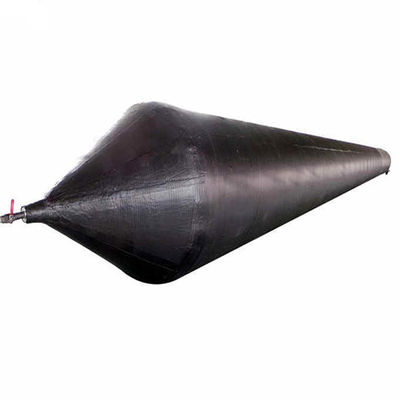
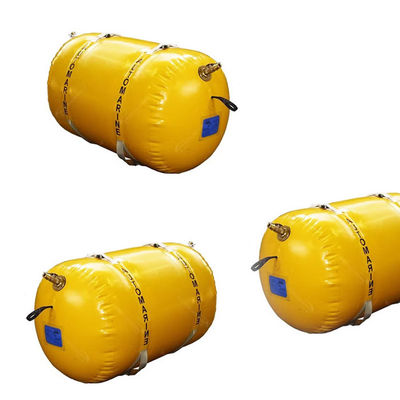
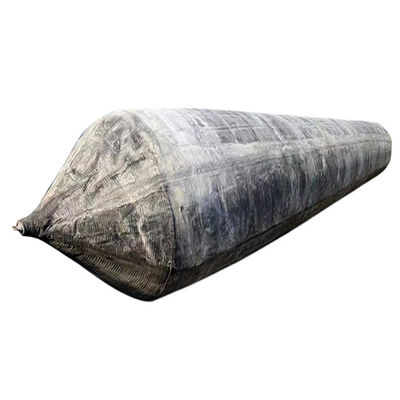
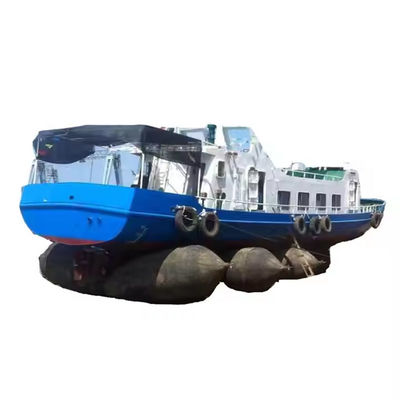
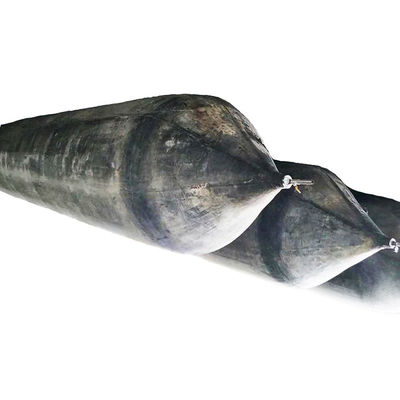
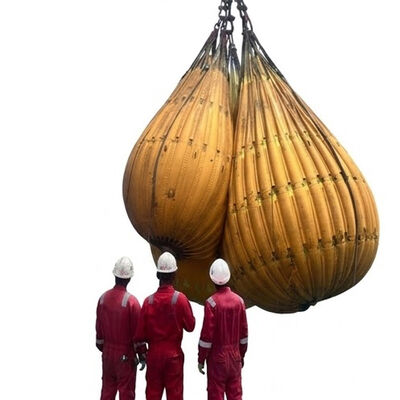
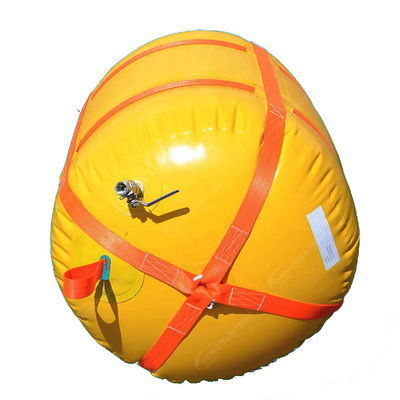
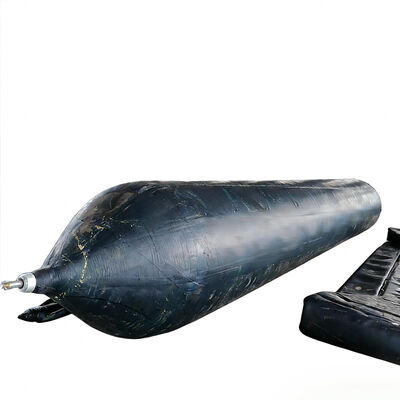
The Airbag Launching Ship system is an advanced marine launching technology developed to transfer newly constructed or repaired vessels from land into water through the controlled rolling movement of inflatable marine airbags. As an alternative to conventional slipways, dry docks, and mechanical launching equipment, this method offers greater flexibility for shipyards while reducing dependence on permanent infrastructure.
Hongruntong Marine manufactures marine airbags using high-quality natural rubber combined with multiple layers of high-tensile synthetic tire cord fabric. The reinforced composite structure is designed to withstand high compressive forces, cyclic loading, rolling friction, and continuous deformation encountered during launching operations.
A medium-sized shipbuilding company in Hai Phong, Vietnam, specialized in manufacturing steel oil barges and inland transportation vessels ranging from 1,800 to 4,500 DWT. The shipyard operated near a tidal river where water levels changed significantly, making traditional launching methods difficult to schedule.
Hongruntong Marine supplied a customized marine airbag launching system designed specifically for the customer's operational environment. The first application involved a 4,200 DWT steel oil barge with a broad hull and substantial launching weight. Throughout the operation, the airbags provided stable rolling support while adapting to the vessel's hull geometry.
The launch was completed smoothly despite uneven tidal conditions, with no measurable hull deformation or structural damage. The customer reported shorter preparation time, improved scheduling flexibility, and lower launching costs compared with conventional methods.
| Item | Description |
|---|---|
| Place of Origin | China |
| Brand Name | Hongruntong Marine |
| Material | Industrial Grade Natural Rubber |
| Diameter | 0.5m-3.0m, or as Request |
| Length | 1.0m-28.0m, or as Request |
| Working Pressure | 0.05-0.25 Mpa |
| Technics | High Pressure, Overall Winding, Explosion-Proof |
| Use | Ship Launching and Docking |
| Thickness | 5-13 ply |
| Standard | Conducted by ISO14409 and GB/T1590-2006 system |
| Accessories | Q355/SS304/SS316, Pressure Gauge, Tee, Plug, Switch, Inflation Tube |
| Packaging | Inner-Plastic Bag; Outer-Standard Wooden Pallets |
| Certificates | ABS, BV, KR, LR, GL, NK, RINA, DNV, RMRS |
| MOQ | 1 |
| OEM | Welcome |
| Diameter | Working Pressure | Working Height | Bearing Capacity KN/m | Bearing Capacity Ton/m |
|---|---|---|---|---|
| D=1.0m | 0.14Mpa | 0.6m | 87.96 | 8.98 |
| 0.5m | 109.96 | 11.22 | ||
| 0.4m | 131.95 | 13.46 | ||
| D=1.2m | 0.12Mpa | 0.7m | 94.25 | 9.62 |
| 0.6m | 113.10 | 11.54 | ||
| 0.5m | 131.95 | 13.46 | ||
| 0.4m | 150.80 | 15.39 | ||
| D=1.5m | 0.10Mpa | 0.9m | 94.25 | 9.62 |
| 0.8m | 109.96 | 11.22 | ||
| 0.7m | 125.66 | 12.82 | ||
| 0.6m | 141.37 | 14.43 | ||
| 0.5m | 157.08 | 16.03 | ||
| D=1.8m | 0.09Mpa | 1.1m | 98.96 | 10.10 |
| 1.0m | 113.10 | 11.54 | ||
| 0.9m | 127.33 | 12.98 | ||
| 0.8m | 141.37 | 14.43 | ||
| 0.7m | 155.51 | 15.87 | ||
| 0.6m | 169.65 | 17.31 | ||
| D=2.0m | 0.08Mpa | 1.2m | 100.53 | 10.26 |
| 1.1m | 113.10 | 11.54 | ||
| 1.0m | 125.66 | 12.82 | ||
| 0.9m | 138.23 | 14.11 | ||
| 0.8m | 150.80 | 15.39 | ||
| 0.7m | 163.36 | 16.67 | ||
| 0.6m | 175.93 | 17.95 |
* Other sizes can be produced following client's requirements
Airbag specifications are selected based on vessel displacement, hull dimensions, launching angle, ground conditions, and required safety factors. Engineering calculations determine the suitable diameter, effective length, quantity, and operating pressure for each project.
Service life depends on operating frequency, working conditions, storage methods, and maintenance practices. Under normal industrial use and proper maintenance, marine airbags can perform reliably through numerous launching cycles over many years.
Yes. Marine airbags possess sufficient flexibility to adapt to moderate ground irregularities. However, the launching surface should be properly prepared to remove sharp objects and excessive elevation differences that could affect operational safety or damage the airbag surface.
After use, airbags should be cleaned with fresh water, inspected for cuts, abrasion, valve integrity, and air leakage, then stored in a clean, dry environment away from direct sunlight, oils, chemicals, and excessive heat to preserve material performance.
Yes. Technical support includes engineering consultation, airbag selection, launching layout recommendations, operational guidance, and maintenance instructions. These services help customers establish safe and standardized launching procedures for efficient long-term operation.