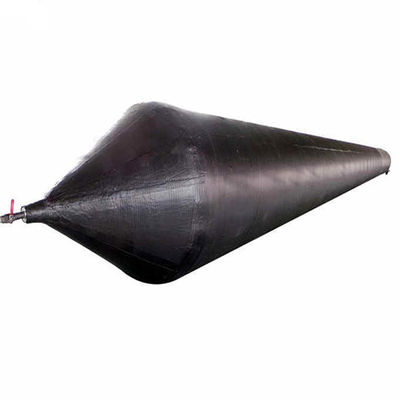
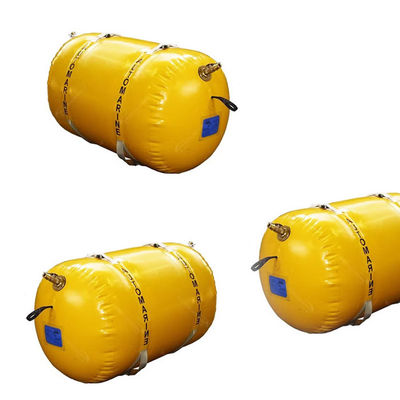
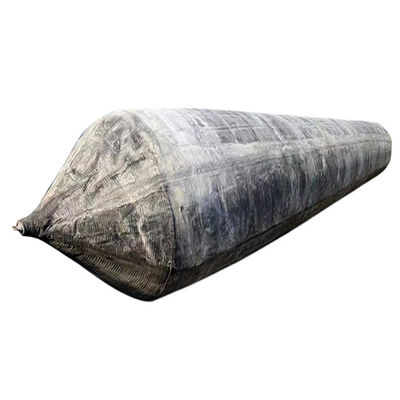
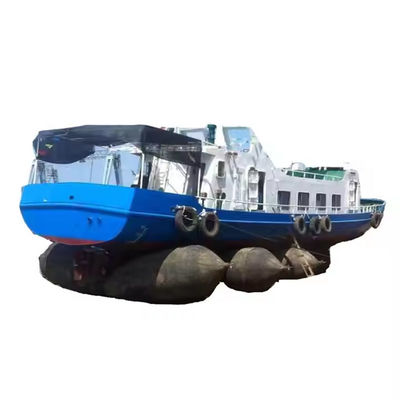
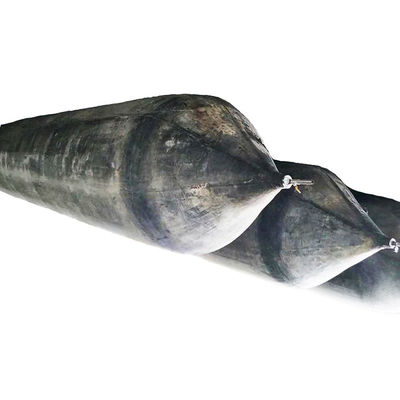
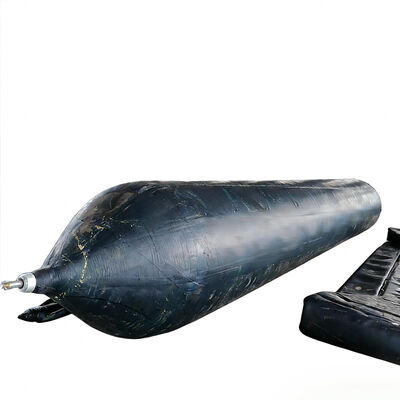
Airbag Launching Ship technology is an engineered vessel launching method that utilizes high-strength inflatable marine airbags to safely transfer newly constructed or repaired vessels from the shipyard platform into the water. Compared with conventional slipways and fixed launching facilities, this system significantly reduces infrastructure investment while providing greater operational flexibility for shipyards handling different vessel sizes and production schedules.
Hongruntong Marine Airbag Launching Systems are manufactured from premium natural rubber compounds combined with multiple layers of high-strength synthetic tire cord reinforcement. The composite structure is designed to withstand repeated compression, rolling friction, and dynamic loading during vessel movement while maintaining stable internal pressure and structural integrity.
A privately owned shipyard located in Surabaya, Indonesia, specialized in the construction of coastal cargo vessels ranging from 2,500 to 5,000 DWT. After evaluating the vessel dimensions, hull weight distribution, launching gradient, and site conditions, Hongruntong Marine supplied a complete airbag launching solution consisting of high-capacity marine airbags with customized dimensions and calculated pressure specifications.
The first project involved launching a newly constructed 3,800 DWT general cargo vessel under variable weather conditions. Throughout the launching process, the airbags maintained stable rolling performance and evenly distributed the vessel load across the launching path. The vessel entered the water smoothly without hull deformation, structural damage, or operational interruption.
| Item | Description |
|---|---|
| Place of Origin | China |
| Brand Name | Hongruntong Marine |
| Material | Industrial Grade Natural Rubber |
| Diameter | 0.5m-3.0m, or as Request |
| Length | 1.0m-28.0m, or as Request |
| Working Pressure | 0.05-0.25 Mpa |
| Technics | High Pressure, Overall Winding, Explosion-Proof |
| Use | Ship Launching and Docking |
| Thickness | 5-13 ply |
| Standard | Conducted by ISO14409 and GB/T1590-2006 system. |
| Accessories | Q355/SS304/SS316, Pressure Gauge, Tee, Plug, Switch, Inflation Tube |
| Packaging | Inner-Plastic Bag; Outer-Standard Wooden Pallets. |
| Certificates | ABS, BV, KR, LR, GL, NK, RINA, DNV, RMRS |
| MOQ | 1 |
| OEM | Welcome |
| Diameter | Working Pressure | Working Height | Bearing Capacity KN/m | Bearing Capacity Ton/m |
|---|---|---|---|---|
| D=1.0m | 0.14Mpa | 0.6m | 87.96 | 8.98 |
| 0.5m | 109.96 | 11.22 | ||
| 0.4m | 131.95 | 13.46 | ||
| D=1.2m | 0.12Mpa | 0.7m | 94.25 | 9.62 |
| 0.6m | 113.10 | 11.54 | ||
| 0.5m | 131.95 | 13.46 | ||
| 0.4m | 150.80 | 15.39 | ||
| D=1.5m | 0.10Mpa | 0.9m | 94.25 | 9.62 |
| 0.8m | 109.96 | 11.22 | ||
| 0.7m | 125.66 | 12.82 | ||
| 0.6m | 141.37 | 14.43 | ||
| 0.5m | 157.08 | 16.03 | ||
| D=1.8m | 0.09Mpa | 1.1m | 98.96 | 10.10 |
| 1.0m | 113.10 | 11.54 | ||
| 0.9m | 127.33 | 12.98 | ||
| 0.8m | 141.37 | 14.43 | ||
| 0.7m | 155.51 | 15.87 | ||
| 0.6m | 169.65 | 17.31 | ||
| D=2.0m | 0.08Mpa | 1.2m | 100.53 | 10.26 |
| 1.1m | 113.10 | 11.54 | ||
| 1.0m | 125.66 | 12.82 | ||
| 0.9m | 138.23 | 14.11 | ||
| 0.8m | 150.80 | 15.39 | ||
| 0.7m | 163.36 | 16.67 | ||
| 0.6m | 175.93 | 17.95 |
* Other sizes can be produced following client's requirements.
Hongruntong Marine airbags are manufactured using multiple layers of high-strength synthetic tire cord fabric combined with premium rubber compounds to create a reinforced composite structure capable of withstanding substantial compressive and rolling loads. The optimized reinforcement arrangement effectively distributes internal pressure while preventing localized deformation during launching operations.
The cylindrical airbag structure is engineered to achieve balanced pressure distribution across the contact surface between the vessel hull and the ground. During rolling movement, internal air pressure automatically adjusts to changing load conditions, allowing the vessel weight to be transferred smoothly from one airbag to another.
The rubber formulation is specifically developed to resist abrasion, aging, ozone exposure, moisture, and marine environmental conditions encountered in shipyard operations. Precision vulcanization technology strengthens the bonding between rubber layers and reinforcing cords, reducing the possibility of delamination or structural failure after repeated use.
Unlike permanent launching infrastructure, marine airbags can be configured according to vessel dimensions, displacement, hull geometry, and launching site conditions. Different quantities, diameters, and effective lengths may be selected to meet specific engineering requirements for various vessel types.
Marine airbags can be designed for a wide range of vessels, from small fishing boats to cargo ships weighing several thousand tons. The appropriate airbag diameter, effective length, quantity, and operating pressure are determined according to the vessel's displacement, hull configuration, and launching conditions.
Yes. Marine airbags are designed for repeated industrial use. When operated within the specified pressure limits and maintained correctly, they can be used for numerous launching projects while maintaining stable structural performance and operational reliability.
The selection process generally requires vessel length, beam, displacement, hull shape, launching slope, ground condition, and available working space. These engineering parameters allow accurate calculation of the required airbag size, quantity, and pressure rating.
Airbags should be cleaned after use and stored in a dry, ventilated area away from direct sunlight, chemicals, sharp objects, and excessive heat. Regular inspection for surface wear, cuts, valve condition, and airtightness is recommended before each launching operation.
Yes. Hongruntong Marine provides customized marine airbags based on project requirements and offers technical support covering product selection, launching calculations, airbag arrangement, operation guidance, and maintenance recommendations to ensure safe and efficient vessel launching.