logo

Marine Salvage Airbags with 1-100 Tons Buoyancy Made from PVC Coated Polyester Fabric Compliant with IMCA D016 Standard

1
MOQ
US$66-US$999
Preis
Marine Salvage Airbags with 1-100 Tons Buoyancy Made from PVC Coated Polyester Fabric Compliant with IMCA D016 Standard
Eigenschaften Galerie Produkt-Beschreibung Fordern Sie ein Zitat
Eigenschaften
Technische Daten
Name: Lufttüten für die Rettung von Schiffen
Inflationsröhre: 30M, kostenlos
Verstärkung: Polyestergewebe
Mindestbestellmenge: 1
Paket: Paletten, Holzkiste
OEM: Herzlich willkommen
Standard: IMCA D016
Zertifikat: ABS, BV, KR, LR, GL, NK, RINA, DNV, RMRS
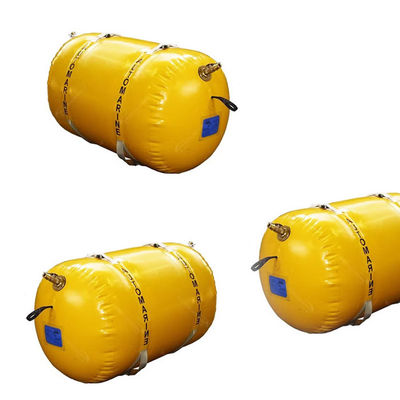
Farbe: Gelb oder auf Wunsch
Durchmesser: 0.5M-3.5M oder auf Wunsch
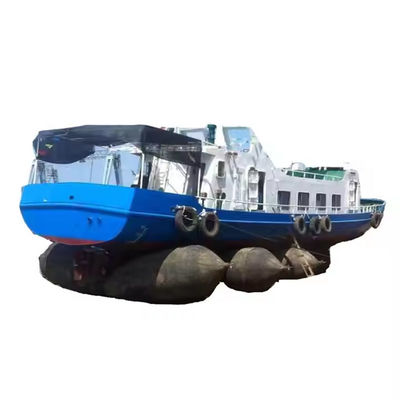
Anwendung: Marine Rettung
Auftrieb: 1 bis 100 Tonnen
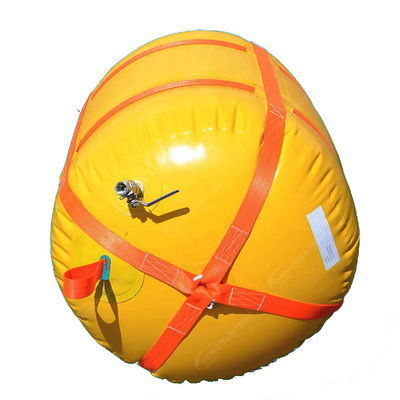
Zubehör: Schlinge, Fesseln
Material: PVC
Länge: 3M-28M oder auf Anfrage
Grundinformation
Herkunftsort: China
Markenname: Hongruntong Marine
Zertifizierung: ABS, BV, KR, LR, GL, NK, RINA, DNV, RMRS
Modellnummer: HM-SA6
Zahlung und Versand AGB
Verpackung Informationen: Holzpaletten, Holzkiste
Lieferzeit: 5-8 Werktage
Zahlungsbedingungen: L/C, T/T, D/A, D/P, Western Union, MoneyGram
Versorgungsmaterial-Fähigkeit: 3520 PCs pro Monat
Produkt-Beschreibung
Inflatable Salvage Bags Lightweight Portable Reliable Performance
Product Overview

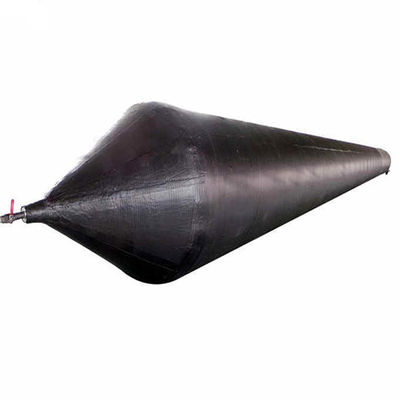
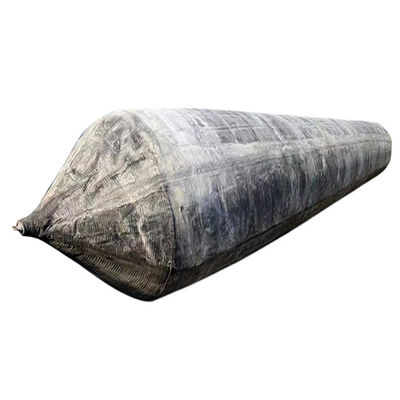
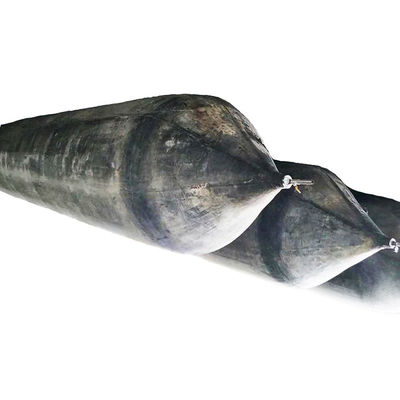
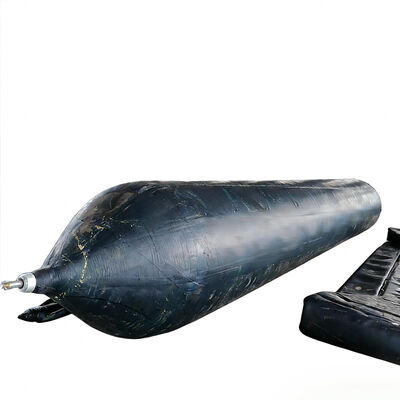
Parachute Type Marine Salvage Airbags for heavy underwater lifting applications are engineered buoyancy systems designed for large-scale structural recovery, infrastructure lifting, and high-load marine construction support. The system is constructed from industrial-grade high-tenacity polyester fabric combined with a reinforced PVC elastomer coating, forming a composite structural membrane capable of withstanding high tensile stress, cyclic loading, and abrasive underwater conditions.

The operating principle is based on controlled buoyancy generation through compressed air displacement in submerged environments. The parachute-type open-bottom configuration enables automatic hydrostatic pressure compensation during ascent, allowing internal air volume to regulate itself according to depth variation. This eliminates excessive internal pressure accumulation and ensures stable structural behavior during high-load lifting operations.

Case Study

A civil engineering contractor in East Asia undertook a river bridge rehabilitation project involving the recovery and repositioning of a displaced reinforced concrete bridge caisson structure weighing approximately 1,850 tons. The structure had partially submerged into a riverbed at a depth of 22 meters following foundation instability caused by prolonged erosion and flood impact.

The project presented significant engineering challenges due to the mass of the structure, uneven sediment distribution beneath the caisson, and restricted access for heavy lifting cranes along the river corridor. Conventional lifting methods were deemed unsuitable due to environmental constraints and risk of further structural damage.

The contractor implemented a buoyancy-assisted lifting solution using Parachute Type Marine Salvage Airbags configured in a distributed heavy-load lifting arrangement. Multiple airbags were installed beneath the caisson using underwater excavation support and diver-assisted positioning techniques. The lifting system was designed based on structural load mapping and hydrostatic balance analysis.

Sequential inflation was carried out in controlled stages using surface-supplied compressed air systems. The open-bottom pressure regulation mechanism ensured continuous equilibrium between internal and external water pressure, preventing abrupt buoyancy fluctuations. This allowed gradual redistribution of load forces as the caisson was elevated from the riverbed.

The structure was successfully lifted to a stable floating position and repositioned for foundation repair and reinstallation. The operation reduced dependency on large-scale crane mobilization, minimized environmental disturbance to the riverbed, and improved operational efficiency.

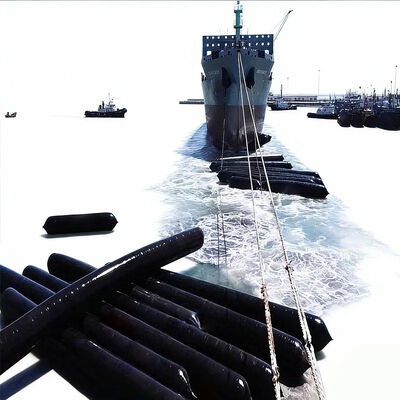
Marine salvage airbag in operation Underwater lifting application
Specifications
Product Name Marine Salvage Airbags
Keywords Boat Lifting Airbag
Material 100% High Performance PVC Coated Polyester Fabric
Physical Property 10,000 N/5cm
Nett Buoyancy 1-200 Tons, or As Request
Dimensions Diameter 0.5m - 3.5m, Length 3.0m - 28.0m, or As Request
Type Enclosed, Open Bottom
Shape Parachute
Inflation Tube 30m, Free of Charge
Technology High Pressure, Overall Winding, Explosion-proof
Metal Parts Q355 / SS304 / SS316
Safety Factor 5:1
MOQ 1
Repair Tools Repair Materials, Glue, Free of Charge
Standard IMCA D016
Certificate ABS, BV, KR, LR, GL, NK, RINA, DNV, RMRS
Package Pallets, Wooden Cases
Service Life 20 Years
Warranty 36 Months
Model Specifications
Model Lifting Capacity (kg) Lifting Capacity (lbs) Dimensions (mm) Approx. Weight (kg)
HM-P01 200 441 800 5
HM-P02 500 1,103 1,000 8
HM-P03 1,000 2,205 1,300 11
HM-P04 2,000 4,410 1,600 20
HM-P05 4,000 8,820 2,000 50
HM-P06 6,000 13,230 2,300 66
HM-P07 8,000 17,640 2,500 75
HM-P08 10,000 22,050 2,700 80
HM-P09 15,000 33,075 3,100 110
HM-P10 20,000 44,100 3,400 130
HM-P11 30,000 66,150 3,900 170
HM-P12 50,000 110,250 4,600 220
HM-P13 70,000 154,350 5,200 310
HM-P14 100,000 220,500 5,800 450
HM-P15 150,000 330,750 6,600 660
HM-P16 200,000 441,000 7,300 900
Note: Other sizes can be customized according to the requirements.
Key Features
  • High-Load Reinforced Structural Framework: Engineered with reinforced load-bearing architecture designed specifically for heavy underwater lifting operations, featuring high-tensile polyester reinforcement layers integrated into critical stress zones.
  • Controlled Hydrostatic Pressure Equalization Mechanism: Open-bottom parachute configuration provides continuous hydrostatic pressure balancing during vertical ascent, preventing structural overloading and ensuring stable lifting behavior.
  • Dynamic Load Stability Under Irregular Submerged Structures: Maintains stable buoyancy behavior under asymmetric load conditions by distributing lifting forces across multiple reinforced attachment points.
  • Fatigue-Resistant Marine Engineering Material System: Constructed using multilayer composite material system designed to resist fatigue under repeated high-load cycles, with PVC-coated elastomer surface providing resistance against abrasion and seawater exposure.
Applications
  • Bridge and Civil Infrastructure Recovery Operations: Lifting and repositioning submerged bridge components, caissons, and foundation structures affected by structural failure or environmental impact.
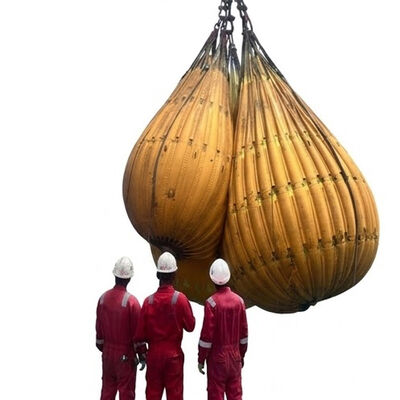
  • Heavy Marine Construction Lifting Support: Applied in the lifting and installation of heavy marine construction components such as precast concrete modules, underwater structural frames, and industrial subsea units.
  • Underwater Structural Rehabilitation Projects: Supports rehabilitation operations involving submerged infrastructure restoration, including repositioning of large structural elements and recovery of damaged civil engineering assets.
Why Choose Hongruntong Marine
  • Heavy Engineering Manufacturing Capability: Specializes in engineered buoyancy systems designed for heavy-load marine and civil engineering applications, with manufacturing aligned with structural engineering requirements.
  • Industrial Load Testing and Quality Control System: Each product undergoes controlled manufacturing and testing procedures including material strength verification, seam integrity testing, and pressure resistance evaluation.
  • Engineering Customization for Large-Scale Projects: Provides customized engineering solutions for high-tonnage lifting projects, including structural reinforcement design and buoyancy distribution optimization.
  • Field Engineering Support for Complex Lifting Operations: Technical support provided during planning and execution stages, including lifting calculations, deployment strategy design, and operational optimization.
Frequently Asked Questions
What is the maximum lifting capacity of Parachute Type Marine Salvage Airbags for heavy engineering applications?

The system can be engineered for high-load applications exceeding 50 tons per unit, and multiple airbags can be combined to achieve lifting capacities of several thousand tons depending on project design.

How does the system handle uneven weight distribution during lifting?

The reinforced multi-point load distribution structure allows lifting forces to be evenly transferred across the airbag body, maintaining stability even under asymmetric or irregular submerged loads.

Can the system be used for civil infrastructure recovery such as bridge components?

Yes. The system is specifically designed for underwater civil engineering applications including bridge caissons, concrete modules, and large structural recovery operations.

What ensures structural durability under repeated heavy lifting cycles?

The combination of high-tensile composite fabric, PVC elastomer coating, and high-frequency welded seams provides fatigue resistance under repeated high-load operational conditions.

Is the system suitable for river and inland water engineering projects?

Yes. The system is applicable to both marine and inland water environments, including rivers, reservoirs, and inland infrastructure engineering sites.

Marine salvage airbag deployment Heavy lifting application Industrial airbag manufacturing Quality control testing
Empfohlene Produkte
Nehmen Sie Kontakt mit uns auf
Ansprechpartner : Mr. William Lau
Telefon : +8618910539783
Faxen : 86-10-89461910
Zeichen übrig(20/3000)