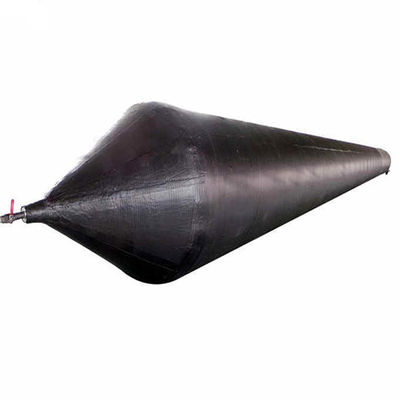
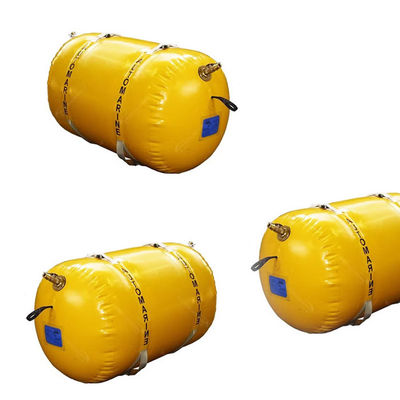
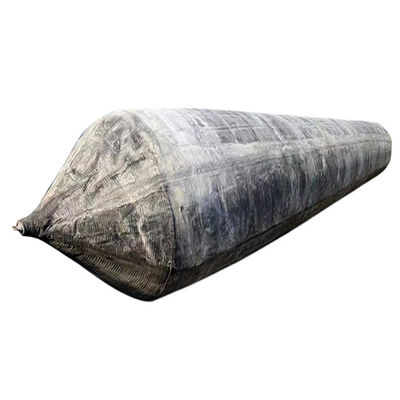
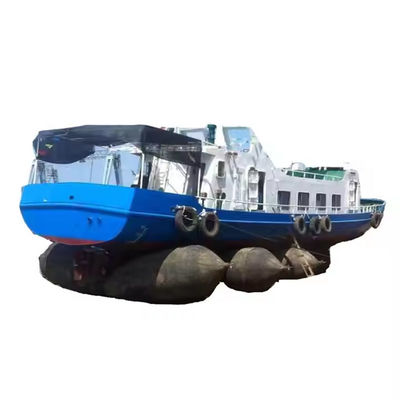
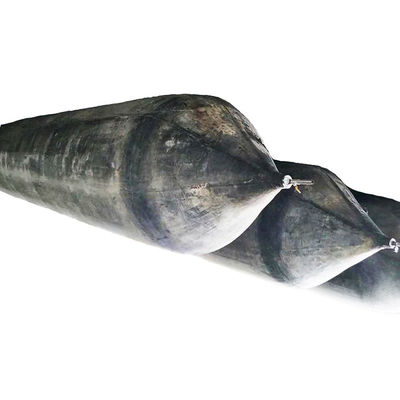
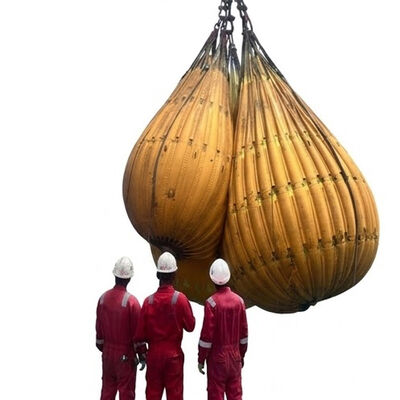
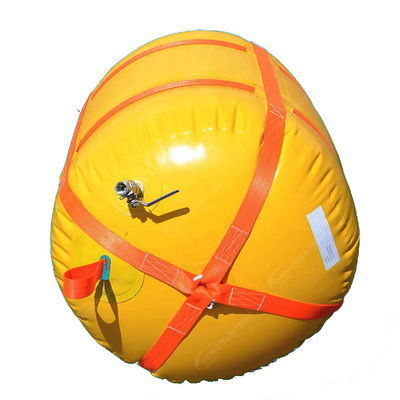
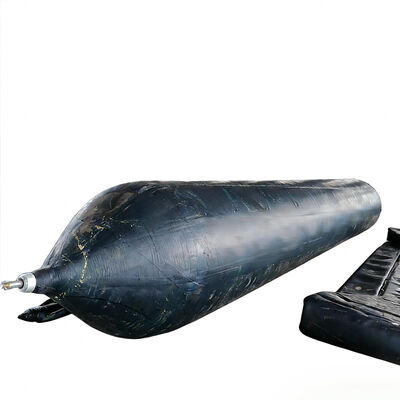
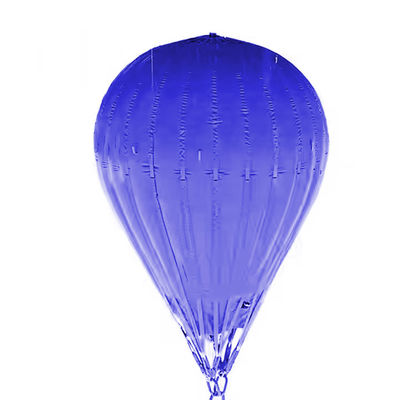
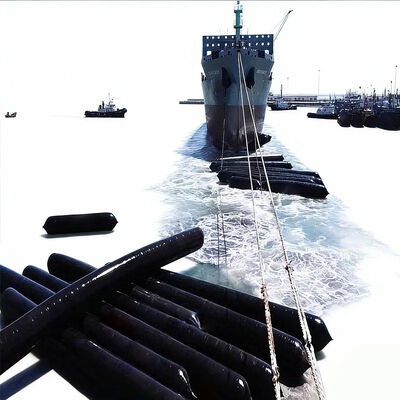
Parachute Type Marine Salvage Airbags for heavy underwater lifting applications are engineered buoyancy systems designed for large-scale structural recovery, infrastructure lifting, and high-load marine construction support. The system is constructed from industrial-grade high-tenacity polyester fabric combined with a reinforced PVC elastomer coating, forming a composite structural membrane capable of withstanding high tensile stress, cyclic loading, and abrasive underwater conditions.
The operating principle is based on controlled buoyancy generation through compressed air displacement in submerged environments. The parachute-type open-bottom configuration enables automatic hydrostatic pressure compensation during ascent, allowing internal air volume to regulate itself according to depth variation. This eliminates excessive internal pressure accumulation and ensures stable structural behavior during high-load lifting operations.
A civil engineering contractor in East Asia undertook a river bridge rehabilitation project involving the recovery and repositioning of a displaced reinforced concrete bridge caisson structure weighing approximately 1,850 tons. The structure had partially submerged into a riverbed at a depth of 22 meters following foundation instability caused by prolonged erosion and flood impact.
The project presented significant engineering challenges due to the mass of the structure, uneven sediment distribution beneath the caisson, and restricted access for heavy lifting cranes along the river corridor. Conventional lifting methods were deemed unsuitable due to environmental constraints and risk of further structural damage.
The contractor implemented a buoyancy-assisted lifting solution using Parachute Type Marine Salvage Airbags configured in a distributed heavy-load lifting arrangement. Multiple airbags were installed beneath the caisson using underwater excavation support and diver-assisted positioning techniques. The lifting system was designed based on structural load mapping and hydrostatic balance analysis.
Sequential inflation was carried out in controlled stages using surface-supplied compressed air systems. The open-bottom pressure regulation mechanism ensured continuous equilibrium between internal and external water pressure, preventing abrupt buoyancy fluctuations. This allowed gradual redistribution of load forces as the caisson was elevated from the riverbed.
The structure was successfully lifted to a stable floating position and repositioned for foundation repair and reinstallation. The operation reduced dependency on large-scale crane mobilization, minimized environmental disturbance to the riverbed, and improved operational efficiency.
| Product Name | Marine Salvage Airbags |
| Keywords | Boat Lifting Airbag |
| Material | 100% High Performance PVC Coated Polyester Fabric |
| Physical Property | 10,000 N/5cm |
| Nett Buoyancy | 1-200 Tons, or As Request |
| Dimensions | Diameter 0.5m - 3.5m, Length 3.0m - 28.0m, or As Request |
| Type | Enclosed, Open Bottom |
| Shape | Parachute |
| Inflation Tube | 30m, Free of Charge |
| Technology | High Pressure, Overall Winding, Explosion-proof |
| Metal Parts | Q355 / SS304 / SS316 |
| Safety Factor | 5:1 |
| MOQ | 1 |
| Repair Tools | Repair Materials, Glue, Free of Charge |
| Standard | IMCA D016 |
| Certificate | ABS, BV, KR, LR, GL, NK, RINA, DNV, RMRS |
| Package | Pallets, Wooden Cases |
| Service Life | 20 Years |
| Warranty | 36 Months |
| Model | Lifting Capacity (kg) | Lifting Capacity (lbs) | Dimensions (mm) | Approx. Weight (kg) |
|---|---|---|---|---|
| HM-P01 | 200 | 441 | 800 | 5 |
| HM-P02 | 500 | 1,103 | 1,000 | 8 |
| HM-P03 | 1,000 | 2,205 | 1,300 | 11 |
| HM-P04 | 2,000 | 4,410 | 1,600 | 20 |
| HM-P05 | 4,000 | 8,820 | 2,000 | 50 |
| HM-P06 | 6,000 | 13,230 | 2,300 | 66 |
| HM-P07 | 8,000 | 17,640 | 2,500 | 75 |
| HM-P08 | 10,000 | 22,050 | 2,700 | 80 |
| HM-P09 | 15,000 | 33,075 | 3,100 | 110 |
| HM-P10 | 20,000 | 44,100 | 3,400 | 130 |
| HM-P11 | 30,000 | 66,150 | 3,900 | 170 |
| HM-P12 | 50,000 | 110,250 | 4,600 | 220 |
| HM-P13 | 70,000 | 154,350 | 5,200 | 310 |
| HM-P14 | 100,000 | 220,500 | 5,800 | 450 |
| HM-P15 | 150,000 | 330,750 | 6,600 | 660 |
| HM-P16 | 200,000 | 441,000 | 7,300 | 900 |
The system can be engineered for high-load applications exceeding 50 tons per unit, and multiple airbags can be combined to achieve lifting capacities of several thousand tons depending on project design.
The reinforced multi-point load distribution structure allows lifting forces to be evenly transferred across the airbag body, maintaining stability even under asymmetric or irregular submerged loads.
Yes. The system is specifically designed for underwater civil engineering applications including bridge caissons, concrete modules, and large structural recovery operations.
The combination of high-tensile composite fabric, PVC elastomer coating, and high-frequency welded seams provides fatigue resistance under repeated high-load operational conditions.
Yes. The system is applicable to both marine and inland water environments, including rivers, reservoirs, and inland infrastructure engineering sites.