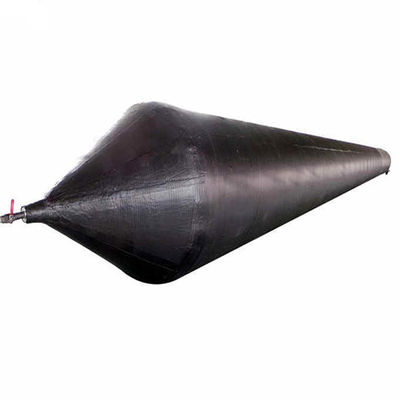
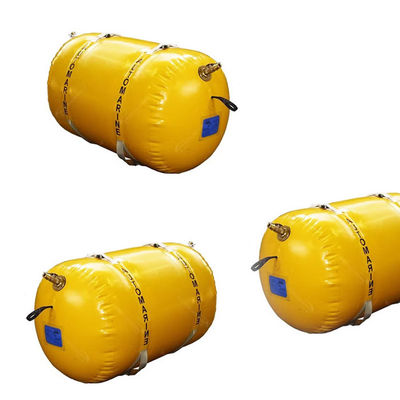
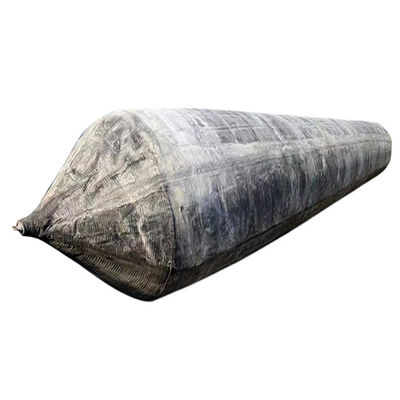
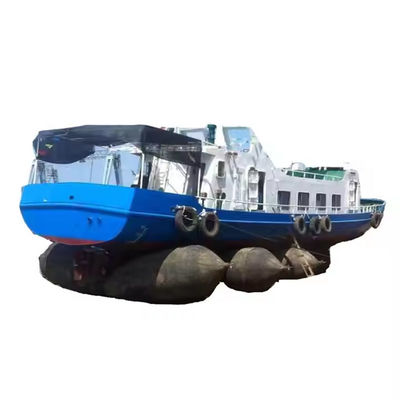
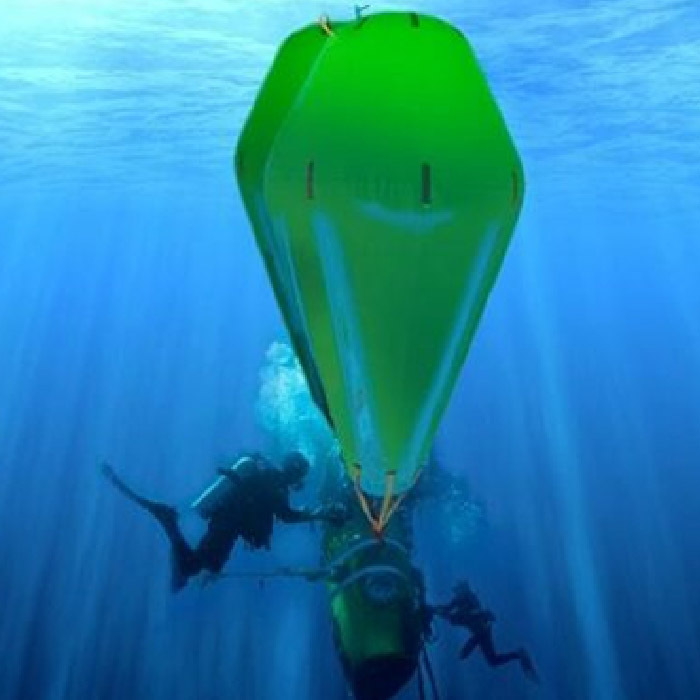
Underwater Buoyancy Bag Abrasion Resistant Stable Buoyancy Lightweight for Underwater Operation
Product Overview
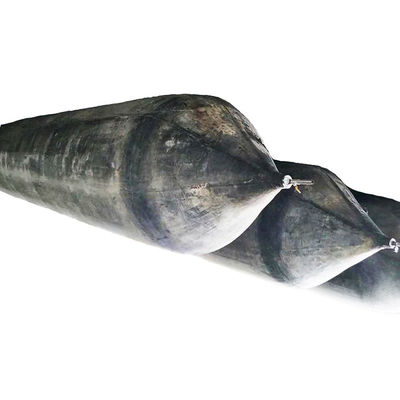
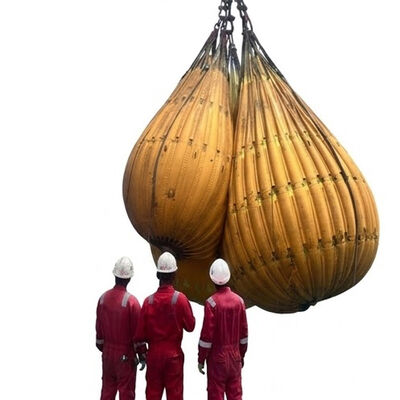
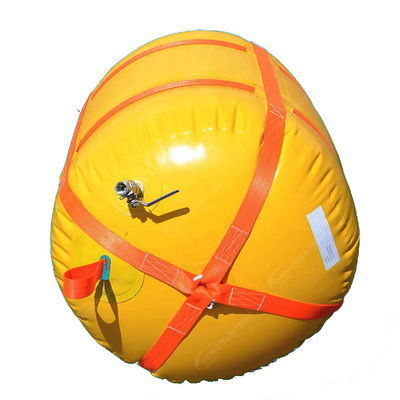
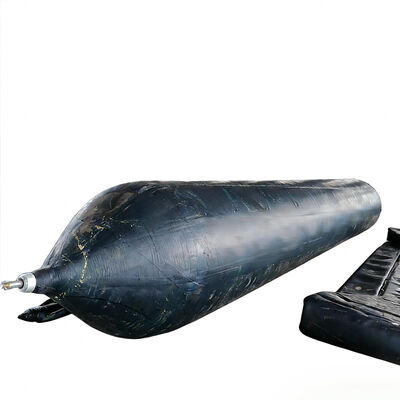
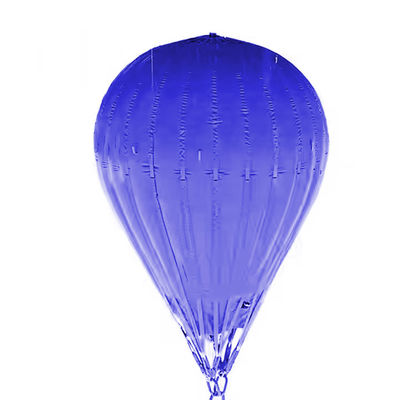
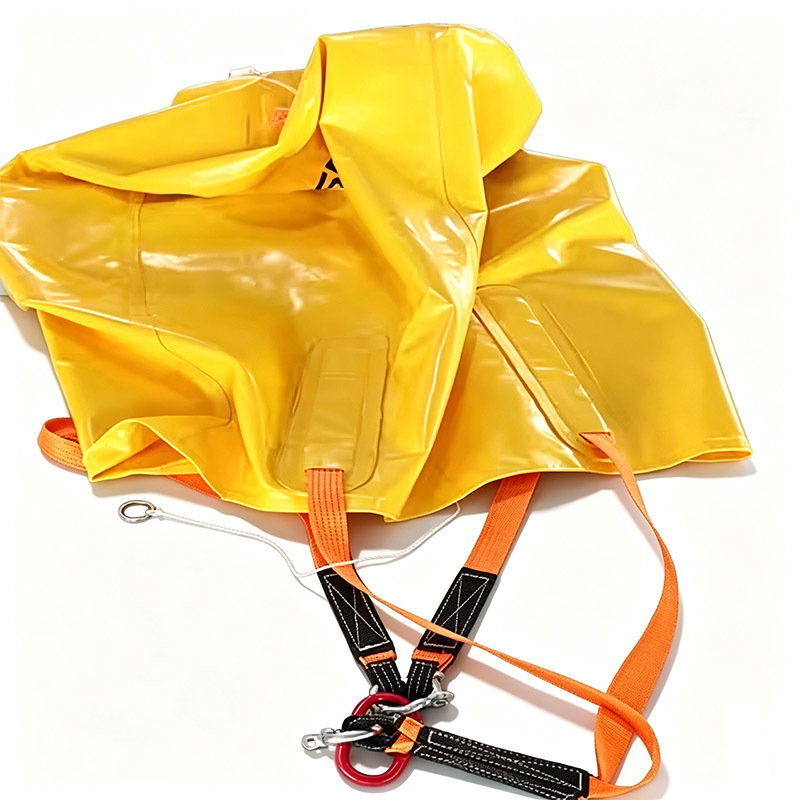
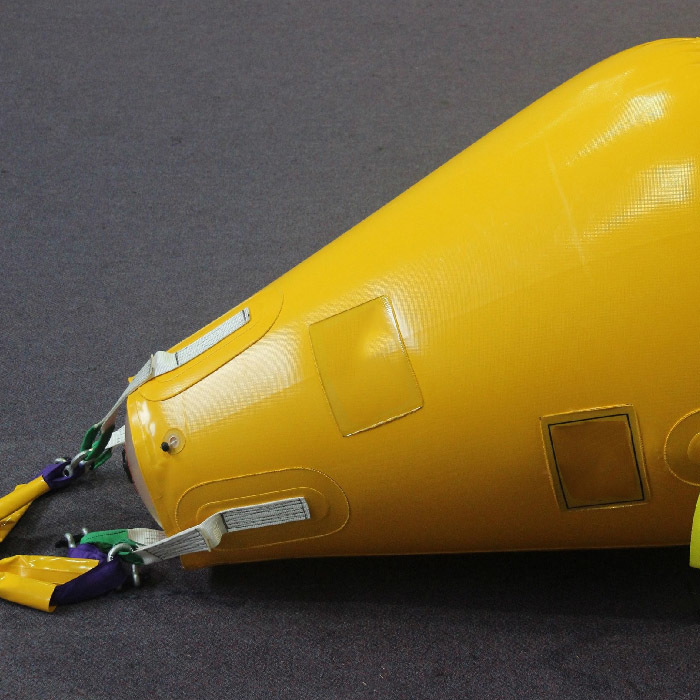
Parachute Underwater Air Lift Bags are flexible underwater buoyancy systems engineered for marine salvage, subsea construction, submerged equipment recovery, temporary flotation, and controlled handling of underwater structures. The parachute configuration consists of a flexible lifting body suspended from a reinforced harness, with an open lower section that allows water to escape as compressed air is introduced. The resulting displacement of water generates upward buoyant force that can be applied to a submerged load through the connected lifting system.
Construction & Materials
The bag body is manufactured from high-strength PVC-coated polyester fabric or other application-specific coated technical textiles. The fabric combines tensile reinforcement with a flexible protective coating, providing resistance to water exposure, abrasion, repeated deployment, folding, transportation, and general marine handling. Critical load-bearing areas are reinforced through additional fabric layers, webbing, lifting straps, suspension points, and connection structures.
Operational Principles
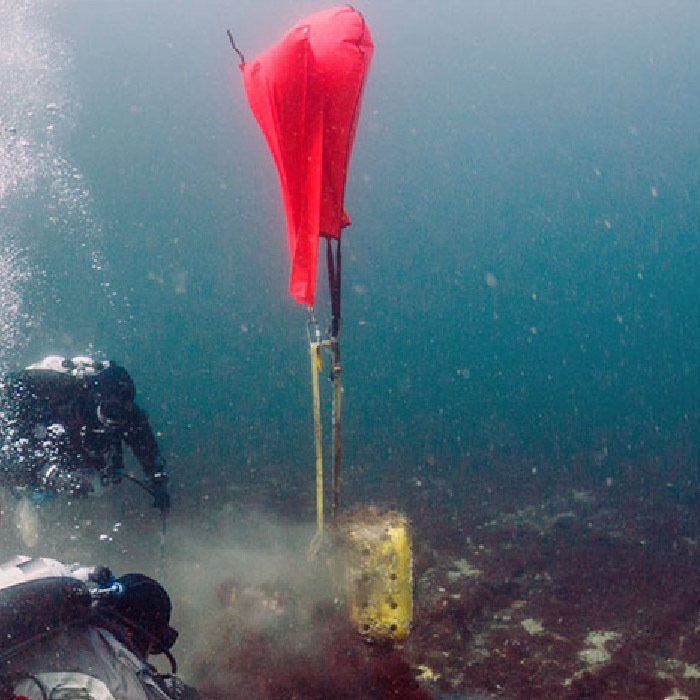
During operation, compressed air is supplied through the inflation connection while the bag is positioned beneath or around the designated lifting arrangement. As the internal air volume increases, displaced water creates buoyancy. The generated upward force can be progressively increased according to the lifting procedure, making the equipment suitable for applications where the load must first be partially relieved from the seabed before complete recovery.
Case Study: Temporary Buoyancy Assistance for Subsea Equipment Installation in Norway
A Norwegian offshore construction contractor successfully used multiple Parachute Underwater Air Lift Bags to install a 21-tonne subsea support frame at 42 meters depth. The distributed buoyancy arrangement provided additional control during final positioning, reducing the effective suspended load and improving handling control without requiring larger surface lifting equipment.
Technical Specifications
| Product Name |
Underwater Air Lift Bags |
| Raw Material |
Top-Notch PVC Coating Fabric |
| Type |
Parachute |
| Size |
500kg, 1000kg, 5000kg, 10000kg, etc |
| Thickness |
0.4-1.2mm, or as request |
| Color |
Yellow, Blue, Black, etc |
| Density |
0.33-0.9g/cm³ |
| Safety Factor |
7:1 |
| Accessories |
Valve, Inflatable Tube, Repair Material |
| OEM |
Welcome |
| Warranty |
3 Years |
| Tolerances |
+/- 0.03 on densities, +/- 0.2 mm on thickness, +/- 0 to +3mm on width, +/- 0 to +3mm on length |
Lifting Capacity Models
| Model |
Lifting Capacity (kg) |
Lifting Capacity (lbs) |
Dimensions (mm) |
Approx. Weight (kg) |
| HM-P01 |
200 |
441 |
800 |
5 |
| HM-P02 |
500 |
1,103 |
1,000 |
8 |
| HM-P03 |
1,000 |
2,205 |
1,300 |
11 |
| HM-P04 |
2,000 |
4,410 |
1,600 |
20 |
| HM-P05 |
4,000 |
8,820 |
2,000 |
50 |
| HM-P06 |
6,000 |
13,230 |
2,300 |
66 |
| HM-P07 |
8,000 |
17,640 |
2,500 |
75 |
| HM-P08 |
10,000 |
22,050 |
2,700 |
80 |
| HM-P09 |
15,000 |
33,075 |
3,100 |
110 |
| HM-P10 |
20,000 |
44,100 |
3,400 |
130 |
| HM-P11 |
30,000 |
66,150 |
3,900 |
170 |
| HM-P12 |
50,000 |
110,250 |
4,600 |
220 |
| HM-P13 |
70,000 |
154,350 |
5,200 |
310 |
| HM-P14 |
100,000 |
220,500 |
5,800 |
450 |
| HM-P15 |
150,000 |
330,750 |
6,600 |
660 |
| HM-P16 |
200,000 |
441,000 |
7,300 |
900 |
Note: Other sizes can be customized according to the requirements.
Key Features
- Precision-Engineered Buoyancy Geometry: Optimized shape for predictable load path and compatibility with suspension arrangements throughout inflation process
- Reinforced Webbing Harness and Connection Points: Critical structural components that transfer buoyant force from fabric body to lifting connections
- Controlled Inflation and Buoyancy Adjustment: Progressive buoyancy generation for embedded load recovery and precise subsea installation
- Adaptable Multi-Bag Lifting Arrangements: Capability to combine multiple bags for complex marine engineering operations and irregular load geometries
Applications
- Subsea Structural Installation: Temporary buoyancy for support frames, structural members, equipment skids, and manifolds during precise positioning
- Pipeline and Cable Handling: Localized buoyancy support for underwater pipelines and cables during positioning and installation
- Underwater Maintenance and Component Replacement: Temporary buoyancy for removal and transfer of heavy valves, pumps, and equipment assemblies
Why Choose Hongruntong Marine
- Established Marine Manufacturing Capability: Over 30 years of experience in marine and industrial products manufacturing
- Application-Specific Customization: Tailored solutions for capacity, dimensions, harness arrangements, and accessory configurations
- Controlled Material and Manufacturing Processes: Rigorous quality control from fabric inspection to final examination
- Technical Support for Project-Based Procurement: Comprehensive support from product selection to documentation and repeat procurement
Frequently Asked Questions
What operating depth can a Parachute Underwater Air Lift Bag be used at?
Operating depth depends on the specific bag design, material construction, buoyancy requirement, air supply arrangement, and applicable operating procedure. Water pressure changes the behavior of compressed air and therefore must be considered during engineering calculations. The manufacturer's specified operating range should be followed for the selected model.
Can different bag capacities be combined in one lifting operation?
Yes. Different capacity units can be combined when the lifting arrangement has been engineered for the specific submerged load. The position and contribution of each bag should be evaluated to maintain the intended load distribution and overall stability.
What information is required for selecting the correct bag size?
Important information includes submerged load weight, approximate load dimensions, water depth, intended attachment points, required lifting height, environmental conditions, rigging arrangement, and desired safety margin. These parameters allow the required buoyancy and bag configuration to be evaluated more accurately.
How should the bags be transported and stored?
The bags should normally be transported and stored in a deflated condition after they have been cleaned and thoroughly dried. They should be protected from sharp objects, excessive heat, prolonged direct sunlight, chemicals, and unnecessary mechanical compression. Folding should follow the manufacturer's handling recommendations to minimize fabric and seam stress.
Can the lifting bags be supplied with customized valves and accessories?
Yes. Valve arrangements, lifting connections, harness configurations, webbing, repair components, and other accessories can be discussed according to the project requirements. The final configuration should be confirmed during technical review before production.


 Your message must be between 20-3,000 characters!