logo

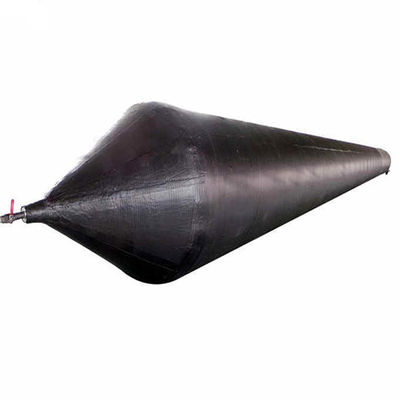
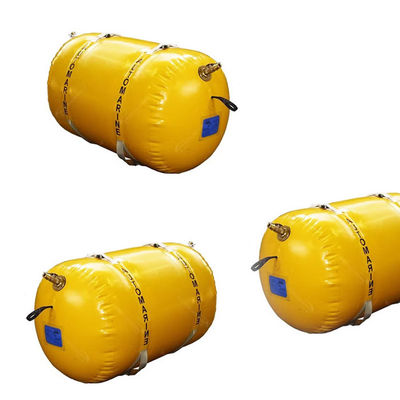
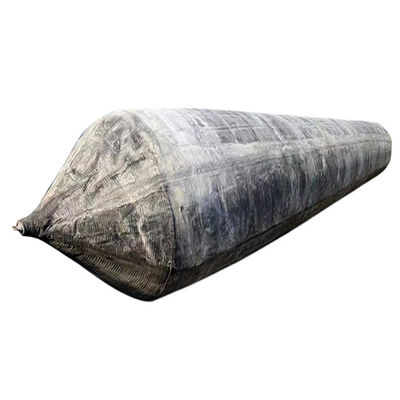
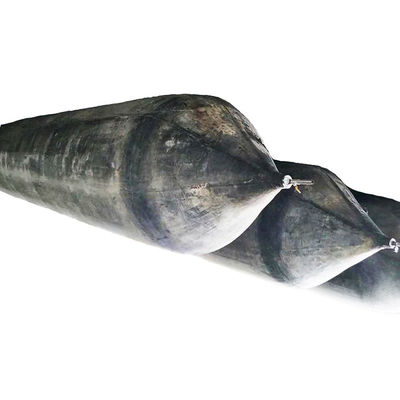
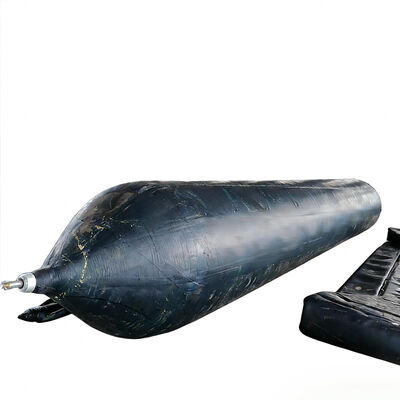
Low Rolling Friction Reinforced End Sealing Uniform Force Distribution Ship Launching Balloon Marine Airbag

1
MOQ
US$36-US$652
τιμή
Low Rolling Friction Reinforced End Sealing Uniform Force Distribution Ship Launching Balloon Marine Airbag
Χαρακτηριστικά Εκθεσιακός χώρος Περιγραφή προϊόντων Ζητήστε ένα απόσπασμα
Χαρακτηριστικά
Προδιαγραφές
Αξεσουάρ: Δωρεάν
Χρώμα: Μαύρος
Υλικό: Σκληρό φυσικό καουτσούκ
Χαρακτηριστικό: Ανθεκτική κατασκευή
Διάμετρος: 0.5M-3.0M, ή προσαρμοσμένο
Επιμήκυνση: ≥ 400%
Μεταλλικό τμήμα: Ειδικότερα, οι ενδείξεις που αναφέρονται στην παράγραφο 1 πρέπει να πληρούνται.
Πίεση Εργασίας: 0.03-0.25Mpa
Εφαρμογή: Πλοίο/Σκάφος/Βάρκα Εκτόξευση/Αποβάθμιση
Εγγύηση: 36 μηνών
Πρότυπο: ISO14409:2011
Ονομα: Αερόστατο εκτόξευσης πλοίου
Επίπεδα: 5-13Πλάι ή προσαρμοσμένο
Σκληρότητα: 60±10 ακτή Α
Ενίσχυση: Υφάσματα από κορδόνια ελαστικών
Αντοχή σε εφελκυσμό: ≥18MPa
Μήκος: 3M-28M, ή προσαρμοσμένο
Βασικές πληροφορίες
Τόπος καταγωγής: Κίνα
Μάρκα: Hongruntong Marine
Πιστοποίηση: ISO, BV, ABS, DNV, LR, SGS, CCS, RMRS
Αριθμό μοντέλου: HM-SLB9
Πληρωμής & Αποστολής Όροι
Συσκευασία λεπτομέρειες: Ξύλινες παλέτες, Ξύλινο κουτί
Χρόνος παράδοσης: 5-7 εργάσιμες
Όροι πληρωμής: L/C,T/T,D/A,D/P,Western Union,MoneyGram
Δυνατότητα προσφοράς: 3280 τμχ το μήνα
Περιγραφή προϊόντων
Roller Airbag Low Rolling Friction Reinforced End Sealing Uniform Force Distribution
Product Overview

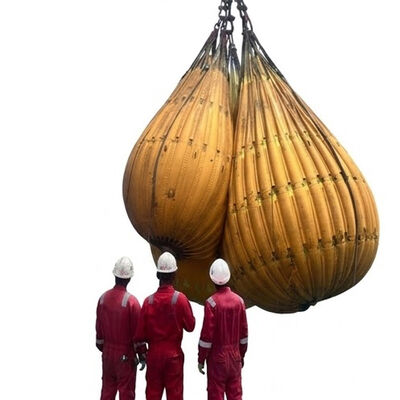
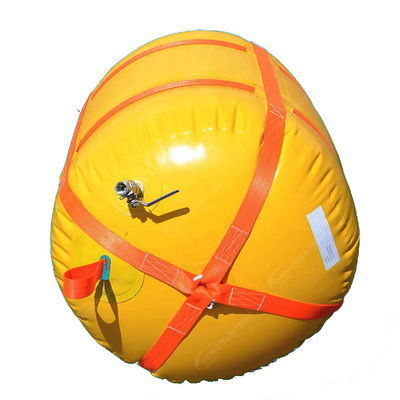
Ship Launching Balloon is a high-load inflatable marine engineering system designed for extreme environment operations, maritime rescue missions, accident vessel recovery, and high-risk hull handling applications. The product is constructed using multi-layer high-tensile synthetic tire cord reinforcement combined with oil-resistant, seawater-resistant vulcanized elastomer compounds, forming a cylindrical pneumatic load-bearing structure capable of maintaining stability under irregular loading, damaged hull interaction, and non-standard seabed or shoreline conditions.

The structural system is manufactured through high-pressure vulcanization molding with asymmetric reinforcement layering technology, enabling enhanced resistance to localized puncture propagation and irregular stress concentration. The internal pneumatic chamber is engineered to maintain controlled pressure stability even under partial surface damage or non-uniform external loading conditions.

Case Study

A coastal maritime rescue operation was conducted in a Southeast Asian port region following the grounding and partial hull breach of a 6,200 DWT general cargo vessel after collision with submerged debris during low tide navigation. The vessel came to rest on an uneven sandy seabed with partial water ingress in the lower ballast compartments.

The Ship Launching Balloon system was deployed as an emergency re-floating and load stabilization mechanism. Pneumatic cylinders were inserted through controlled access points beneath the hull using diver-assisted positioning techniques. Controlled inflation was executed in incremental pressure stages to gradually restore buoyancy and redistribute load away from damaged hull zones.

During recovery operations, the vessel was successfully re-floated with controlled lifting progression, minimizing additional structural stress on compromised hull sections. The system maintained stability throughout tidal variation cycles, allowing safe towing preparation without further structural failure.

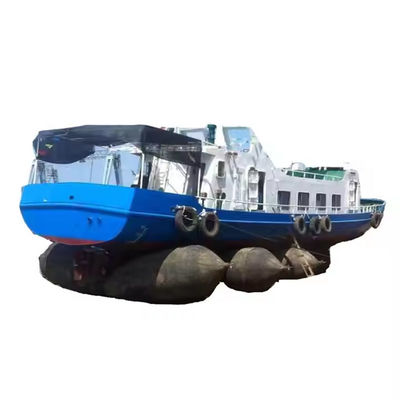
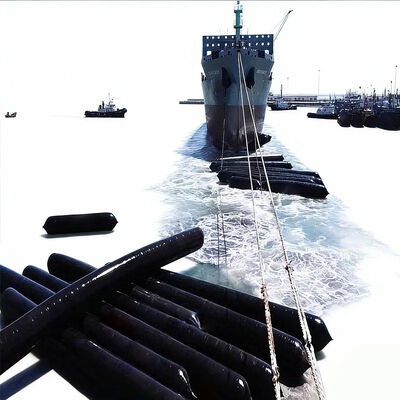
Ship Launching Balloon deployment in marine salvage operation
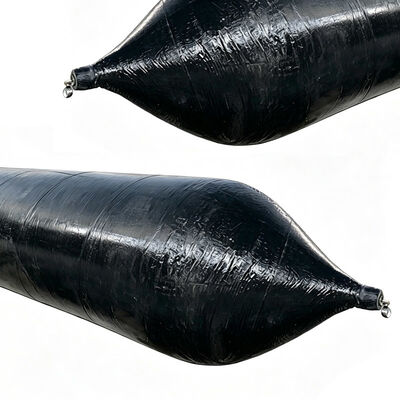
Close-up view of marine airbag system in use
Technical Specifications
Product Name Ship Launching Balloon
Material 100% High Tensile Natural Rubber (NR)
Dimensions Diameter 0.2m - 4.0m, Length 3.0m - 28.0m, or As Request
Working Pressure 0.05-0.25MPA
Technology Overall Winding, High Pressure, Explosion-Proof
Metal Parts Q355 / SS304 / SS316
OEM Supported
MOQ 1
Repair Tools Electric Heating Plate, Repair Materials, Glue, Free of Charge
Standard ISO 17357
Certificate ABS, BV, KR, LR, GL, NK, RINA, DNV, RMRS
Package Pallets, Wooden Cases
Service Life 20 Years
Warranty 36 Months
Load Capacity Specifications
Diameter Working Pressure Working Height Bearing Capacity KN/m Bearing Capacity Ton/m
D=1.0m 0.14Mpa 0.6m 87.96 8.98
D=1.0m 0.14Mpa 0.5m 109.96 11.22
D=1.0m 0.14Mpa 0.4m 131.95 13.46
D=1.2m 0.12Mpa 0.7m 94.25 9.62
D=1.2m 0.12Mpa 0.6m 113.10 11.54
D=1.2m 0.12Mpa 0.5m 131.95 13.46
D=1.2m 0.12Mpa 0.4m 150.80 15.39
D=1.5m 0.10Mpa 0.9m 94.25 9.62
D=1.5m 0.10Mpa 0.8m 109.96 11.22
D=1.5m 0.10Mpa 0.7m 125.66 12.82
D=1.5m 0.10Mpa 0.6m 141.37 14.43
D=1.5m 0.10Mpa 0.5m 157.08 16.03
D=1.8m 0.09Mpa 1.1m 98.96 10.10
D=1.8m 0.09Mpa 1.0m 113.10 11.54
D=1.8m 0.09Mpa 0.9m 127.33 12.98
D=1.8m 0.09Mpa 0.8m 141.37 14.43
D=1.8m 0.09Mpa 0.7m 155.51 15.87
D=1.8m 0.09Mpa 0.6m 169.65 17.31
D=2.0m 0.08Mpa 1.2m 100.53 10.26
D=2.0m 0.08Mpa 1.1m 113.10 11.54
D=2.0m 0.08Mpa 1.0m 125.66 12.82
D=2.0m 0.08Mpa 0.9m 138.23 14.11
D=2.0m 0.08Mpa 0.8m 150.80 15.39
D=2.0m 0.08Mpa 0.7m 163.36 16.67
D=2.0m 0.08Mpa 0.6m 175.93 17.95
* Other Size Can Be Provided Follow Client's Requirements.
Key Features
  • Damage-Tolerant Multi-Layer Reinforced Structure Design: Engineered with staggered multi-layer synthetic tire cord reinforcement embedded within a high-resilience vulcanized elastomer matrix to resist crack propagation and localized failure under puncture, abrasion, or partial structural damage conditions.
  • Adaptive Pneumatic Pressure Redistribution System: Internal air chamber designed with dynamic pressure balancing capability, allowing localized load variation without global structural collapse and maintaining functional integrity under non-uniform inflation conditions.
  • Marine Contaminant and Abrasion Resistance Engineering: Outer rubber layer formulated with enhanced resistance to seawater corrosion, oil contamination, and sediment abrasion for stable mechanical performance in polluted harbor environments and industrial spill conditions.
  • Emergency Load Stabilization and Controlled Buoyancy Recovery Mechanism: Functions as a temporary buoyancy restoration interface for accident vessels, converting pneumatic pressure into distributed lifting force for gradual recovery of hull stability without introducing sudden stress peaks.
Applications
  • Maritime Accident Recovery and Shipwreck Salvage Operations: Emergency marine engineering scenarios involving grounded, capsized, or partially submerged vessels where conventional salvage equipment cannot be safely deployed.
  • Harbor and Coastal Emergency Response Engineering: Rapid vessel recovery after collision, grounding, or structural failure incidents in port emergency systems with adaptive load support under unstable tidal conditions.
  • High-Risk Offshore Structural Recovery and Marine Disaster Response: Offshore accident scenarios involving damaged platforms, floating structures, or partially submerged industrial marine assets with flexible load distribution capability.
Why Choose Hongruntong Marine
  • High-Risk Marine Engineering Design Capability: Engineered systems specifically designed for unstable, damaged, and non-standard marine environments with failure mode analysis and emergency response simulation.
  • Advanced Material Engineering for Damaged Environment Resistance: Specialized elastomer compounds and multi-layer reinforcement structures designed for resistance against puncture, abrasion, oil contamination, and seawater degradation.
  • Emergency Engineering Application Experience: Proven application in maritime salvage, vessel recovery, and accident response projects involving complex structural damage conditions.
  • Field Support and Rapid Deployment Engineering System: Technical guidance for emergency deployment scenarios including underwater positioning, inflation sequencing, and load stabilization control for immediate response capability.
Frequently Asked Questions
  • Can the system be used on partially submerged or capsized vessels?
    Yes, the system is designed for emergency re-floating and stabilization of partially submerged or structurally unstable vessels under controlled inflation and load redistribution conditions.
  • How does the system perform under hull damage or deformation conditions?
    The reinforced structure is designed to tolerate irregular hull geometry and localized damage. It maintains load support through distributed pneumatic pressure even under non-uniform contact conditions.
  • Is the system suitable for contaminated marine environments such as oil spill zones?
    Yes, the outer rubber compound is resistant to oil contamination, seawater exposure, and sediment abrasion, making it suitable for polluted harbor and accident recovery environments.
  • Can the system be deployed in deep water salvage operations?
    The system is primarily designed for shallow to moderate depth salvage operations where controlled insertion beneath hull structures is feasible. Deployment depends on access conditions and diver-assisted positioning capability.
  • What safety mechanisms are included for high-risk operations?
    The system uses controlled staged inflation and pressure balancing design to prevent sudden structural failure. Load is gradually redistributed to minimize stress concentration during emergency lifting operations.
Marine airbag system installation demonstration Industrial marine airbag application in shipyard Ship launching balloon technical specifications diagram
Marine salvage operation using airbag system
Συνιστώμενα προϊόντα
Ελάτε σε επαφή μαζί μας
Υπεύθυνος Επικοινωνίας : Mr. William Lau
Τηλ.: : +8618910539783
Φαξ : 86-10-89461910
Χαρακτήρες Λοιπά(20/3000)