Marine Rubber Airbag Heavy Load Anti Aging Wear Resistant
Product Overview
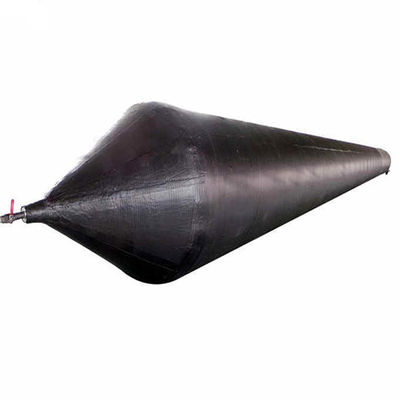
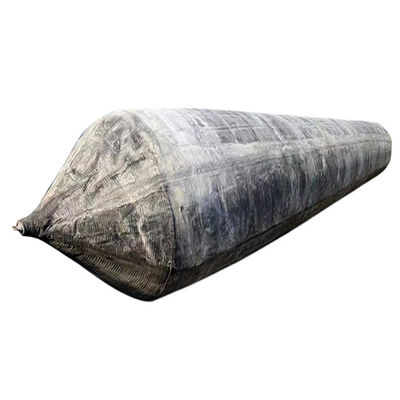
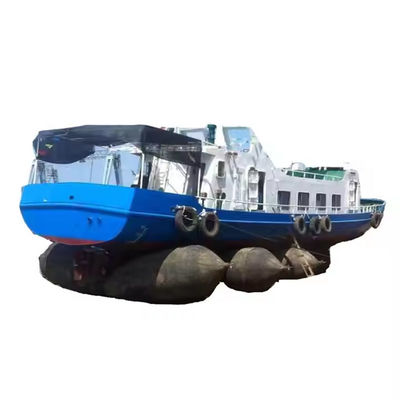
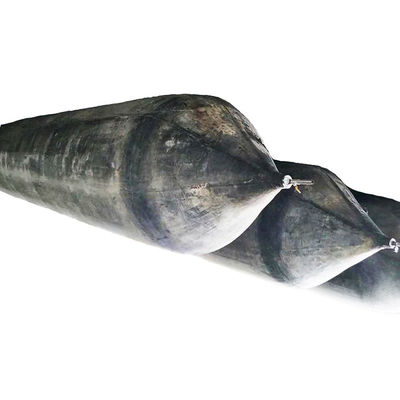
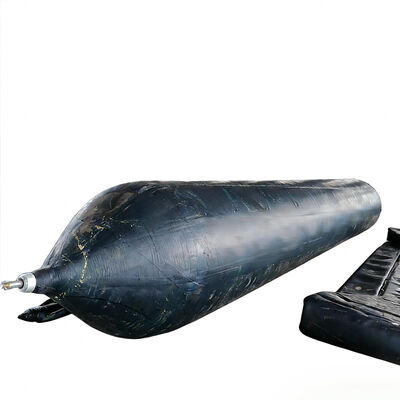
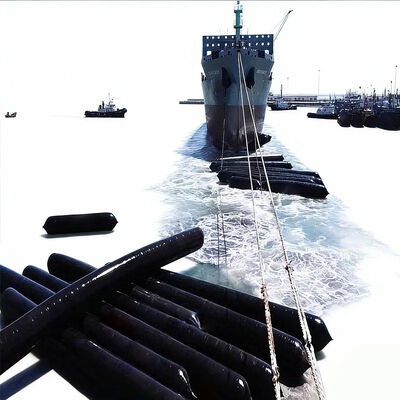
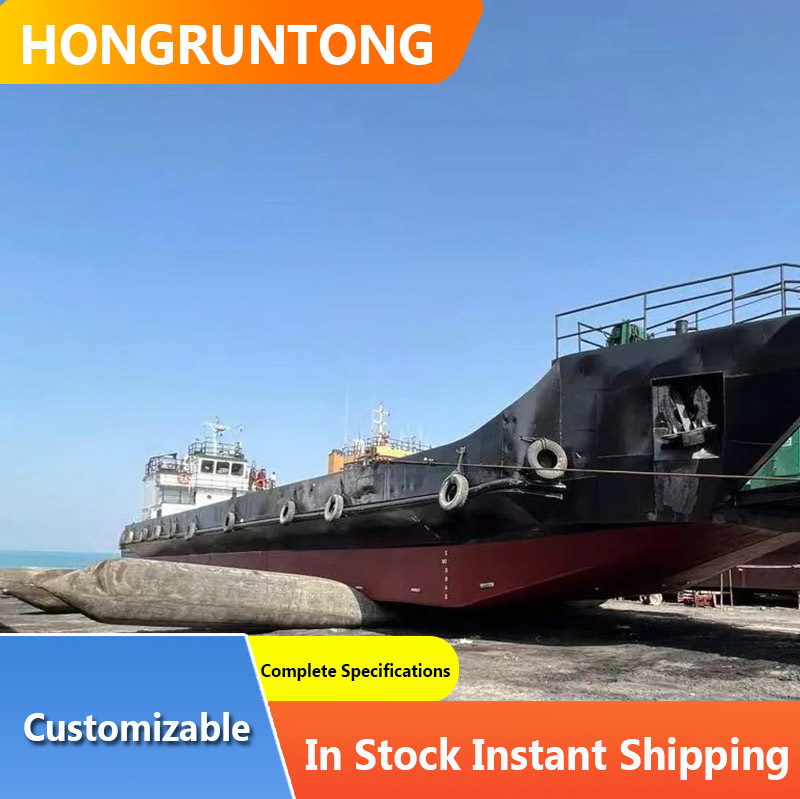
Hongruntong Marine Ship Launching Airbags are high-load pneumatic transfer devices engineered for the controlled launching of vessels from land-based construction sites to waterborne environments without permanent dry dock or fixed slipway infrastructure.
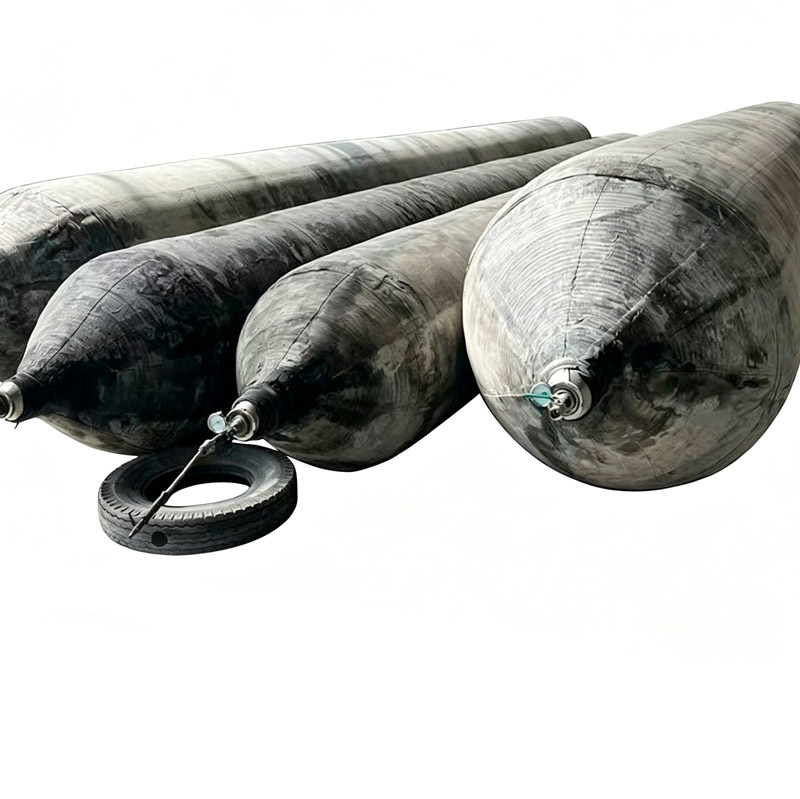
Each airbag is manufactured using multiple layers of high-tenacity nylon-6,6 tire cord fabric arranged in a bias-ply orientation to achieve uniform radial and axial stress distribution. The outer envelope is fully vulcanized with a chlorobutyl rubber compound formulated for abrasion resistance and environmental durability.
Case Study: 18,500 DWT Bulk Carrier Launch
A shipyard operating on the Karnaphuli River in Chittagong, Bangladesh required launching of an 18,500 DWT bulk carrier measuring 149 meters in length. The facility possessed no conventional building slipway due to tidal variation and soft alluvial soil conditions.
Hongruntong Marine supplied twenty-four airbags of 1.8 meter diameter and 18 meter effective length. The implementation achieved zero hull coating damage, measured hull longitudinal stress within elastic limits, and full retraction of all airbags within ninety minutes post-launch.
The shipyard reported an eighty-three percent reduction in launch-related civil works expenditure compared to conventional slipway construction, with launch preparation time reduced from fourteen days to thirty-six hours.
Technical Specifications
| Item |
Description |
| Place of Origin |
China |
| Brand Name |
Hongruntong Marine |
| Product Name |
Ship Launching Airbags |
| Material |
Top-Notch Natural Rubber |
| Diameter |
0.5m-3.0m, or As Request |
| Length |
1.0m-28.0m, or As Request |
| Working Pressure |
0.05-0.25 Mpa |
| Technics |
High Pressure, Overall Winding, Explosion-Proof |
| Use |
ship launching and docking |
| Thickness |
5-15 ply |
| Standard |
Conducted by ISO14409 and GB/T1590-2006 system. |
| Accessories |
Q355/SS304/SS316, Pressure Gauge, Tee, Plug, Switch, Inflation Tube |
| Packaging |
Inner-Plastic Bag; Outer-Standard Wooden Pallets. |
| Keywords |
Marine Rubber Airbags for Ship Launching |
| Certificates |
ABS, BV, KR, LR, GL, NK, RINA, DNV, RMRS |
| MOQ |
1 |
| OEM |
Welcome |
Capacity Specifications
| Diameter |
Working Pressure |
Working Height |
Bearing Capacity KN/m |
Bearing Capacity Ton/m |
| D=1.0m |
0.14Mpa |
0.6m |
87.96 |
8.98 |
| 0.5m |
109.96 |
11.22 |
| 0.4m |
131.95 |
13.46 |
| D=1.2m |
0.12Mpa |
0.7m |
94.25 |
9.62 |
| 0.6m |
113.10 |
11.54 |
| 0.5m |
131.95 |
13.46 |
| 0.4m |
150.80 |
15.39 |
| D=1.5m |
0.10Mpa |
0.9m |
94.25 |
9.62 |
| 0.8m |
109.96 |
11.22 |
| 0.7m |
125.66 |
12.82 |
| 0.6m |
141.37 |
14.43 |
| 0.5m |
157.08 |
16.03 |
| D=1.8m |
0.09Mpa |
1.1m |
98.96 |
10.10 |
| 1.0m |
113.10 |
11.54 |
| 0.9m |
127.33 |
12.98 |
| 0.8m |
141.37 |
14.43 |
| 0.7m |
155.51 |
15.87 |
| 0.6m |
169.65 |
17.31 |
| D=2.0m |
0.08Mpa |
1.2m |
100.53 |
10.26 |
| 1.1m |
113.10 |
11.54 |
| 1.0m |
125.66 |
12.82 |
| 0.9m |
138.23 |
14.11 |
| 0.8m |
150.80 |
15.39 |
| 0.7m |
163.36 |
16.67 |
| 0.6m |
175.93 |
17.95 |
* Other size can be produced follow client's requirements.
Key Features
Multi-Layer Bias-Ply Cord Reinforcement
The structural integrity derives from a bias-ply arrangement of high-tenacity nylon-6,6 tire cord, with each layer oriented at opposing fifty-four degree angles relative to the airbag longitudinal axis. This ensures uniform radial and axial stress distribution across multiple cord intersections.
Abrasion-Resistant Chlorobutyl Outer Compound
The external rubber layer is formulated with chlorobutyl polymer base and carbon black reinforcement, achieving superior abrasion resistance and ozone protection. The material maintains flexibility across extreme temperature ranges while providing optimal balance between deformation under load and resistance to cutting.
Dual High-Flow Valve System
Each airbag features two steel-bodied valves with tamper-resistant locking rings and replaceable nitrile rubber sealing elements. The threaded needle mechanism allows precise graduated deflation rates, while remote pressure monitoring ports enable real-time data collection from safe distances.
Modular Length and Diameter Engineering
Hongruntong provides custom sizing with length increments from four to twenty-five meters and diameter options from 0.6 to 2.5 meters. Finite element contact pressure simulation ensures uniform contact pressure distribution across asymmetric hull profiles.
Applications
Greenfield Shipyard Construction
New shipbuilding facilities deploy airbags as primary launch systems during initial years, eliminating the need for permanent concrete runways and allowing capital reallocation to essential equipment.
Repair and Maintenance Launching
Ship repair facilities use airbags to launch vessels after hull maintenance when dry docks are occupied, doubling throughput capacity by allowing continuous dry dock utilization.
Barge Construction at Inland Waterways
Inland barge builders operating on rivers with seasonal water level variations use airbags to launch during high water periods, accommodating various riverbank surfaces without additional preparation.
Why Choose Hongruntong Marine
Certified Manufacturing Excellence
With eighteen years of continuous airbag manufacturing under ISO 14409 and ISO 14410 certification, Hongruntong has delivered over 7,200 units to shipyards across forty-seven countries.
Finite Element Engineering Support
Pre-sale engineering analysis includes comprehensive launch planning with finite element modeling of hull contact stress distribution, significantly reducing technical risk.
Field-Based Technical Support
Qualified field engineers supervise first launches, providing hands-on training and documentation to ensure operational success with a 98.6% first-launch success rate.
Predictive Maintenance Program
Color-coded wear indicators integrated into the outer rubber layer enable precise remaining life estimation and proactive replacement planning.
Frequently Asked Questions
What is the maximum vessel deadweight that can be launched using standard Hongruntong airbags?
The standard product line supports vessels up to 25,000 deadweight tons using 2.0 meter diameter airbags. Custom engineering is available for vessels up to 32,000 DWT.
How many launch cycles can a single airbag perform?
Under standard operating conditions, documented service life ranges from twelve to twenty launches, with maximum observed life of twenty-nine launches over four years.
What ground preparation is required before launching?
The launch way must be leveled and compacted to achieve minimum California Bearing Ratio requirements, with sand leveling layer recommended for repeat use sites.
Does Hongruntong provide training for customer personnel?
Yes. Every airbag purchase of fifteen units or more includes two days of on-site training covering both classroom instruction and practical hands-on operation.
What repair methods are approved for damaged airbags?
Punctures and cuts up to twenty-five millimeters are repairable using cold vulcanization patches. Larger damage requires hot vulcanization or factory remanufacturing.


 ข้อความของคุณจะต้องอยู่ระหว่าง 20-3,000 ตัวอักษร!