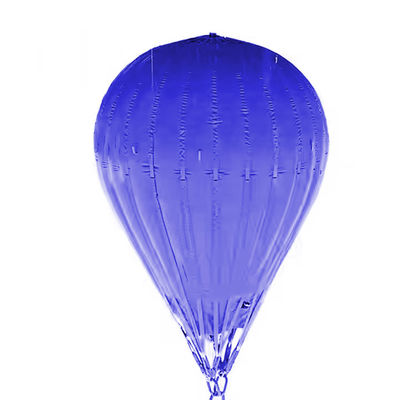
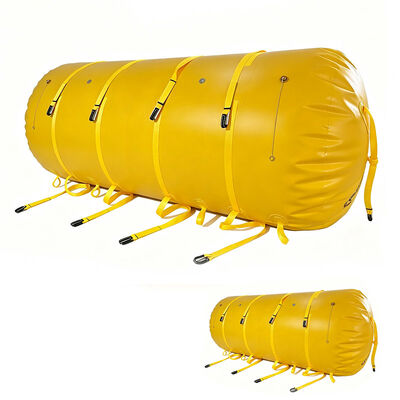
Marine Salvage Bags Corrosion Resistant Seawater Proof Easy Inflation Deflation for Underwater Wreck Recovery
Product Overview
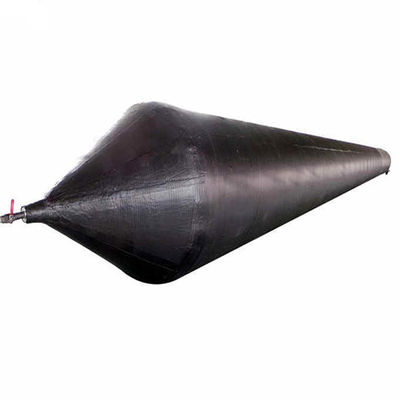
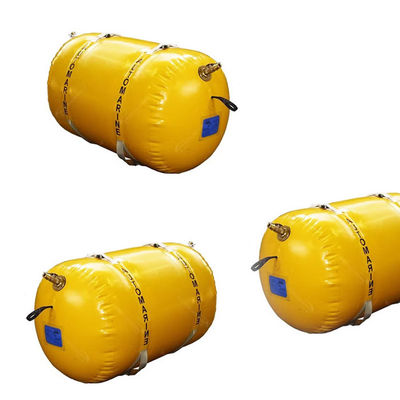
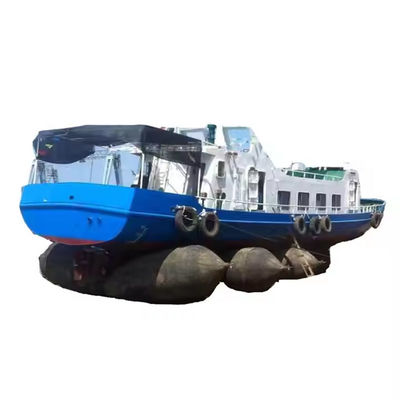
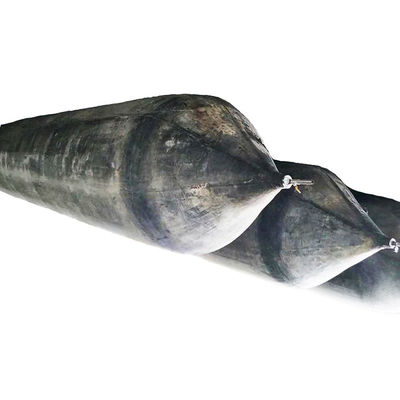
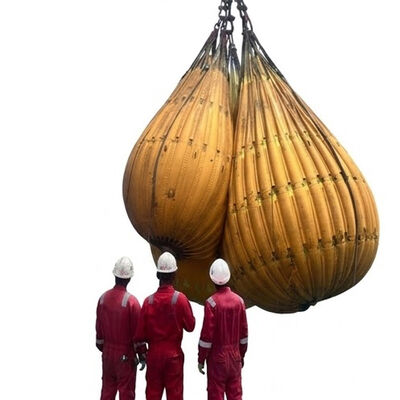
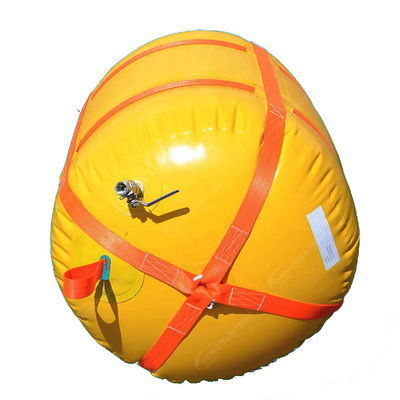
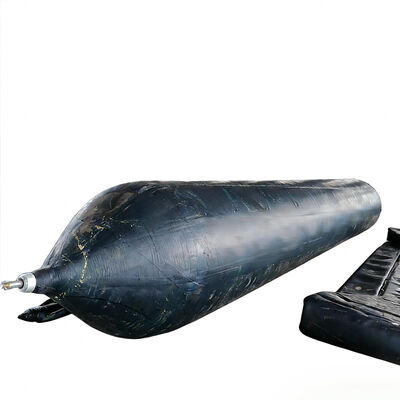
Underwater Lift Bags are engineered inflatable buoyancy systems used for lifting, stabilizing, recovering, and positioning submerged objects in marine and industrial environments. The equipment creates controlled positive buoyancy through the displacement of water by an enclosed air volume. By introducing air into the reinforced body, the effective submerged weight of a load can be reduced progressively, allowing operators to manage underwater movement with greater flexibility.
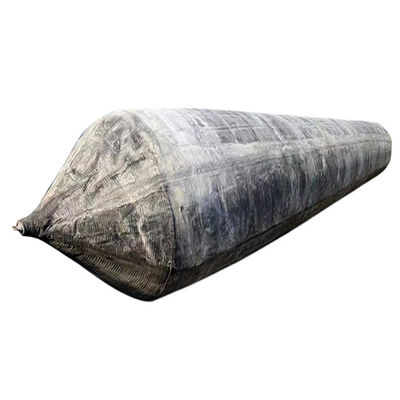
The product is primarily constructed from high-strength synthetic reinforcement fabric with a durable rubber or elastomeric outer coating. The reinforcement provides tensile strength and dimensional stability, while the external layer provides protection against abrasion, moisture, repeated handling, and normal contact with marine structures.
Case Study: Temporary Buoyancy Support for Subsea Pipeline Installation
A coastal engineering contractor in the Middle East was installing a large-diameter steel pipeline section as part of a marine infrastructure project. The pipeline section had substantial submerged weight and required controlled positioning across a shallow nearshore working area with uneven seabed elevation.
Several Underwater Lift Bags were strategically positioned along the pipeline assembly. The bags were progressively inflated as the pipeline entered the water, reducing the effective load and providing temporary support. The installation team adjusted buoyancy distribution to maintain pipeline orientation and reduce localized loading during positioning.
Once correctly aligned and supported by permanent installation arrangements, the lifting bags were progressively deflated and recovered. This approach demonstrated the value of distributed buoyancy in subsea installation work, providing controlled handling and reducing dependence on continuous mechanical lifting.

Technical Specifications
| Product Name |
Underwater Lift Bags |
| Raw Material |
PVC coating fabric |
| Type |
Cylindrical |
| Size |
500kg, 1000kg, 5000kg, 10000kg, etc |
| Thickness |
0.4-1.2mm, or as requested |
| Color |
Yellow, Blue, Black, etc |
| Density |
0.33-0.9g/cm³ |
| Safety Factor |
7:1 |
| Tolerances |
±0.03 on densities, ±0.2mm on thickness, ±0 to +3mm on width, ±0 to +3mm on length |
Model Specifications
| Model |
Buoyancy (kg) |
Buoyancy (lbs) |
Diameter (mm) |
Length (mm) |
Weight (kg) |
| HM-ULB01 |
200 |
441 |
500 |
1,000 |
5 |
| HM-ULB02 |
500 |
1,103 |
800 |
1,000 |
8 |
| HM-ULB03 |
1,000 |
2,205 |
1,000 |
1,500 |
11 |
| HM-ULB04 |
2,000 |
4,410 |
1,300 |
1,500 |
20 |
| HM-ULB05 |
4,000 |
8,820 |
1,600 |
2,000 |
50 |
| HM-ULB06 |
6,000 |
13,230 |
2,000 |
2,000 |
66 |
| HM-ULB07 |
8,000 |
17,640 |
2,000 |
2,600 |
75 |
| HM-ULB08 |
10,000 |
22,050 |
2,400 |
2,400 |
80 |
| HM-ULB09 |
15,000 |
33,075 |
2,600 |
3,000 |
110 |
| HM-ULB10 |
20,000 |
44,100 |
3,000 |
3,000 |
130 |
| HM-ULB11 |
30,000 |
66,150 |
3,000 |
4,500 |
170 |
| HM-ULB12 |
50,000 |
110,250 |
4,000 |
4,000 |
220 |
| HM-ULB13 |
70,000 |
154,350 |
4,000 |
5,700 |
310 |
| HM-ULB14 |
100,000 |
220,500 |
4,000 |
8,000 |
450 |
| HM-ULB15 |
150,000 |
330,750 |
5,000 |
8,000 |
660 |
| HM-ULB16 |
200,000 |
441,000 |
5,000 |
10,000 |
900 |
Note: Other sizes can be customized according to project requirements.
Key Features
Precision Designed Buoyancy Distribution
Underwater Lift Bags enable distributed buoyant force across multiple locations rather than applying entire lifting force through a single point. This is particularly important for long pipelines, fabricated frames, and equipment with offset centers of gravity. Multiple bags can be arranged according to load geometry and weight distribution, reducing excessive concentration of upward force and controlling bending during movement.
High Fatigue Resistance for Repeated Deployment
The reinforced construction tolerates repeated mechanical cycles including transportation, unfolding, inflation, deflation, repositioning, and storage. Synthetic reinforcement provides tensile strength while flexible outer coating allows expansion and contraction without rigid structure. This fatigue resistance supports multiple project deployments and reduces need for dedicated lifting equipment for every operation.
Corrosion-Resistant and Water-Compatible Material System
Primary construction uses reinforced fabric with rubber or elastomeric coating rather than rigid metallic shell, providing resistance to water-related deterioration. The material system maintains flexibility and mechanical performance under normal underwater conditions while wear-resistant external surfaces protect reinforcement during deployment and recovery operations.
Operational Flexibility in Variable Working Conditions
Buoyancy can be adjusted according to project stage and working conditions. The equipment supports recovery operations, installation work, and maintenance activities with adjustable buoyancy, flexible installation, modular configuration, and compact transportation. This combination supports wide range of marine engineering tasks while maintaining relatively simple equipment structure.
Applications
Subsea Pipeline Installation and Alignment
Provides temporary buoyancy during installation and alignment of submerged pipeline sections. Multiple units distribute upward force to reduce effective submerged load and control vertical position, particularly useful where seabed elevation changes or restricted access make direct mechanical positioning difficult.
Offshore Construction and Infrastructure Maintenance
Supports submerged structural members, temporary components, fabricated frames, and marine installation assemblies. Controlled buoyancy assists with positioning equipment at defined underwater elevation or maintaining temporary support while permanent connections are completed.
Underwater Industrial Handling
Applied to underwater handling of machinery, fabricated components, construction tools, and maintenance equipment. Provides temporary buoyancy to assist recovery or relocation when conventional lifting equipment cannot easily reach submerged loads.
Why Choose Hongruntong Marine
Extensive Experience in Marine Rubber Engineering
Over 30 years of experience in marine rubber manufacturing and related engineering products provides practical understanding of how reinforced rubber structures behave under repeated handling, marine exposure, inflation, deformation, and load transfer. This experience supports coordinated control of manufacturing elements including reinforcement fabric, coating, seams, and connection points.
Customized Design Based on Project Parameters
Develops customized designs based on project information including required buoyancy, dimensions, submerged load, operating depth, attachment method, and environmental conditions. Customization can include dimensions, lifting straps, reinforcement arrangement, connection points, inflation components, and material selection to avoid unnecessary oversizing or unsuitable configurations.
Structured Quality Control During Production
Applies inspection procedures to critical production stages including reinforcement preparation, material assembly, seam formation, coating condition, fitting installation, and final product inspection. Controlled material selection and production procedures help maintain consistent product characteristics across manufacturing batches.
Technical Communication and Project Delivery Support
Communicates with customers regarding product dimensions, capacity requirements, operating depth, connection arrangements, and intended applications before production. Supports delivery planning with compact transportation characteristics and provides technical information covering product handling, deployment, inspection, maintenance, and storage.
Frequently Asked Questions
How is buoyancy calculated for an underwater lifting operation?
The theoretical buoyant force relates to the volume of water displaced by the inflated bag and the density of surrounding water. Practical lifting capacity must consider operating depth, submerged load weight, water conditions, bag configuration, connection arrangement, and required operating margin. Engineering calculations should be completed for actual project conditions.
Can the bags support a load during horizontal movement?
They can provide temporary buoyancy during controlled horizontal movement when the lifting arrangement is properly designed. Multiple bags may be distributed along the load to maintain stability and reduce excessive concentration of buoyancy. The load's center of gravity, attachment points, structural strength, and movement method should be evaluated before operation.
Are the lifting bags suitable for seawater applications?
The reinforced rubber or elastomeric construction is intended for marine environments, including normal seawater and freshwater applications, subject to selected material specification. After seawater exposure, equipment should be cleaned appropriately, inspected, and dried before storage. Metallic fittings require suitable attention for environmental resistance.
How can the service life of the bags be maintained?
Service life depends on operating pressure, load conditions, frequency of use, environmental exposure, storage conditions, and maintenance. Equipment should be inspected before and after use, protected from sharp edges and excessive abrasion, cleaned after marine operations, dried before storage, and kept away from excessive heat, direct sunlight, and incompatible chemicals.
What information should be provided when requesting a quotation?
Useful information includes required buoyancy or estimated submerged load, dimensions of the load, operating water depth, water type, lifting points, attachment method, quantity required, intended application, and any dimensional restrictions at the worksite. Drawings or photographs are helpful for customized configurations.


 Your message must be between 20-3,000 characters!