Roller Bags Flexible Rolling High Tensile Strength Convenient Ship Moving
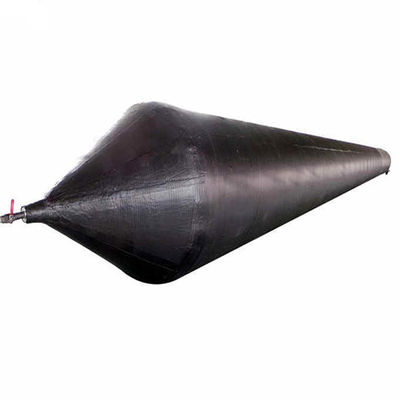
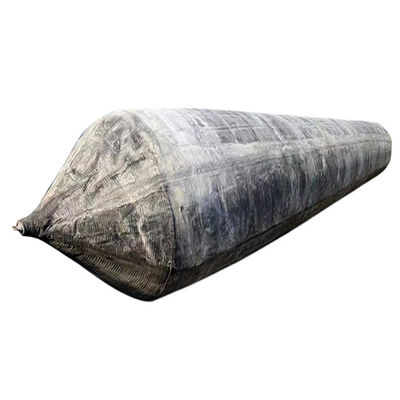
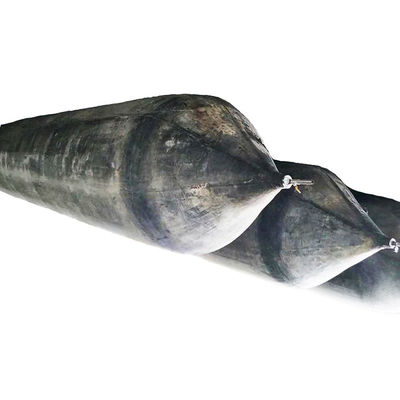
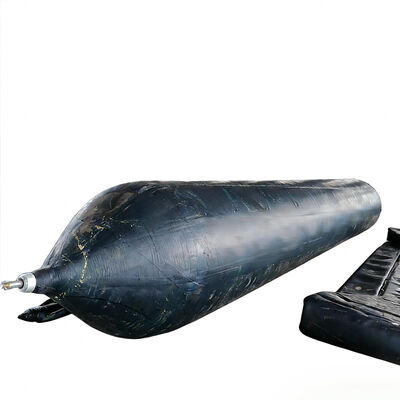
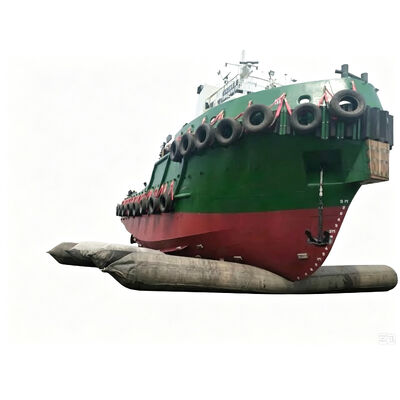
Inflatable Marine Airbags are flexible marine handling equipment engineered for vessel launching, hauling, beaching, shifting, temporary lifting support, and controlled transfer operations. Constructed from reinforced rubber with multiple layers of high-strength synthetic tire cord, these airbags develop the pressure required to support and transfer vessel loads while maintaining flexibility to roll beneath the hull.
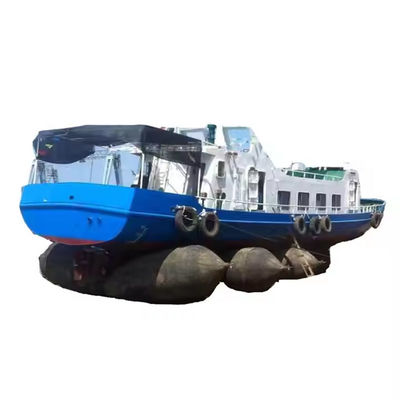
A marine fabrication company in the Middle East successfully launched a 5,200-ton deck barge using our inflatable marine airbags. The project demonstrated how temporary vessel movement systems can support large structures during transition from fabrication areas to waterfront locations.
Key project elements included careful engineering preparation, route surface preparation, controlled inflation procedures, and continuous monitoring during movement. The airbags were positioned, inflated, and systematically repositioned to create a moving support system, ultimately achieving successful water entry and stable floating conditions.
| Item | Description |
|---|---|
| Product Name | Inflatable Marine Airbags |
| Material | 100% Grade A Natural Rubber |
| Type | Inflatable, Lifting, Roller, Launching |
| Diameter | 0.5m-3.0m, or As Request |
| Length | 1.0m-28.0m, or As Request |
| Working Pressure | 0.05-0.25 mpa |
| Standard | Conducted by ISO14409 and GB/T1590-2006 system |
| Accessories | Q355/SS304/SS316, Pressure Gauge, Tee, Plug, Switch, Inflation Tube |
| Packaging | Inner-Plastic Bag; Outer -Standard Wooden Pallets |
| Color | Black |
| Certificates | ABS, BV, KR, LR, GL, NK, RINA, DNV, RMRS |
| Applications | Ship launching and docking, Marine salvaging, Dry-docking, Bridge construction, Heavy machinery transportation |
| OEM | Welcome |
| Diameter | Working Pressure | Working Height | Bearing Capacity KN/m | Bearing Capacity Ton/m |
|---|---|---|---|---|
| D=1.0m | 0.14Mpa | 0.6m | 87.96 | 8.98 |
| D=1.0m | 0.14Mpa | 0.5m | 109.96 | 11.22 |
| D=1.0m | 0.14Mpa | 0.4m | 131.95 | 13.46 |
| D=1.2m | 0.12Mpa | 0.7m | 94.25 | 9.62 |
| D=1.2m | 0.12Mpa | 0.6m | 113.10 | 11.54 |
| D=1.2m | 0.12Mpa | 0.5m | 131.95 | 13.46 |
| D=1.2m | 0.12Mpa | 0.4m | 150.80 | 15.39 |
| * Other sizes can be produced following client requirements | ||||
Multiple layers of high-strength synthetic tire cord provide the tensile strength required to contain internal air pressure while resisting deformation from substantial vessel loading. The integrated composite system maintains dimensional stability through repeated compression and rolling cycles.
Flexible body deformation creates effective contact zones that distribute vessel loads across multiple support locations. Proper spacing and positioning ensure continuous support while allowing airbags to roll as the vessel advances.
External rubber layer provides protection against mechanical and environmental exposure while maintaining flexibility for repeated deformation and rolling operations. Regular inspection preserves equipment condition for long-term service.
Progressive inflation establishes required support conditions while continuous monitoring maintains stable operation. Systematic deflation and repositioning creates sequential rolling support for continuous vessel movement.
They can be used for various marine structures including barges, pontoons, workboats, cargo vessels, fishing vessels, service vessels, and other structures within applicable engineering load and dimensional requirements.
No. Vessel weight is important but hull width, bottom geometry, airbag diameter, effective length, working pressure, quantity, spacing, ground condition, and movement procedure also influence the required configuration.
Visual inspection for cuts, cracks, abnormal abrasion, deformation, exposed reinforcement, valve damage, and end-fitting problems. Operating route should be checked for sharp objects and hazards.
After cleaning and drying, store in a dry environment away from sharp objects, excessive heat, prolonged direct exposure, and substances that may affect rubber materials.
Yes. Dimensions, reinforcement specifications, end fittings, valves, connection arrangements, and other technical details can be customized according to project requirements.