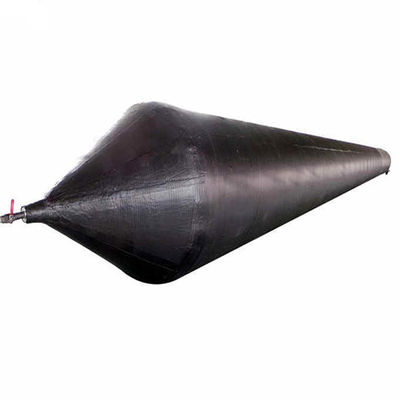
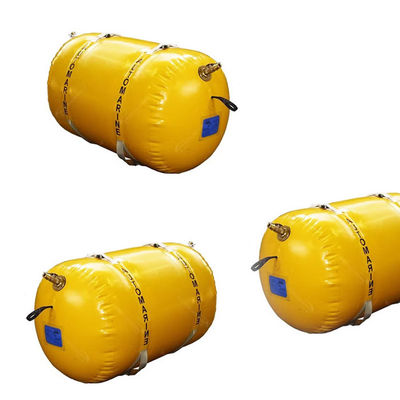
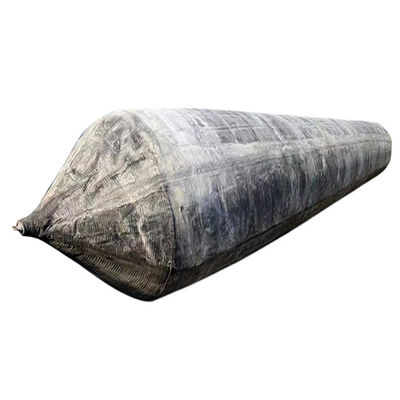
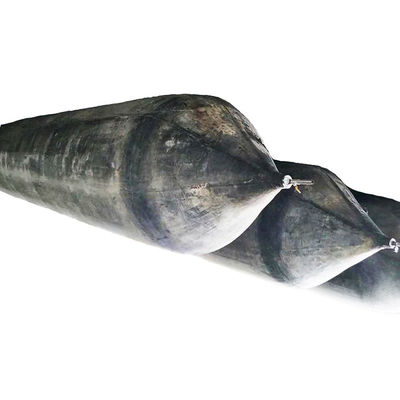
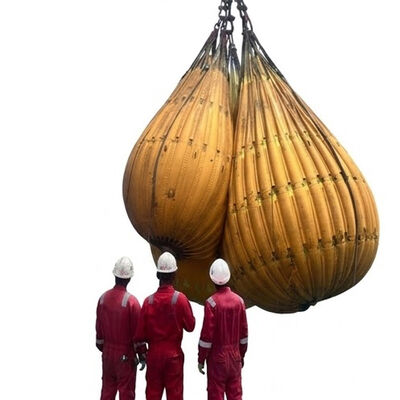
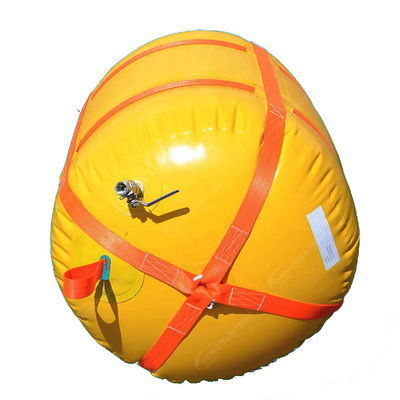
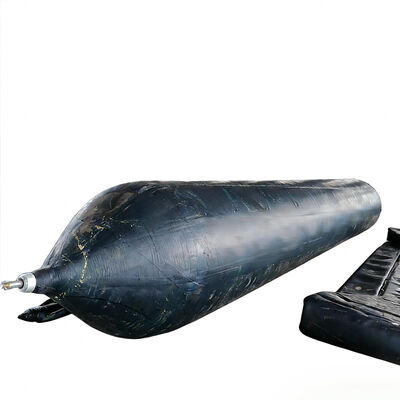
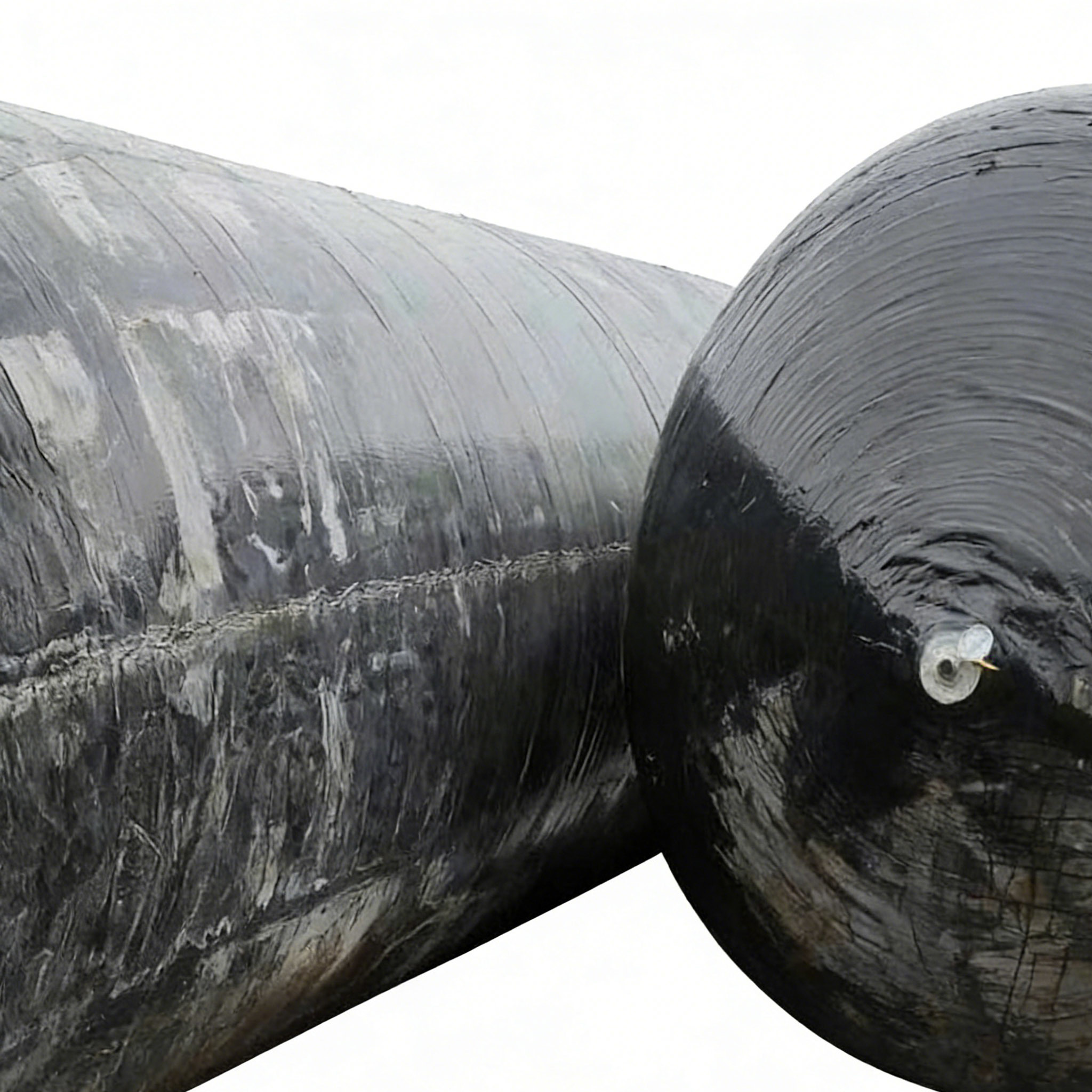
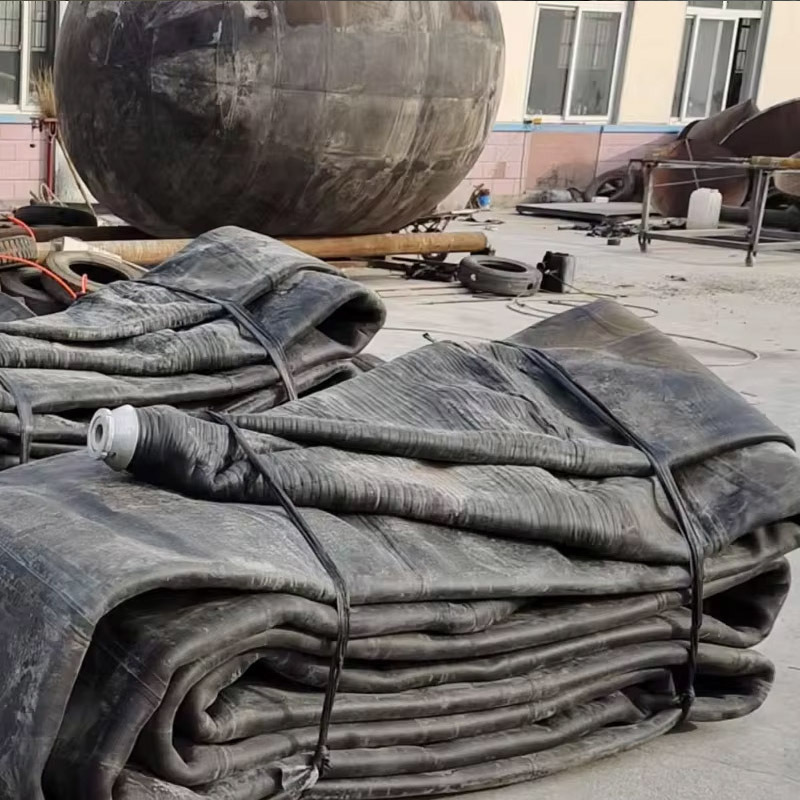
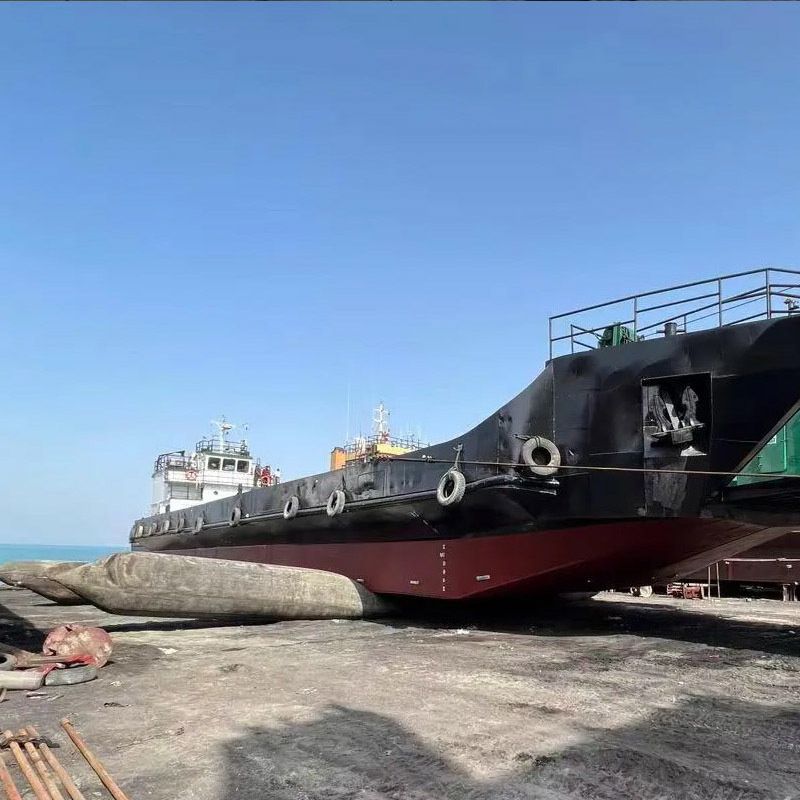
Marine Rubber Airbags are engineered for high-load marine operations including ship launching, vessel landing, and heavy structure transportation. They are constructed from premium natural rubber combined with multi-layer high-strength synthetic tire cord reinforcement, forming a composite structure capable of withstanding extreme pressure, dynamic forces, and repeated use.
The internal cord layers are aligned to optimize tensile strength and distribute load evenly across the airbag body, ensuring structural stability and reliable performance. The outer rubber layer is specially formulated for superior abrasion resistance, UV resistance, and corrosion protection against saltwater.
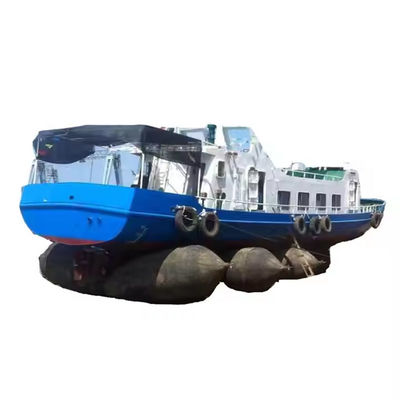
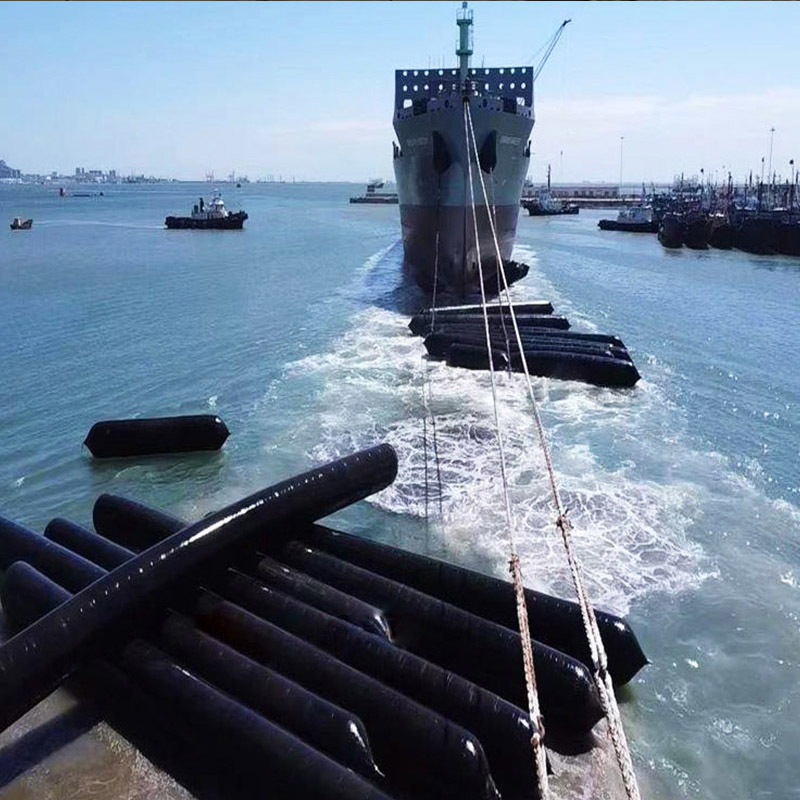
Available in diameters from 0.8 meters to 2.5 meters and lengths up to 24 meters, with custom sizes available to meet project-specific requirements. When inflated, they form a rolling support platform that evenly distributes vessel weight and allows smooth movement during ship launching or landing operations.
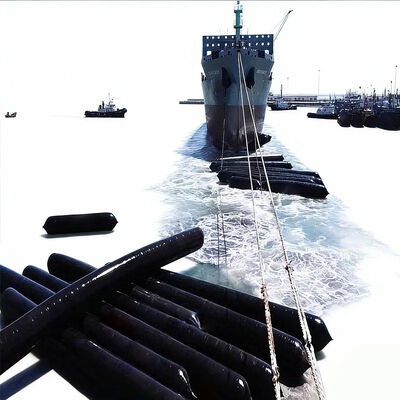
A shipyard in Northern China successfully launched a 6,200 DWT bulk freighter using Hongruntong Marine Rubber Airbags. The vessel measured approximately 120 meters in length with a displacement exceeding 6,000 tons.
Engineers designed a configuration using 20 airbags with a diameter of 1.8 meters and length of 16 meters positioned along the keel and bilge sections. The airbags were inflated incrementally to ensure uniform support, and the launch was completed safely in a single day.
The operation demonstrated significant cost savings by eliminating the need for expensive temporary infrastructure while providing reliable, reusable equipment for future projects.
| Product Name | Marine Rubber Airbags |
|---|---|
| Material | 100% High Tensile NR |
| Dimensions | Diameter 0.5m - 3.0m, Length 3.0m - 28.0m, or as Request |
| Working Pressure | 0.05-0.25MPA |
| Technology | Overall Winding, High Pressure, Explosion Proof |
| Standard | ISO14409:2011 |
| Certificates | ABS, BV, KR, LR, GL, NK, RINA, DNV, RMRS |
| Service Life | 20 Years |
| Warranty | 36 Months |
| Diameter | Working Pressure | Working Height | Bearing Capacity (KN/m) | Bearing Capacity (Ton/m) |
|---|---|---|---|---|
| D=1.0m | 0.14Mpa | 0.6m | 87.96 | 8.98 |
| D=1.0m | 0.14Mpa | 0.5m | 109.96 | 11.22 |
| D=1.0m | 0.14Mpa | 0.4m | 131.95 | 13.46 |
| D=1.2m | 0.12Mpa | 0.7m | 94.25 | 9.62 |
| D=1.2m | 0.12Mpa | 0.6m | 113.10 | 11.54 |
| D=1.2m | 0.12Mpa | 0.5m | 131.95 | 13.46 |
| D=1.2m | 0.12Mpa | 0.4m | 150.80 | 15.39 |
| D=1.5m | 0.10Mpa | 0.9m | 94.25 | 9.62 |
| D=1.5m | 0.10Mpa | 0.8m | 109.96 | 11.22 |
| D=1.5m | 0.10Mpa | 0.7m | 125.66 | 12.82 |
| D=1.5m | 0.10Mpa | 0.6m | 141.37 | 14.43 |
| D=1.5m | 0.10Mpa | 0.5m | 157.08 | 16.03 |
| D=1.8m | 0.09Mpa | 1.1m | 98.96 | 10.10 |
| D=1.8m | 0.09Mpa | 1.0m | 113.10 | 11.54 |
| D=1.8m | 0.09Mpa | 0.9m | 127.33 | 12.98 |
| D=1.8m | 0.09Mpa | 0.8m | 141.37 | 14.43 |
| D=1.8m | 0.09Mpa | 0.7m | 155.51 | 15.87 |
| D=1.8m | 0.09Mpa | 0.6m | 169.65 | 17.31 |
| D=2.0m | 0.08Mpa | 1.2m | 100.53 | 10.26 |
| D=2.0m | 0.08Mpa | 1.1m | 113.10 | 11.54 |
| D=2.0m | 0.08Mpa | 1.0m | 125.66 | 12.82 |
| D=2.0m | 0.08Mpa | 0.9m | 138.23 | 14.11 |
| D=2.0m | 0.08Mpa | 0.8m | 150.80 | 15.39 |
| D=2.0m | 0.08Mpa | 0.7m | 163.36 | 16.67 |
| D=2.0m | 0.08Mpa | 0.6m | 175.93 | 17.95 |
* Other sizes can be provided following client's requirements.
Multiple layers of high-strength synthetic tire cord reinforcement embedded within premium rubber create a cross-ply structure that distributes load evenly and withstands extreme internal pressures and heavy vessel loads.
Engineered outer rubber layer resists abrasion from rolling friction and provides strong resistance to saltwater corrosion, UV exposure, and environmental aging for long-term durability.
Controlled elasticity allows smooth compression and recovery under vessel loads, absorbing dynamic forces and adapting to different hull geometries and ground conditions.
Easy to transport, install, and inflate using standard air compressors. Deflatable for inspection and reuse, providing cost-effective and flexible solutions for various projects.
Yes, they can be adapted to various vessel shapes and sizes including cargo ships, tankers, fishing boats, and offshore service vessels by selecting appropriate diameter, length, and quantity.
The capacity depends on airbag diameter, length, and internal pressure. Engineers calculate the number of airbags and arrangement to ensure the total system can safely support the vessel weight with an adequate safety margin.
Airbags should be cleaned after use, inspected for surface damage, valves checked, and stored in a dry, shaded area to prevent UV and moisture degradation. Regular maintenance ensures long-term reliability.
Yes, all airbags meet recognized international standards for marine engineering and have passed ISO quality and safety certification tests to guarantee performance under heavy loads.
The airbags are lightweight relative to their size, can be rolled for transport, and installed using basic lifting equipment. They are portable and reusable, enabling deployment across multiple sites and projects efficiently.