Ship Launching Rubber Airbag Wear Resistant Reliable Easy Installation
Product Overview
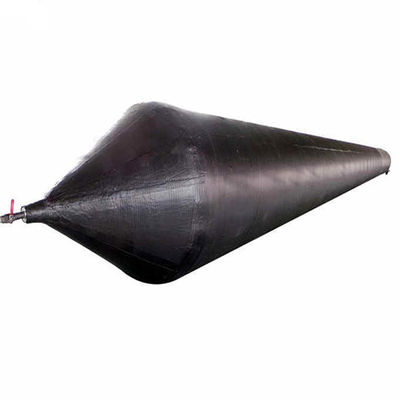
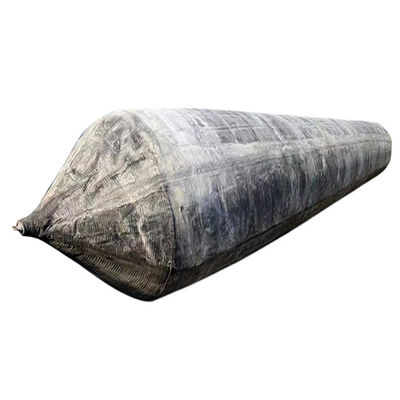
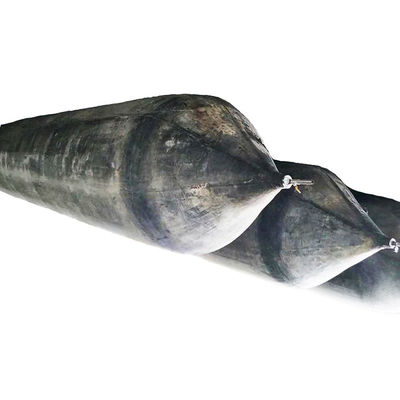
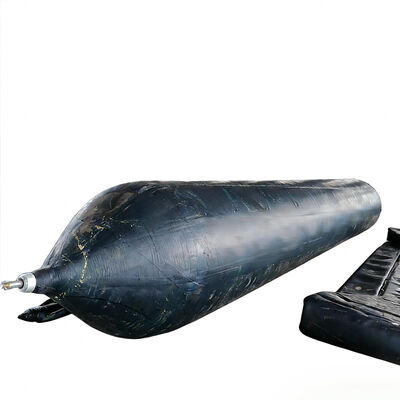
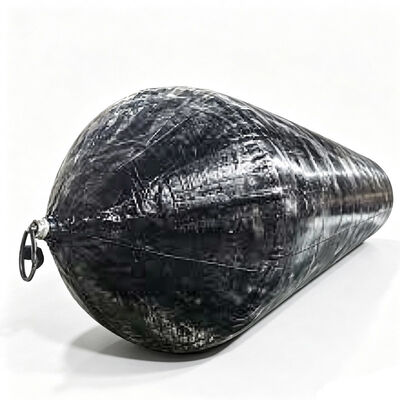
Marine Rubber Airbags are reinforced pneumatic marine equipment designed for controlled vessel launching, ship landing, hull shifting, temporary support, and load transfer operations in shipyards and marine construction environments. The product combines a flexible rubber body with multiple layers of high-strength synthetic reinforcement to create a pressure-supported structure capable of carrying substantial vessel loads while remaining movable and reusable.
Case Study: 1,200 Ton Fishing Vessel Launching in Norway
A small shipyard on the western coast of Norway successfully launched a 1,200 ton fishing vessel using Marine Rubber Airbags. The yard had limited working area between the fabrication hall and shoreline, making traditional slipway expansion impractical.
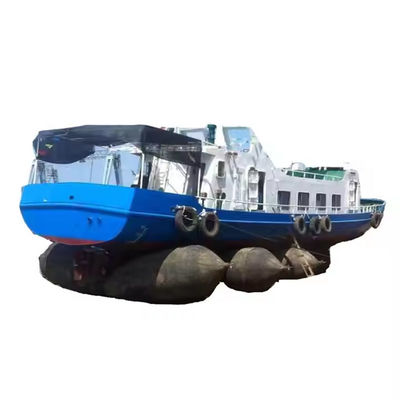
The airbags were arranged beneath the hull at predetermined intervals and progressively inflated. During movement, operators monitored vessel alignment and pressure conditions. Airbags from the rear section were deflated and moved forward as the vessel progressed, demonstrating the system's flexibility and efficiency.

Technical Specifications
| Parameter |
Specification |
| Product Name |
Marine Rubber Airbags |
| Material |
100% High Tensile NR |
| Dimensions |
Diameter 0.5m - 3.0m, Length 3.0m - 28.0m, or Custom |
| Working Pressure |
0.05-0.25MPA |
| Technology |
Overall Winding, High Pressure, Explosion Proof |
| Metal Parts |
Q355 / SS304 / SS316 |
| Standard |
ISO14409:2011 |
| Certificates |
ABS, BV, KR, LR, GL, NK, RINA, DNV, RMRS |
| Service Life |
20 Years |
| Warranty |
36 Months |
Load Capacity Table
| Diameter |
Working Pressure |
Working Height |
Bearing Capacity (KN/m) |
Bearing Capacity (Ton/m) |
| D=1.0m |
0.14Mpa |
0.6m |
87.96 |
8.98 |
| D=1.0m |
0.14Mpa |
0.5m |
109.96 |
11.22 |
| D=1.0m |
0.14Mpa |
0.4m |
131.95 |
13.46 |
| D=1.2m |
0.12Mpa |
0.7m |
94.25 |
9.62 |
| D=1.2m |
0.12Mpa |
0.6m |
113.10 |
11.54 |
| D=1.5m |
0.10Mpa |
0.9m |
94.25 |
9.62 |
| D=1.8m |
0.09Mpa |
1.1m |
98.96 |
10.10 |
| D=2.0m |
0.08Mpa |
1.2m |
100.53 |
10.26 |
* Other sizes can be provided according to client requirements
Key Features
High Fatigue Resistance Through Reinforced Composite Construction
Marine Rubber Airbags are designed to withstand repeated mechanical cycles during inflation, load transfer, rolling, deflation, and repositioning. The reinforced composite structure distributes stress across the cylindrical body rather than concentrating it at isolated locations, ensuring long-term reliability.
Precision Designed Rubber and Reinforcement Interface
The critical interface between rubber and reinforcement is engineered for optimal bonding and stress distribution. Controlled manufacturing processes ensure consistent geometry and material distribution, providing stable pressure retention and predictable behavior under load.
Stable Load Distribution During Vessel Movement
The cylindrical airbag provides continuous support that adapts to changing loads and contact conditions. Multiple airbags arranged longitudinally allow progressive load transfer, maintaining balanced support throughout vessel movement operations.
High Environmental Adaptability
Designed for use in coastal environments with exposure to moisture, humidity, saltwater, and temperature variations. The protective outer rubber layer and enclosed reinforcement system provide resistance to marine environmental conditions while maintaining operational flexibility.
Applications
- Small and Medium Shipyard Launching Operations
- Vessel Shifting Between Fabrication Zones
- Temporary Support in Coastal Maintenance Facilities
Why Choose Hongruntong Marine
- 30+ Years Manufacturing Experience: Extensive expertise in marine rubber products and equipment
- Controlled Material Selection: Careful evaluation of rubber and reinforcement materials for optimal performance
- Project-Specific Engineering: Custom configurations based on vessel weight, dimensions, and operating conditions
- Quality Inspection & Documentation: Comprehensive technical documentation and traceable manufacturing processes
Frequently Asked Questions
Are Marine Rubber Airbags suitable for cold coastal environments?
Yes, they can be used in cold marine environments when the selected rubber compound and operating conditions are appropriate for the expected temperature range. Proper storage and handling according to manufacturer recommendations are essential.
How does fatigue affect a reusable Marine Rubber Airbag?
The reinforced composite structure is designed to tolerate repeated operating cycles. Service condition depends on load level, pressure, surface contact, frequency of use, and maintenance. Regular inspection is necessary to identify abnormal wear before continued use.
Can the airbags be transported to remote shipyards?
Yes. After complete deflation, Marine Rubber Airbags can be prepared for transportation between project locations. Proper packaging protects the rubber surface and fittings from damage during transit.
What should be checked before the first inflation?
Inspect the operating surface for sharp objects. Check the airbag for cuts, punctures, abnormal deformation, fitting damage, and visible defects. Verify inflation equipment, pressure gauges, valves, and connection points before applying pressure.
Can one set of airbags be used for vessels with different hull shapes?
A set may be reused for different vessels when dimensions, weight, contact conditions, and pressure requirements are compatible. However, the number and spacing of airbags should be recalculated for each vessel to ensure proper support.


 Your message must be between 20-3,000 characters!