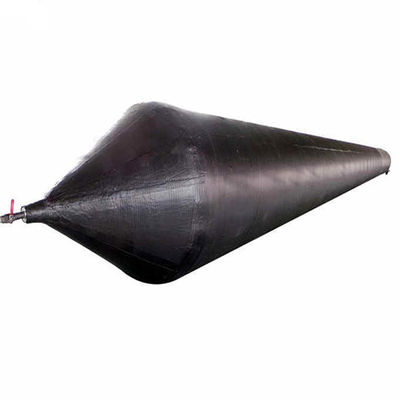
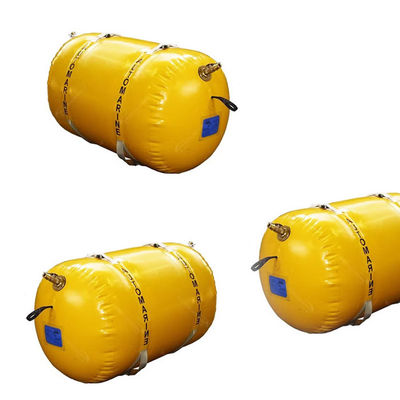
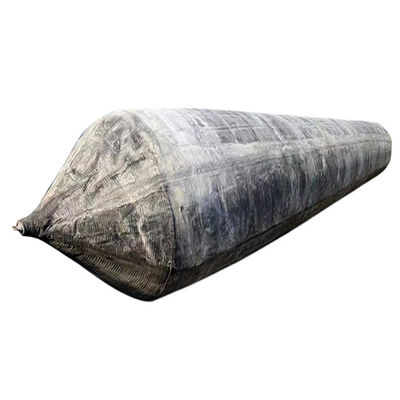
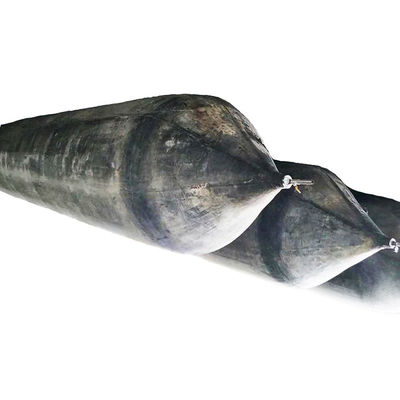
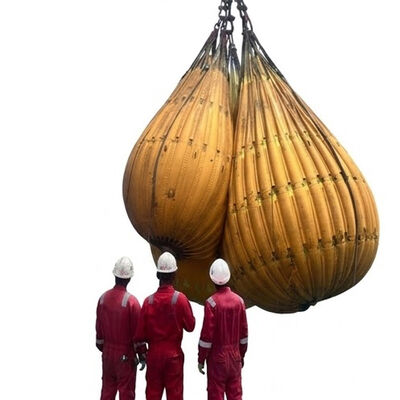
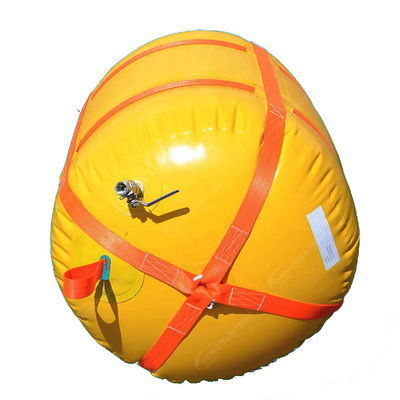
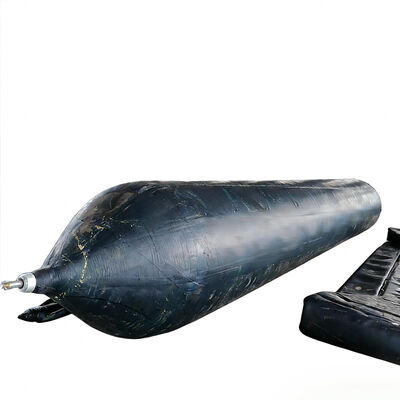
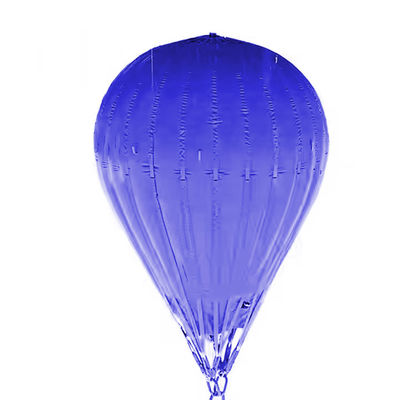
Cylindrical Underwater Air Lifting Bags are flexible pneumatic buoyancy systems engineered for marine salvage, underwater lifting, vessel refloating, temporary flotation, submerged equipment recovery, and marine construction applications. These bags develop controlled buoyancy when filled with compressed air below the water surface, generating upward force to reduce or overcome the effective underwater weight of vessels and structures.
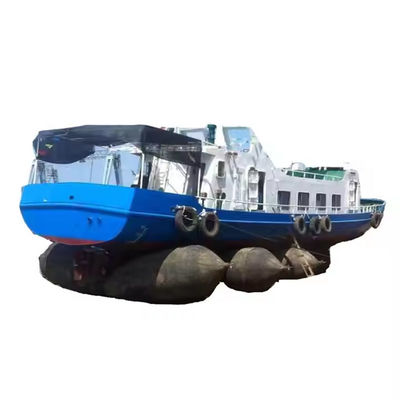
A marine recovery contractor successfully refloated a 275 tonne coastal workboat that had grounded near a commercial port after losing propulsion during a storm. The vessel was resting on a mixed sand and rock seabed with the stern section significantly more deeply embedded than the forward hull.
The recovery team used a distributed arrangement of cylindrical air lifting bags positioned beneath the hull. Divers conducted detailed surveys and installed protective materials at contact points. Controlled inflation in stages allowed the team to manage vessel trim and gradually transfer load from the seabed to the lifting system.
Once sufficient positive buoyancy was achieved, the vessel was towed to deeper water, dewatered, and transferred to a repair berth. This operation demonstrated the effectiveness of cylindrical pneumatic buoyancy in constrained port environments where heavy lifting equipment would have been impractical.
| Product Name | Boat Air Bags |
| Raw Material | PVC coating fabric |
| Type | Cylindrical |
| Size | 500kg, 1000kg, 5000kg, 10000kg, etc. |
| Thickness | 0.4-1.2mm, or as requested |
| Color | Yellow, Blue, Black, etc. |
| Density | 0.33-0.9g/cm³ |
| Safety Factor | 7:1 |
| Tolerances | ±0.03 on densities, ±0.2mm on thickness, ±0 to +3mm on width, ±0 to +3mm on length |
| Model | Buoyancy (kg) | Buoyancy (lbs) | Diameter (mm) | Length (mm) | Approx. Weight (kg) |
|---|---|---|---|---|---|
| HM-ULB01 | 200 | 441 | 500 | 1,000 | 5 |
| HM-ULB02 | 500 | 1,103 | 800 | 1,000 | 8 |
| HM-ULB03 | 1,000 | 2,205 | 1,000 | 1,500 | 11 |
| HM-ULB04 | 2,000 | 4,410 | 1,300 | 1,500 | 20 |
| HM-ULB05 | 4,000 | 8,820 | 1,600 | 2,000 | 50 |
| HM-ULB06 | 6,000 | 13,230 | 2,000 | 2,000 | 66 |
| HM-ULB07 | 8,000 | 17,640 | 2,000 | 2,600 | 75 |
| HM-ULB08 | 10,000 | 22,050 | 2,400 | 2,400 | 80 |
| HM-ULB09 | 15,000 | 33,075 | 2,600 | 3,000 | 110 |
| HM-ULB10 | 20,000 | 44,100 | 3,000 | 3,000 | 130 |
| HM-ULB11 | 30,000 | 66,150 | 3,000 | 4,500 | 170 |
| HM-ULB12 | 50,000 | 110,250 | 4,000 | 4,000 | 220 |
| HM-ULB13 | 70,000 | 154,350 | 4,000 | 5,700 | 310 |
| HM-ULB14 | 100,000 | 220,500 | 4,000 | 8,000 | 450 |
| HM-ULB15 | 150,000 | 330,750 | 5,000 | 8,000 | 660 |
| HM-ULB16 | 200,000 | 441,000 | 5,000 | 10,000 | 900 |
Note: Other sizes can be customized according to requirements.
Cylindrical lifting bags generate buoyancy through compressed-air inflation and can be transported and stored deflated. Rigid flotation tanks have fixed geometry and require more transportation space. The appropriate system depends on project requirements and operating environment.
Yes. They can be configured to provide partial buoyancy or, when appropriately sized and arranged, the major portion of buoyancy required for recovery operations. Configuration should be determined through engineering calculation.
Normal inflation and deflation are part of intended operation, but service life depends on pressure level, cycle frequency, abrasion, environmental exposure, handling, storage, and maintenance. Pre-use and post-use inspection is essential.
Inspect contact areas for sharp edges, protruding bolts, damaged plating, and debris. Use suitable protective material where necessary and restrain bags against uncontrolled movement. Ensure lifting points are compatible with hull structural strength.
Yes. Diameter, effective length, reinforcement configuration, lifting capacity, valves, end fittings, and connection arrangements can be customized according to confirmed project requirements.