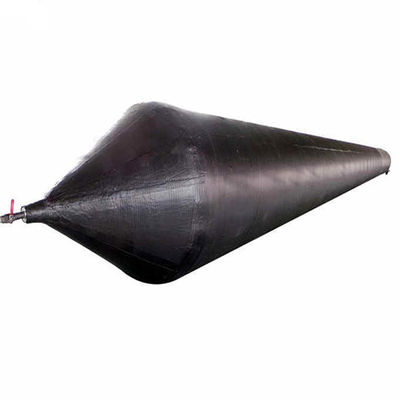
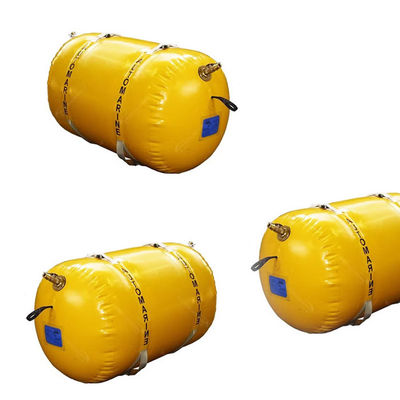
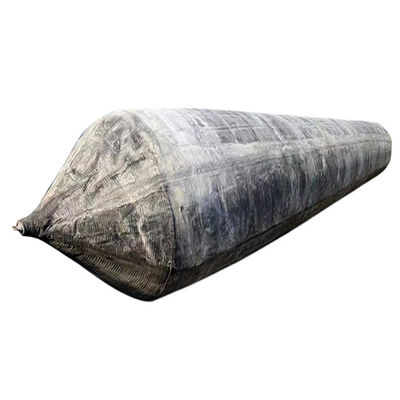
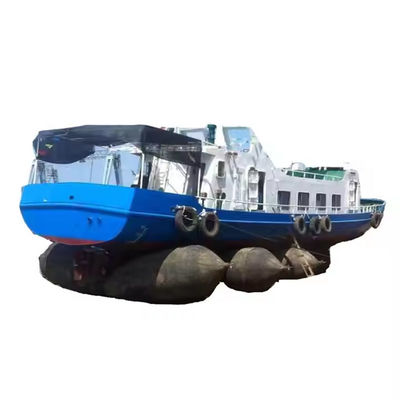
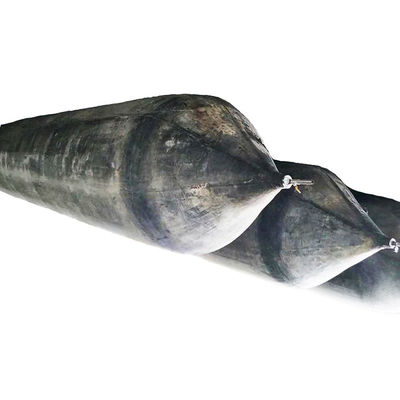
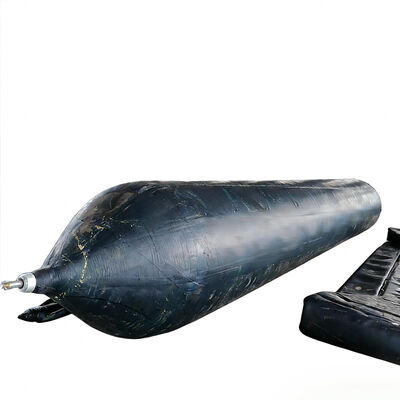
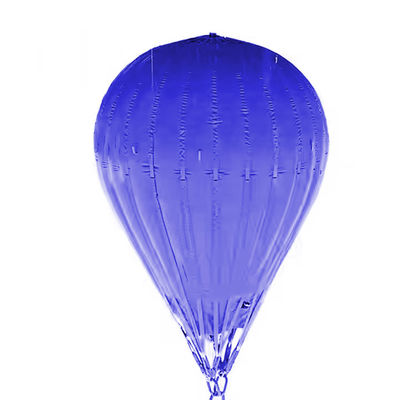
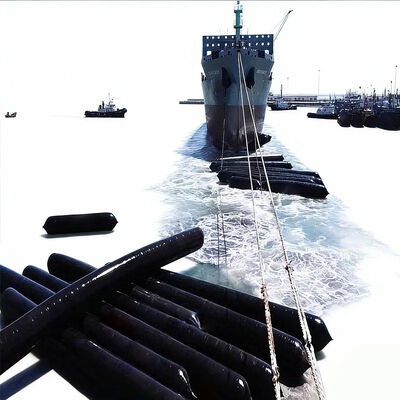
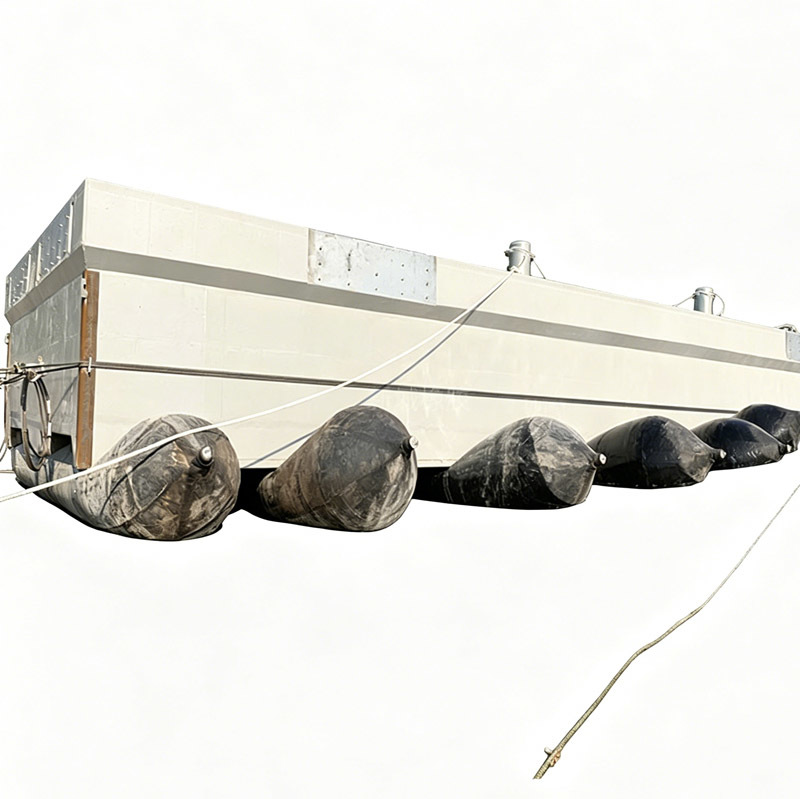
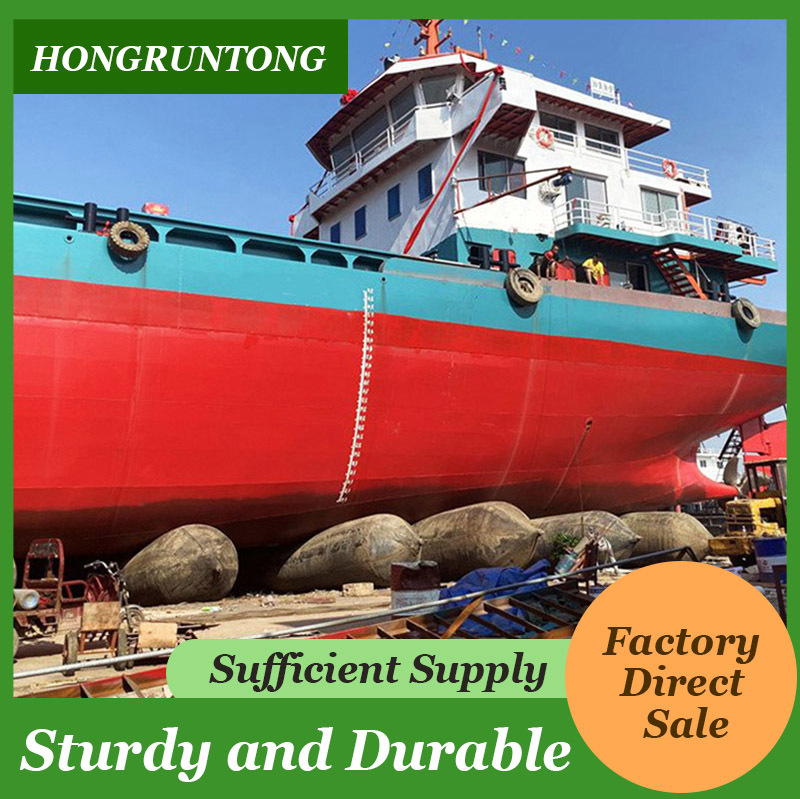
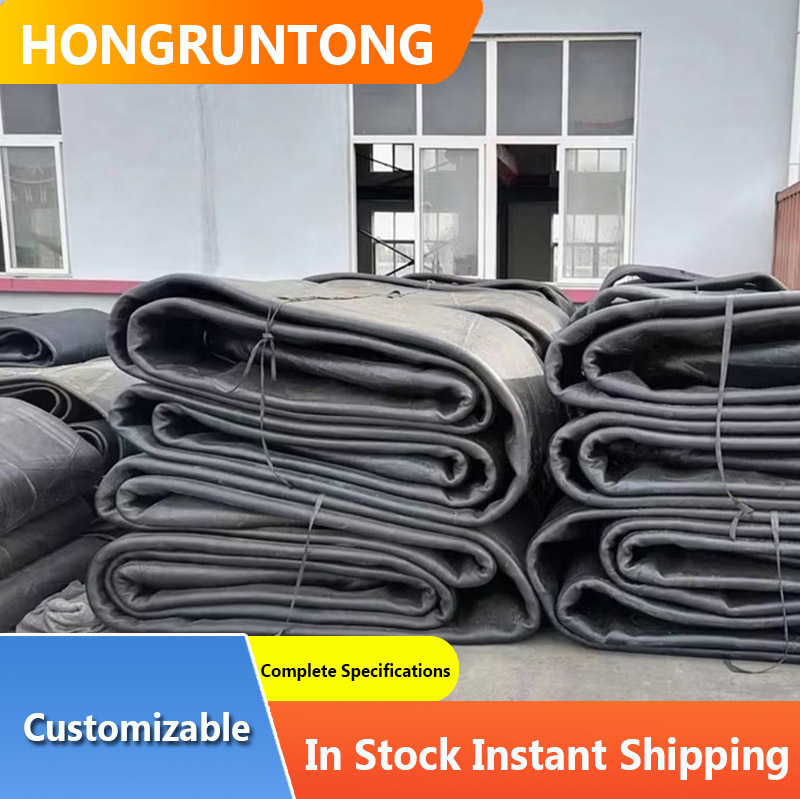
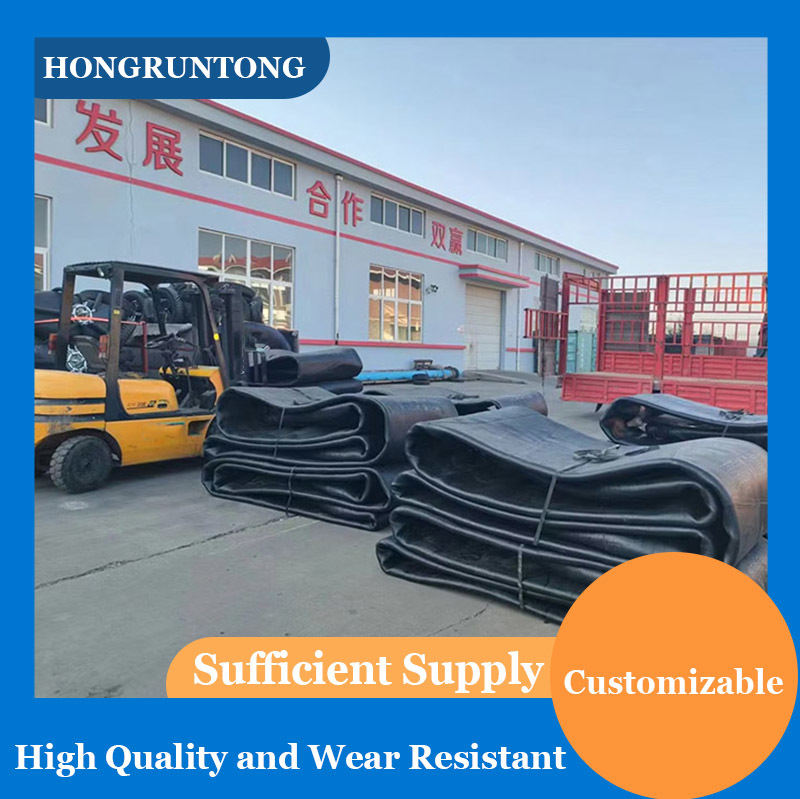
Ship Launching Airbags are specialized marine engineering systems developed for vessel launching, vessel landing, heavy-load transportation, and offshore deployment operations. The product is manufactured using multiple layers of high-strength synthetic tire cord reinforcement combined with premium-grade vulcanized rubber compounds, forming a flexible pneumatic structure capable of supporting substantial loads under dynamic operating conditions.
The structural design is based on advanced reinforcement technology that enables the airbag to withstand internal pressure while maintaining dimensional stability during lifting and rolling operations. Through controlled pneumatic inflation, the system converts compressed air energy into lifting force and movement capability, allowing vessels to be transferred safely from construction platforms into water environments.
A regional shipbuilding company in the Philippines successfully launched commercial fishing vessels ranging from 1,200 to 1,800 tons displacement using Ship Launching Airbags. The shipyard operated in a coastal area with limited infrastructure and restricted access to conventional dry dock facilities.
Engineers developed a flexible deployment arrangement capable of accommodating different vessel sizes using standardized airbag configurations. Multiple vessels were launched successfully without structural damage or operational interruption, resulting in improved launching efficiency, reduced preparation time, and lower infrastructure expenditures.
| Item | Description |
|---|---|
| Place of Origin | China |
| Brand Name | Hongruntong Marine |
| Product Name | Ship Launching Airbags |
| Material | Top-Notch Natural Rubber |
| Diameter | 0.5m-3.0m, or As Request |
| Length | 1.0m-28.0m, or As Request |
| Working Pressure | 0.05-0.25 Mpa |
| Technics | High Pressure, Overall Winding, Explosion-Proof |
| Use | Ship launching and docking |
| Thickness | 5-15 ply |
| Standard | Conducted by ISO14409 and GB/T1590-2006 system |
| Accessories | Q355/SS304/SS316, Pressure Gauge, Tee, Plug, Switch, Inflation Tube |
| Packaging | Inner-Plastic Bag; Outer-Standard Wooden Pallets |
| Certificates | ABS, BV, KR, LR, GL, NK, RINA, DNV, RMRS |
| MOQ | 1 |
| OEM | Welcome |
| Diameter | Working Pressure | Working Height | Bearing Capacity KN/m | Bearing Capacity Ton/m |
|---|---|---|---|---|
| D=1.0m | 0.14Mpa | 0.6m | 87.96 | 8.98 |
| D=1.0m | 0.14Mpa | 0.5m | 109.96 | 11.22 |
| D=1.0m | 0.14Mpa | 0.4m | 131.95 | 13.46 |
| D=1.2m | 0.12Mpa | 0.7m | 94.25 | 9.62 |
| D=1.2m | 0.12Mpa | 0.6m | 113.10 | 11.54 |
| D=1.2m | 0.12Mpa | 0.5m | 131.95 | 13.46 |
| D=1.2m | 0.12Mpa | 0.4m | 150.80 | 15.39 |
| D=1.5m | 0.10Mpa | 0.9m | 94.25 | 9.62 |
| D=1.5m | 0.10Mpa | 0.8m | 109.96 | 11.22 |
| D=1.5m | 0.10Mpa | 0.7m | 125.66 | 12.82 |
| D=1.5m | 0.10Mpa | 0.6m | 141.37 | 14.43 |
| D=1.5m | 0.10Mpa | 0.5m | 157.08 | 16.03 |
| D=1.8m | 0.09Mpa | 1.1m | 98.96 | 10.10 |
| D=1.8m | 0.09Mpa | 1.0m | 113.10 | 11.54 |
| D=1.8m | 0.09Mpa | 0.9m | 127.33 | 12.98 |
| D=1.8m | 0.09Mpa | 0.8m | 141.37 | 14.43 |
| D=1.8m | 0.09Mpa | 0.7m | 155.51 | 15.87 |
| D=1.8m | 0.09Mpa | 0.6m | 169.65 | 17.31 |
| D=2.0m | 0.08Mpa | 1.2m | 100.53 | 10.26 |
| D=2.0m | 0.08Mpa | 1.1m | 113.10 | 11.54 |
| D=2.0m | 0.08Mpa | 1.0m | 125.66 | 12.82 |
| D=2.0m | 0.08Mpa | 0.9m | 138.23 | 14.11 |
| D=2.0m | 0.08Mpa | 0.8m | 150.80 | 15.39 |
| D=2.0m | 0.08Mpa | 0.7m | 163.36 | 16.67 |
| D=2.0m | 0.08Mpa | 0.6m | 175.93 | 17.95 |
* Other sizes can be produced following client's requirements.
The system can be used for cargo vessels, fishing boats, barges, passenger ferries, offshore support vessels, and various other marine structures, depending on engineering calculations and deployment configuration.
The number of operational cycles depends on maintenance quality, operating conditions, and handling procedures. Under proper industrial use, the system is designed for repeated long-term service.
Required quantity depends on vessel displacement, hull dimensions, launching angle, ground conditions, and applicable safety factors established during engineering design.
Yes. The material system is engineered to resist seawater exposure, humidity, ultraviolet radiation, and mechanical wear commonly encountered in marine applications.
Yes. Diameter, effective length, reinforcement layer quantity, and pressure ratings can be customized according to project requirements and vessel characteristics.