logo

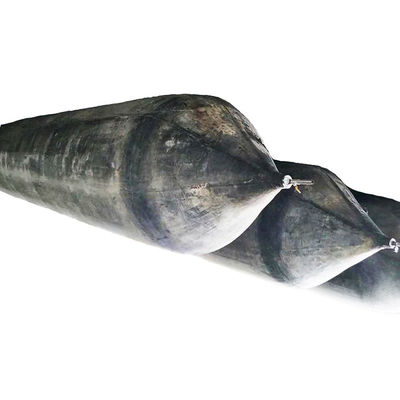
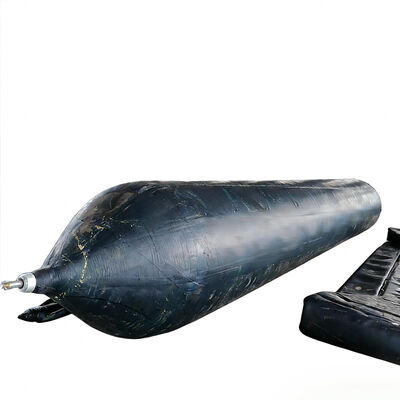
Inflatable Marine Airbags Flexible Operation High Durability Easy Maintenance

1
MOQ
$USD66-$USD968
giá bán
Inflatable Marine Airbags Flexible Operation High Durability Easy Maintenance
Đặc trưng Bộ sưu tập Mô tả sản phẩm Yêu cầu báo giá
Đặc trưng
Thông số kỹ thuật
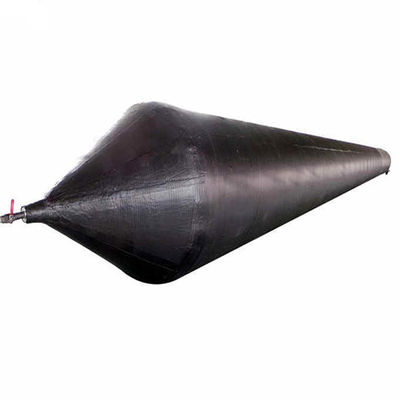
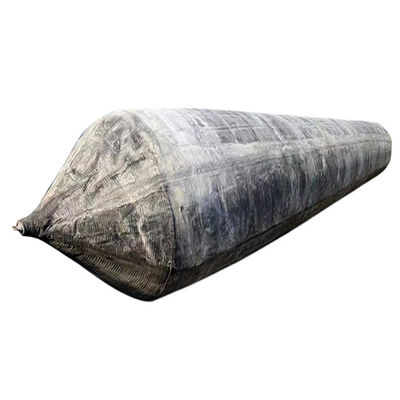
Tên sản phẩm: Tàu phóng túi khí
Tính năng: xây dựng bền
Đường kính: 0,5M-3,0M hoặc theo yêu cầu
Vật liệu: NBR
Chiều dài: 3M-28M hoặc theo yêu cầu
Áp suất làm việc: 0.05-0.25 MPA
Củng cố: Lớp vải dây lốp
Lớp: 5-13Hãy xin, hoặc theo yêu cầu
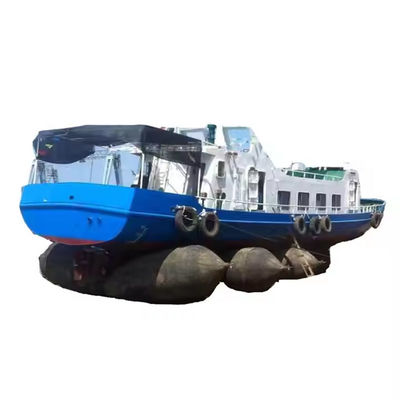
Ứng dụng: Tàu thuyền Hạ thủy
Màu sắc: Màu đen hoặc tùy chỉnh
Bao bì: Pallet, hộp gỗ
Làm nổi bật:

inflatable marine airbags with high durability

,

flexible operation marine airbags

,

easy maintenance ship launching airbags

Thông tin cơ bản
Nguồn gốc: Trung Quốc
Hàng hiệu: Hongruntong Marine
Chứng nhận: ISO, BV, ABS, DNV, LR, SGS, CCS, RMRS
Số mô hình: HM-Als9
Thanh toán
chi tiết đóng gói: Pallet gỗ, hộp gỗ
Thời gian giao hàng: 5-7 ngày làm việc
Điều khoản thanh toán: L/C, D/A, D/P, T/T, Western Union, MoneyGram
Khả năng cung cấp: 3660 chiếc mỗi tháng
Mô tả sản phẩm
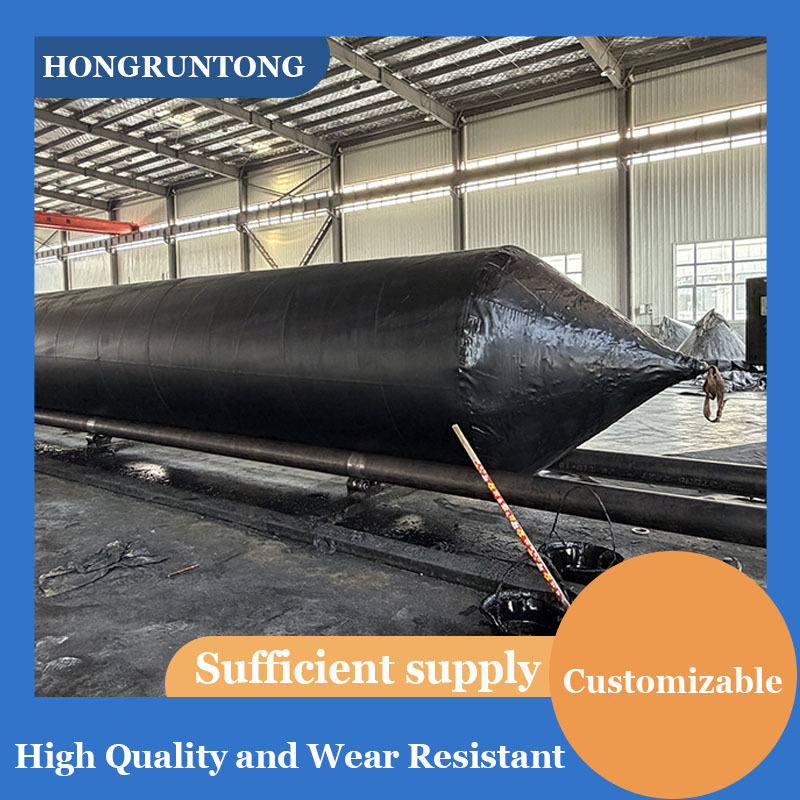
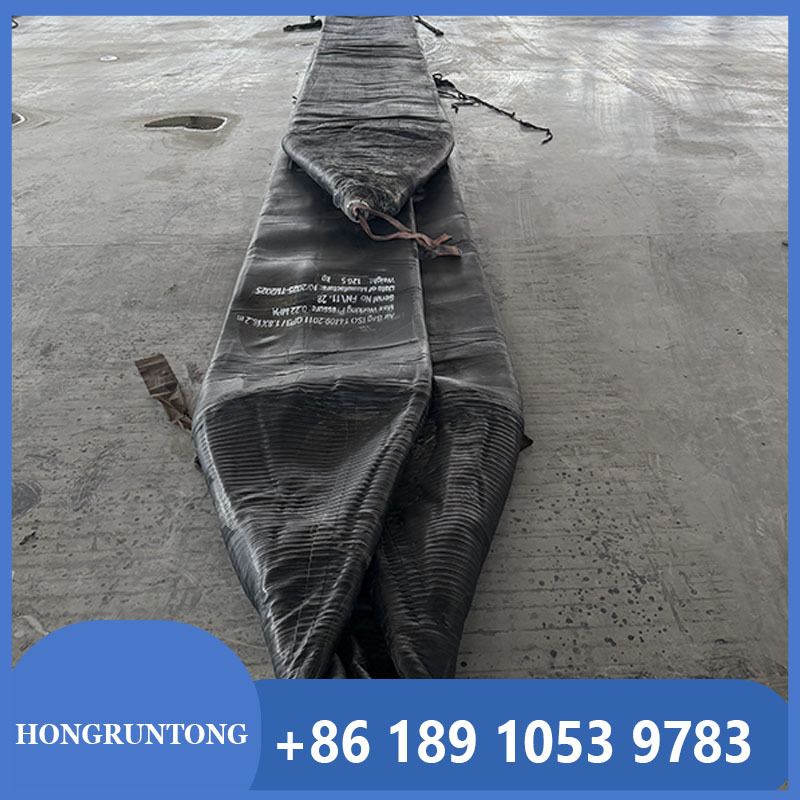
Inflatable Marine Airbags: Flexible Operation, High Durability, Easy Maintenance
Product Overview

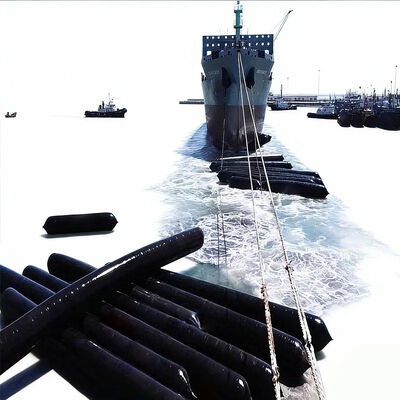
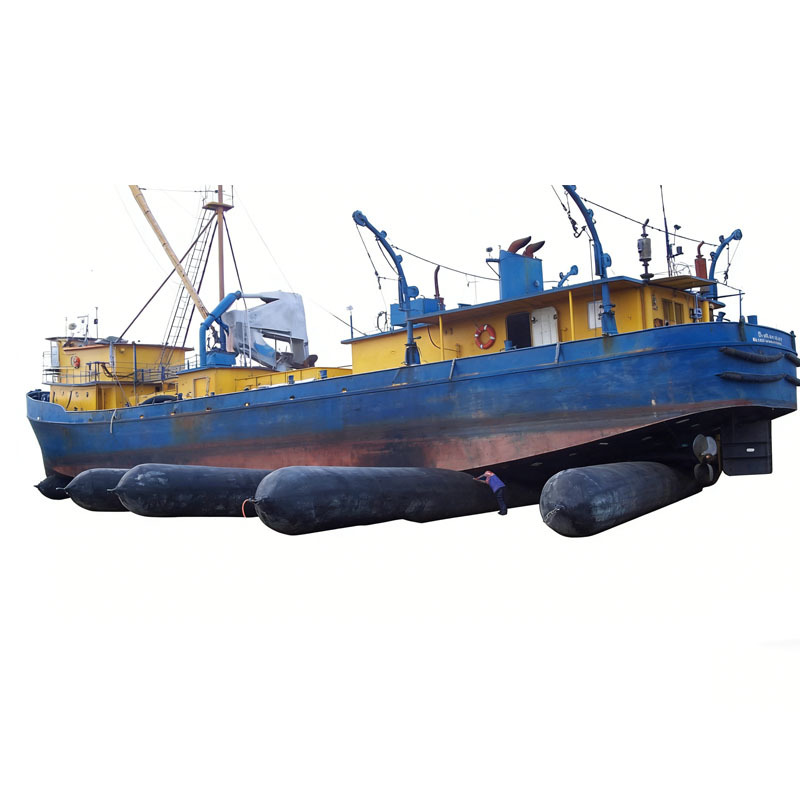
Airbag launching has evolved into a mature, cost-effective, and structurally reliable method for transferring ships from land to water without dependence on permanent slipway facilities. The technology operates by distributing hull loads across a series of cylindrical reinforced airbags that deform elastically under controlled pressure. This deformation serves two simultaneous functions: load-bearing support and rolling propulsion.

By adjusting internal pressure and spacing, airbag systems can be configured for vessels with varying displacement, keel geometries, and launching-angle requirements. They perform particularly well in shipyards constrained by space, limited infrastructure, or changing shoreline conditions.

Unlike cradle systems or drydock launching, airbag launching does not introduce concentrated point stresses into the hull bottom. Instead, the hull rests on a continuously adapting support surface, allowing stresses to remain within safe yield limits during longitudinal movement. Advanced rubber formulation and high-tensile reinforcement technology ensure structural stability even during rapid pressure transitions and dynamic load cycles.

Case Study: Launching of a 165 Meter Offshore Construction Barge

A notable engineering case took place at a Northern European facility deploying a 165-meter offshore construction barge with a flat-bottomed hull and complex load distribution. Traditional cradle launching was impractical due to infrastructure limitations.

Engineers designed a high-capacity airbag arrangement using 32 airbags (2.0m diameter, 20m length) with differential pressurization to balance asymmetric loads. Laser alignment sensors ensured straight-line movement, and the ground was reinforced with compacted stone and steel plates.

During launch, the barge advanced steadily across the airbags as each unit compressed and released energy in a controlled sequence. The vessel entered the water with low trim variation and no lateral drift, validating airbag launching for large industrial vessels with unconventional mass distributions.

Technical Specifications
Place of Origin China
Brand Name Hongruntong Marine
Material Industrial Grade Natural Rubber
Diameter 0.5m-3.0m, or as Request
Length 1.0m-28.0m, or as Request
Working Pressure 0.05-0.25 Mpa
Technics High Pressure, Overall Winding, Explosion-Proof
Use Ship Launching and Docking
Thickness 5-13 ply
Standard ISO14409 and GB/T1590-2006
Accessories Q355/SS304/SS316, Pressure Gauge, Tee, Plug, Switch, Inflation Tube
Packaging Inner-Plastic Bag; Outer-Standard Wooden Pallets
Certificates ABS, BV, KR, LR, GL, NK, RINA, DNV, RMRS
MOQ 1
OEM Welcome
Capacity Specifications
Diameter Working Pressure Working Height Bearing Capacity (KN/m) Bearing Capacity (Ton/m)
D=1.0m 0.14Mpa 0.6m 87.96 8.98
0.5m 109.96 11.22
0.4m 131.95 13.46
D=1.2m 0.12Mpa 0.7m 94.25 9.62
0.6m 113.10 11.54
0.5m 131.95 13.46
0.4m 150.80 15.39
D=1.5m 0.10Mpa 0.9m 94.25 9.62
0.8m 109.96 11.22
0.7m 125.66 12.82
0.6m 141.37 14.43
0.5m 157.08 16.03
D=1.8m 0.09Mpa 1.1m 98.96 10.10
1.0m 113.10 11.54
0.9m 127.33 12.98
0.8m 141.37 14.43
0.7m 155.51 15.87
0.6m 169.65 17.31
D=2.0m 0.08Mpa 1.2m 100.53 10.26
1.1m 113.10 11.54
1.0m 125.66 12.82
0.9m 138.23 14.11
0.8m 150.80 15.39
0.7m 163.36 16.67
0.6m 175.93 17.95
* Other sizes can be produced following client's requirements.
Key Features
  • Reinforced Circular Weave Fabric Technology: Eliminates seam-related stress concentrations and provides uniform tensile characteristics around the circumference for increased fatigue resistance.
  • High Energy Absorption Under Dynamic Loading: Calibrated internal rubber elasticity and fabric stiffness absorb dynamic energy during motion.
  • Thermal Stability for All-Season Operation: Engineered to retain elasticity and pressure stability across wide temperature ranges.
  • Extended Bearing Length for Large Hull Contact Areas: Improves hull-contact stability and reduces localized loading.
Applications
  • Launching of offshore engineering platforms including heavy industrial barges, pipe-lay vessels, and construction pontoons
  • Support for modular shipbuilding and block transfer operations
  • Movement of oversized coastal and civil engineering structures
Competitive Advantages
  • Material Science Leadership: Proprietary rubber compounds optimized for tensile strength, ozone resistance, and long-cycle fatigue performance
  • Advanced Production Automation: Automated calendaring and controlled vulcanization guarantee uniform reinforcement adhesion
  • Engineering Support for Complex Projects: Includes slope modeling, differential pressure planning, and real-time technical guidance
  • Proven Reliability Worldwide: Extensive operational experience with inspection programs and long-term maintenance support
Frequently Asked Questions
Q1. How do I determine the correct internal pressure for a specific vessel launch?
Pressure is calculated based on vessel displacement, hull geometry, slope conditions, and spacing configuration.
Q2. Can airbags be used for vessels with asymmetric weight distribution?
Yes. Differential pressurization allows the system to maintain balanced support and prevent lateral deviation.
Q3. What environmental conditions can the airbags withstand?
They perform reliably across extreme temperature ranges and resist saltwater, UV exposure, and chemical contaminants.
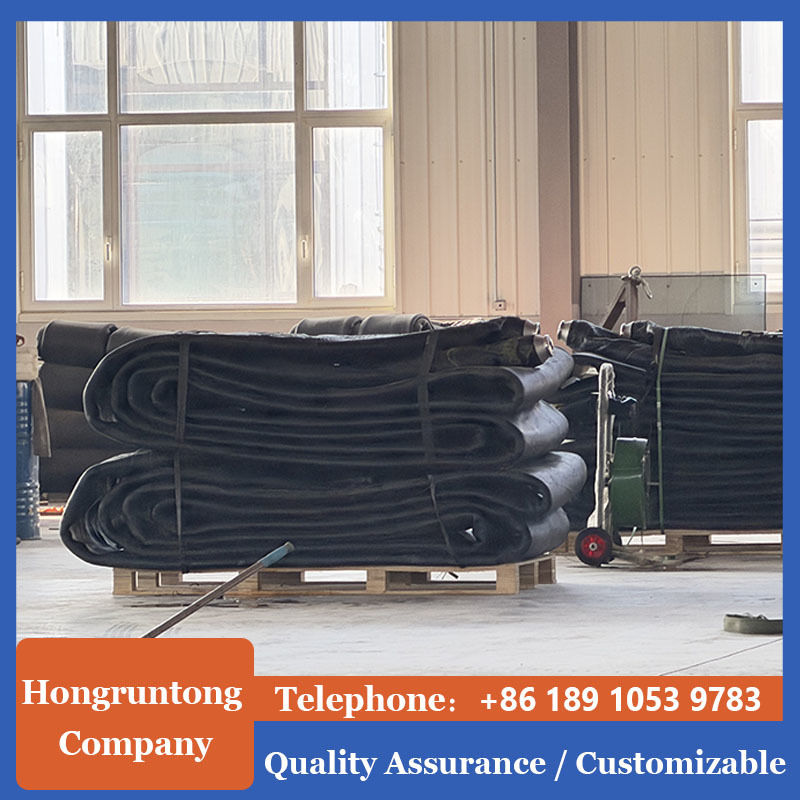
Q4. How should airbags be stored when not in use?
Store deflated in a cool, dry, shaded area away from petroleum products and excessive heat.
Q5. What maintenance is required for long-term use?
Regular inspection of rubber elasticity, valves, and reinforcement layers, plus periodic pressure testing.
Product Gallery
Sản phẩm khuyến cáo
Hãy liên lạc với chúng tôi
Người liên hệ : Mr. William Lau
Tel : +8618910539783
Fax : 86-10-89461910
Ký tự còn lại(20/3000)